
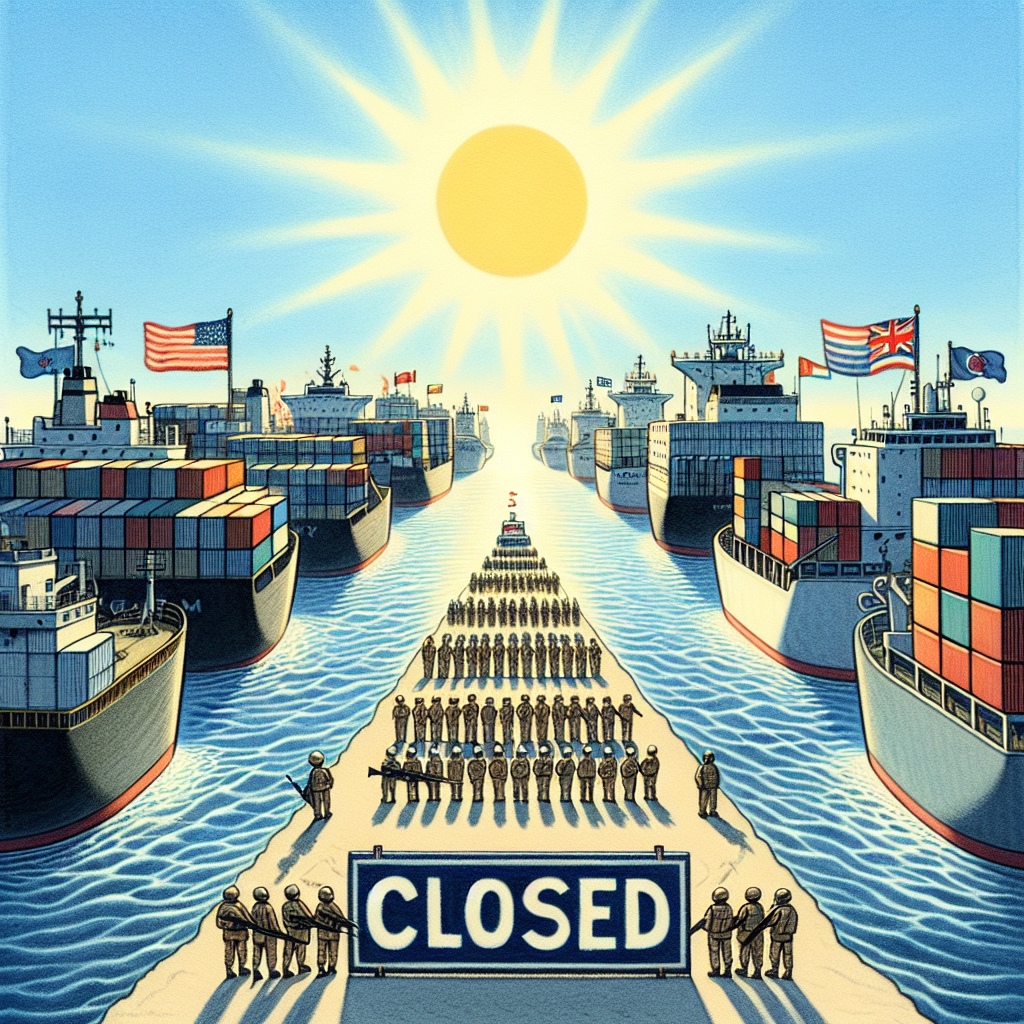
Iran announced on Friday (April 17) the reopening of the Strait of Hormuz but then promptly blocked this crucial international waterway again on Saturday in retaliation for the ongoing US naval blockades of Iranian ports.
The Iranian Joint Military Command stated on Saturday that control over the Strait of Hormuz has been restored to its previous state and is now under strict management and control by armed forces.
The command vowed to continue blocking passage through the Strait of Hormuz as long as the US blockade on Iranian ports remains in effect.
According to a statement released on social media platform X by the US Central Command on Saturday, American forces are enforcing naval blockades on ships entering and exiting Iranian ports and coastal regions. Since the blockade began, 23 ships have reportedly followed US military orders to turn back.
US President Trump has yet to comment on Iran’s decision to reseal the Strait of Hormuz on Saturday.
Previously, Trump had welcomed Iran’s opening of the Strait of Hormuz but had emphasized that the US naval blockade on Iran would still be fully enforced until an agreement is reached between the US and Iran. The US has been pressuring Iran to abandon its nuclear ambitions.
Following the collapse of negotiations in Islamabad, the capital of Pakistan, last weekend between the US and Iran, Trump ordered the naval blockade on Iran to increase pressure in hopes of forcing Iran to reach an agreement with the US.
While the US continues to pressure Iran, Pakistan, as a key mediator, has been in contact with both sides, hoping to facilitate a second round of negotiations.
The British military reported that after Iran announced the resealing of the Strait of Hormuz on Saturday, two vessels from the Iranian Revolutionary Guard fired upon a passing oil tanker.
The UK Maritime Trade Operations Center stated that the tanker and its crew were reported safe but did not disclose the vessel’s name or destination.
According to reports from the vessel-tracking website TankerTrackers.com, two Indian vessels were forced to change course in the Strait of Hormuz after encountering gunfire from the Iranian Revolutionary Guard.
The website mentioned that these vessels include a super tanker flying the Indian flag carrying 2 million barrels of Iraqi crude oil.
On Friday, President Trump, when asked by reporters aboard Air Force One if he would extend the ceasefire if the US and Iran failed to reach an agreement by next Wednesday, responded, “I don’t know yet. I may not do that. But the blockade will continue.”
He hinted at the possibility of renewed military strikes against Iran if negotiations fail. “Unfortunately, we may have to go back and hit them again,” the President said. He also mentioned that if an agreement is reached, the US would cooperate with Iran to bring enriched uranium to the US. If no agreement is reached, “we’ll get it in a different form – a more unfriendly form. But we’ll get it eventually.”