
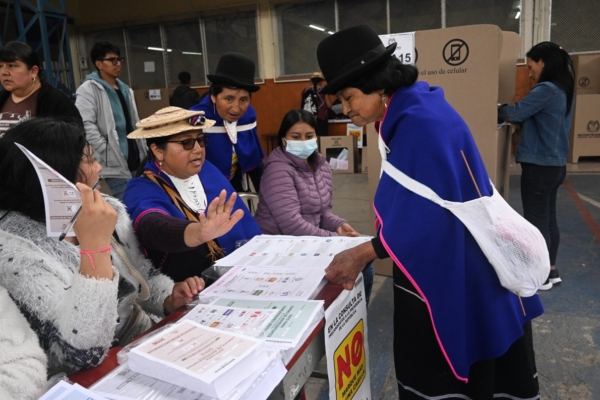
Colombia held parliamentary elections for both the Senate and the House of Representatives on Sunday, March 8th, which will determine the political landscape of the country’s next head of state and test whether the once powerful right-wing is ready to regain its political dominance.
According to reports from Reuters and the Associated Press, the elections took place under high alert nationwide, with increasing concerns about possible political violence during the electoral process, especially in rural areas controlled by illegal armed groups.
Defense Minister Pedro Sanchez announced this week that around 246,000 military personnel and national police forces have been placed on high alert to prevent illegal armed groups from launching attacks, disrupting the elections, or coercing voters to support specific candidates.
Polling stations opened at 8 a.m. local time on Sunday and closed at 4 p.m.
Colombia has a total of 41.2 million eligible voters. Over 3,000 candidates are competing for 285 parliamentary seats – 102 in the Senate and 183 in the House of Representatives.
Analysts predict that the seats in this election may be dispersed among more than twenty political parties, potentially forcing the next president to form a coalition government.
Under the leadership of leftist figure and current President Gustavo Petro, the Congress has increasingly acted as a balancing force against his policies, a stark contrast to the past when the Congress often aligned with the president.
During Petro’s tenure, the current Colombian Congress approved his pension and labor reform plans but rejected his proposals for healthcare and tax reforms, leading to tense relations between him and lawmakers.
At the same time, the right-wing opposition is seeking to reclaim political dominance. The main opposition party in Colombia, the Democratic Center, influenced by former President Álvaro Uribe, is mobilizing its supporters to secure a strong position in the legislature before the presidential election.
Alongside the parliamentary elections, Colombian citizens also voted for the presidential candidates of the country’s three major political camps – centrist, center-left, and right-wing. The winners of these interparty consultations, similar to the primary elections in the United States, will participate in the presidential election, with the first round scheduled for May 31st.