
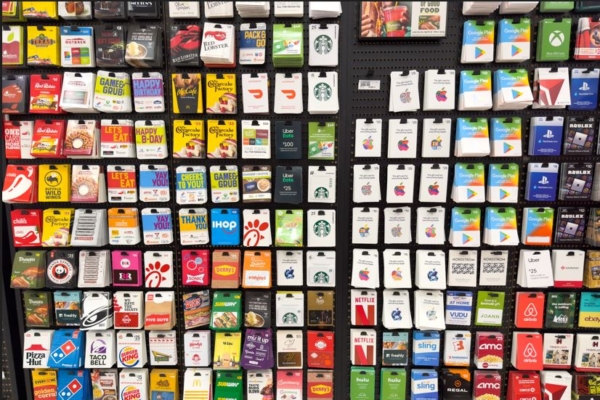
On February 18, 2026, 63-year-old Chinese citizen Jun Wang, who holds a U.S. green card, was convicted of money laundering conspiracy in a federal court in the northern district of New York. This decision stemmed from an international fraud money laundering network involving over $2.2 million worth of Walmart gift cards spread across the United States.
The case revealed the complete structure of how cross-border gift card fraud operates: victims are deceived into purchasing gift cards through various tactics, the card numbers are then sent to China via WeChat, quickly exchanged in the U.S., converted into new cards, and sent back to China to launder the original funds.
The trial reconstructed how this criminal chain operated through court hearings and written arguments in December 2025. Judge Mae D’Agostino outlined in a 20-page judgment that Jun Wang played a key role in the entire fraud chain – though he did not directly contact the victims, he was responsible for converting and disguising the proceeds of the fraud and sending them back to China.
At least four New York victims – C.W., A.M., Y.M., and H.R. – testified in court describing their respective ordeals. While the fraud scenarios were different, the outcome was the same: purchasing gift cards and handing over card numbers and PIN codes.
In June 2019, C.W. received a call from a man claiming to be Max, stating that her computer was infected with a virus and she needed to purchase a $500 Walmart gift card to pay for repairs. She followed the instructions, bought the gift card, and provided the card number, which was then quickly used.
These types of “tech support scams” are a common tactic – exploiting panic to compel victims to make immediate payments.
On July 22, 2019, A.M. responded to a nanny job advertised online by a couple from out of state, received a check from them, and was instructed to purchase three Walmart gift cards totaling $1,300.
The check bounced, meaning the bank could not honor the payment, but the gift card numbers and PIN codes provided by A.M. had already been used.
This “fake check” scam leverages the trust of job seekers and the time delay in transferring funds.
On September 11, 2020, Y.M. received a call from someone claiming to be a government official, informing her that someone had rented a car in her name and illegal substances were found in the car with her prints on them.
When Y.M. denied involvement, they claimed her account and social security information were at risk, and requested her to purchase gift cards to “protect the funds from theft,” she followed the instructions, bought the cards, and provided the card information.
This type of scam uses legal intimidation to swiftly coerce victims into compliance.
On January 22, 2021, H.R. received a friend request on Facebook from an impersonator posing as a acquaintance. The impersonator claimed to have won a large sum of money and persuaded her to apply for the same program, claiming she could obtain government grants through the Department of Health and Public Services.
H.R. was intrigued, and the impersonator subsequently asked her to purchase gift cards to pay processing fees, and to send the card numbers to a provided phone number.
This reflects scammers exploiting social trust relationships.
The judge noted that different tactics did not imply different conspiracies – the common goal was to induce victims to purchase gift cards and provide card numbers. Once scammers obtained the information, they could access the funds on the cards.
The First Warning: Cashier Observation
Marlange Morency, the asset protection manager at Sam’s Club in Florida (a warehouse-style members-only store under Walmart), testified that in 2019, she noticed Jun Wang scanning a large number of gift cards at the self-checkout aisle. She checked the surveillance footage and questioned him about the purpose.
Morency stated that she captured a screenshot of Jun Wang’s phone screen showing gift card information. After he failed to provide a reasonable explanation, she asked him to leave the store and warned that if he returned, she would call the police. However, she later saw him in the store again.
The court believed this incident showed that Jun Wang was already aware of the suspicious nature of his actions at an early stage.
Following this, Walmart’s global investigations department got involved. Senior investigator Darick Leighty was tasked with tracking abnormal gift card transactions across states. He discovered that some gift cards purchased in one state were quickly used in another.
Leighty testified that he noticed Jun Wang’s high volume of gift card exchange activities, which far exceeded normal commercial behavior and had been flagged in Walmart’s internal system. He tracked Jun Wang’s activities across approximately 140 different Walmart and Sam’s Club locations and compiled a gift card transaction spreadsheet, covering 6,907 gift cards and 4,738 transactions with a total redemption value of around $2.35 million.
Leighty confirmed that Jun Wang’s in-store appearances and gift card usage were captured on surveillance camera recordings, and could be traced through receipts containing time and location information.
Regarding the fraud victims in the northern district of New York, Leighty pointed out that gift cards purchased by victims in the northern district of New York were subsequently used in Florida. Some cards were even redeemed in Florida within less than an hour of purchase – which was clearly suspicious. Surveillance footage and receipts ultimately confirmed that Jun Wang was the one using the gift cards.
The data compiled by Leighty revealed Jun Wang’s modus operandi. Specifically, he frequently exchanged gift cards from multiple cash registers in the same store on the same day; he also made similar transactions across different Walmart and Sam’s Club locations on the same day.
Sometimes, he spent hours traveling back and forth between multiple stores on the same day to exchange gift cards, and often completed exchanges within minutes of victims purchasing gift cards out of state. Evidence also showed that he regularly exchanged thousands of dollars’ worth of gift cards in a single day, and used the barcodes generated from fraudulently obtained gift cards to purchase new gift cards.
On December 2, 2021, the FBI questioned Jun Wang at Los Angeles International Airport. Agent Ryan Nicolos from the Los Angeles Financial Institution Fraud Unit recalled that Jun Wang’s explanation of his gift card exchange activities at the time clearly did not match the facts. For example, he claimed to have exchanged only around $50,000 worth of gift cards, which accounted for less than 2% of his actual total exchange amount between 2019 and 2021.
During the airport interview, the FBI presented a search warrant for Jun Wang’s phone, and he agreed to allow agents to view its contents. Text messages on the phone revealed his deep involvement in related activities, including instructing others on how to exchange gift cards, requesting to delete chat records, recruiting others to join, and discussing related criminal matters. The court deemed these contents as evidence that he was “fully aware” of the nature and risks of the entire operation.
More specifically, the text messages exposed Jun Wang’s level of knowledge and subjective intent. For example:
– In August 2019, Jun Wang asked a contact if they were ready to process gift cards from both Best Buy and Walmart simultaneously, and instructed the contact on how to redeem them at Walmart.
– In the same month, he asked a contact named William Best Buy to delete their conversation, stating that “keeping in touch with you is not wise.”
– From April to August 2020, Jun Wang exchanged multiple messages with a lawyer discussing potentially testifying in a criminal trial involving “Walmart gift card incidents.”
– In August 2020, he described the gift card redemption process to a recruit and likened it to “daily work like a normal job.”
On March 14, 2021, J.L. in Pennsylvania received a voicemail falsely claiming issues with her Amazon account, directing her to call a specific number. After contacting the number, an unidentified individual instructed her to purchase $2,000 worth of gift cards and provided the gift card information from Walmart in Florida on the same day.
On May 14, 2021, J.L. purchased gift cards and handed them over to someone claiming to be an Amazon representative to “resolve account issues.” Subsequent law enforcement investigation confirmed that Jun Wang had exchanged these gift cards. Once his identity was confirmed, the Northampton County District Attorney’s Office in Pennsylvania brought multiple related charges against Jun Wang.
During the pending trial on these charges, Jun Wang submitted written explanations to law enforcement and the court, and voluntarily participated in a Zoom interview recording in March 2023.
In the recorded Zoom interview, Jun Wang told the FBI that he ran an online merchandise business and also worked for a Chinese company. His work pattern was as follows:
– He received gift card serial numbers from a Chinese “boss” via WeChat.
– He used these numbers to shop (entering the card number and password online or using them at self-checkout in-store).
– He typically bought new physical gift cards at Walmart, such as Google, Steam, etc., in this manner.
– After obtaining the new cards, he sent the serial numbers and PIN codes back to the Chinese “boss”, destroyed the physical cards, and provided photos as evidence that he did not keep them for personal use.
His Chinese counterparts would pay him a portion of the amount, and he admitted to using some gift cards to purchase groceries or gasoline. He claimed that this was not his first time partaking in similar transactions arranged by the Chinese company.
Jun Wang presented three core defense arguments: first, denying involvement in a large-scale conspiracy. He argued that the prosecution had not proven any connection between him and the scammers, stating, “These four so-called frauds are independent of each other and not related.” Second, denying knowledge of the fraudulent nature. And third, he believed his actions were transparent and did not constitute money laundering or criminal concealment.
In a recorded interview with Agent Soika in 2023, Jun Wang stated that he was simply “a cog in the machine,” indicating that employees of the Chinese company would send gift card information to him via WeChat, and he would use that information to purchase gift cards in the U.S. and then return the new card information.
He emphasized that he did not know the source of the gift cards, only followed instructions to complete “ordinary work,” and even claimed he was also a victim.
The judge ultimately rejected Jun Wang’s defenses, and the FBI’s recording became crucial evidence.
The judge pointed out that in Jun Wang’s conversation with Agent Soika, he never suggested or implied that he only learned about the gift card fraud after the fact. On the contrary, his own words indicated a clear understanding of the fraudulent nature, such as, “The only loser is that woman”; “We all know. It’s easy to know. Only that woman lost $1,000”; “Except for that woman, everyone is happy.”
Furthermore, Jun Wang’s pattern of behavior strongly indicated his subjective intent, including exchanging gift cards rapidly across states and stores, requesting others to delete messages, and continuing his operations despite being questioned by store employees.
During the jury trial in December 2025, evidence showed that between June 2019 and June 2021, Jun Wang exchanged gift cards worth $2,285,039, all purchased by fraud victims from across the U.S. (including the northern district of New York).
The judge concluded: first, a single conspiracy was proven, the different fraud methods were just various ways to deceive for money, but the goal was the same, belonging to the same criminal scheme. Second, knowledge and intent were established, Jun’s behavior pattern, communication content, and recorded conversations all indicated his clear understanding. Third, the trial location was appropriate as the purchase of gift cards by victims in the northern district of New York constituted the starting point of the criminal activity, giving the court jurisdiction.
Therefore, the judge found Jun Wang guilty of money laundering conspiracy.
In summary, this case revealed a typical model of cross-border gift card fraud: globalized fraud tactics, instant cross-border transmission of gift card serial numbers, rapid money laundering through physical stores, and WeChat as a tool for a transnational command chain.
Authorities emphasized that they would continue to investigate the entire fraud chain, rather than just the end operators. First Assistant District Attorney John A. Sarcone III of the northern district of New York stated in a statement: “Jun was a premeditated participant with knowledge and an essential participant in a multinational scheme that preyed on victims across the United States, including the elderly. We will continue to hold accountable all those involved in these fraudulent schemes at every level.”
Jun Wang is expected to be sentenced in June 2026, with a maximum penalty of 20 years in prison and a $500,000 fine for money laundering conspiracy.