
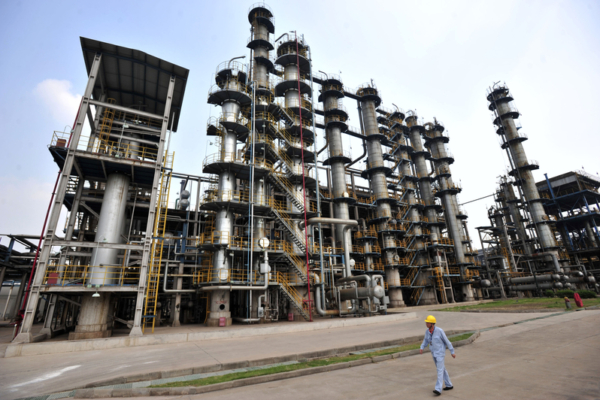
In light of the military strikes by the United States and Israel against Iran and the death of Iran’s Supreme Leader Ayatollah Khamenei, the energy and security landscape in the Middle East has undergone sudden changes. In the short term, this is expected to cause fluctuations in the crude oil and financial markets, impacting stock markets including A-shares and Hong Kong stocks as well. Investors are advised to closely monitor the developments and make informed investment decisions.
Iran is a significant oil-producing country globally and one of the crucial sources for China’s long-term strategic oil reserves. As the conflict escalates, China’s official policies in recent years have continued to strengthen the strategic reserves of “oil, gold, and food”, highlighting its state of readiness. However, internal power struggles and military high-level purges within China have intensified, currently seen as a form of systematic risk mitigation rather than a single war anticipation.
On February 28, the United States and Israel launched military strikes against Iran, leading to the closure of the Hormuz Strait by Iran’s Islamic Revolutionary Guard Corps that same night. On March 1, Iran officially confirmed the death of Supreme Leader Ayatollah Khamenei and declared a nationwide mourning period lasting 40 days.
As the Persian Gulf and Hormuz Strait serve as crucial channels for approximately 20% of global crude oil circulation, disruptions in these passages have significantly heightened market expectations of supply tightness. This impact on the global energy supply chain has driven up oil prices and increased uncertainty in investments.
Iran, being a major oil-producing country, has garnered global attention for the impact of the conflict on oil.
According to analysis from Columbia University’s Center on Global Energy Policy, in 2025, Iran supplied an average of about 1.38 million barrels per day of crude oil and condensate to China, accounting for around 13% of China’s maritime crude oil imports that year.
If Iranian oil supplies are disrupted, China’s economy may face major pressures such as loss of cheap oil sources, increased costs for independent refineries, profit squeeze, and rising import expenses. With continuous oil price increases, manufacturing costs can rise, potentially leading to a 0.3% to 0.5% decrease in GDP.
Regarding the impact on the oil industry chain, both crude oil and petrochemical products (such as methanol, liquefied crude oil gas, liquefied natural gas, fuel oil, polyethylene, etc.) are expected to experience short-term volatile surges due to cost increases and tightened raw material supply. For instance, Iran is the world’s second-largest methanol producer, with China being a major buyer. As alternative non-Iranian sources would have difficulty filling such a significant gap in the short term, domestic methanol prices in China are poised to undergo a round of increases.
Simultaneously, investors are likely to flock towards safe-haven asset markets once again. In 2026 so far, gold prices have reached historic highs with a 22% increase, while silver has also shown strong performance, garnering investors’ favor. Escalation in the Middle East typically strengthens the attractiveness of U.S. treasuries as a global safe-haven asset, prompting increased demand and lower yields.
On the stock market front, several global airlines have canceled flights to the Middle East, and if the conflict spreads leading to more airspace closures, airline stocks will face pressure. A-shares and Hong Kong stocks will also fluctuate alongside global stock markets, with the energy sector benefiting while airlines, manufacturing, and export-oriented companies may face challenges.
The foreign exchange market also remains vulnerable. The trend of the U.S. dollar will depend on the scale and duration of the conflict. It is expected that the U.S. dollar will strengthen against most currencies except the Japanese yen and the Swiss franc. The Swiss franc is widely considered a safe-haven currency during turbulent times and may face greater appreciation pressure. Pressure on the exchange rates of the Chinese renminbi and the Hong Kong dollar is also expected.
It is noteworthy that if Western countries further expand sanctions on entities connected to Iran, financial channels related to Iranian oil transportation, settlement, insurance, and shipping will come under pressure.
Oil, gold, and food are crucial strategic reserve materials, with data indicating that China has been stepping up its preparations.
According to official Chinese data, China’s crude oil imports reached 557 million tons in 2025, equivalent to an average of about 11.2 million barrels per day (1 ton equals approximately 7.33 barrels), marking a roughly 4.4% year-on-year increase. This volume surpassed Saudi Arabia’s daily production level of around 9.5 million barrels.
Such a massive import quantity is not entirely consumed immediately. China typically replenishes over 10% of the import volume into the strategic reserves system. By the end of 2025, the total oil storage capacity (including national strategic reserves, commercial reserves, and corporate inventories) exceeded 2 billion barrels. This figure is significantly higher than the 1.4 billion barrels in 2015. Although the total storage capacity surpasses 2 billion barrels, the current actual filling volume (inventory level) is around 1.3 billion to 1.5 billion barrels. Based on the current consumption rate, China’s oil reserves can satisfy approximately 121 days of demand, far exceeding the International Energy Agency’s benchmark standard of 90 days.
The expansion of strategic reserves implies that China is unlikely to face a supply crisis in the short term, but rather cost impacts.
According to People’s Bank of China data, as of January 2026, the official gold reserve stood at 74.19 million ounces, marking a continuous increase for 15 months.
In the backdrop of the intertwining cycles of U.S. dollar interest rates and geopolitical conflicts, gold holds three significant meanings for China: diversifying foreign exchange reserve risks, hedging U.S. dollar asset volatility, and enhancing the stability of the Renminbi’s credit.
Following the sudden changes in the Iran situation, if the risk aversion sentiment persists, gold prices may be further supported. For China, initiatives including establishing Hong Kong as an international gold storage and trading center aim to create a buffer zone.
Food is a longstanding strategic focus for China. China’s existing grain storage capacity surpasses 730 million tons, ranking at the top globally.
While direct impacts of the Middle East conflict on food are limited, rising energy prices could elevate costs in fertilizer, transportation, and agriculture. Therefore, food reserves essentially serve as a secondary defense layer against energy price shocks.
Combining recent international events such as the supply chain disruption caused by the pandemic, the Russia-Ukraine war triggering a European energy crisis, along with the current escalation of internal power struggles and frequent military high-level purges within China, this resource allocation leans more towards a systematic risk hedge against global supply chain disruptions, financial sanctions risks, and energy price fluctuations rather than a clear anticipation of a specific war.
The core logic lies in enhancing economic resilience and regime security buffers, rather than immediately entering a full-scale military mobilization. Consequently, China’s reinforcement of strategic reserves of “oil, gold, and food” serves as a preparedness response to overlapping systematic risks. Amid highly uncertain global situations, China has built a “resource security cushion” through reserves and diversified supply chain construction.
Economic variables will depend on how the Middle East and the world order reconfigure, and whether global energy prices enter a phase of long-term repricing.