
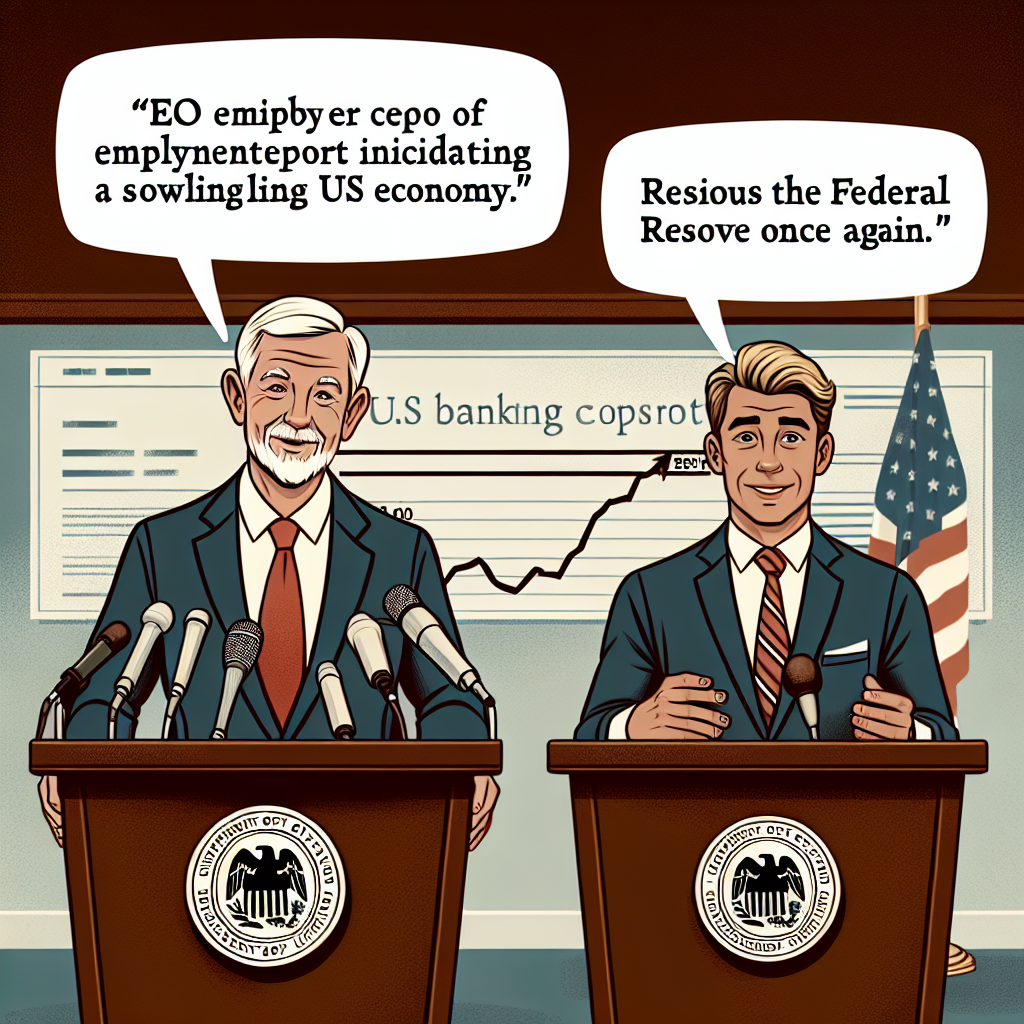
On September 10, 2025, Jamie Dimon, the CEO of JPMorgan Chase, stated that the employment report released by the United States Department of Labor on Tuesday, September 9, confirmed that the US economy is slowing down. President Trump, on the other hand, criticized the Federal Reserve once again and pushed for further rate cuts.
On Tuesday, the Bureau of Labor Statistics (BLS) released its annual revision of nonfarm payroll data, revising down the annual nonfarm job additions up until March by 911,000. This downward revision was higher than the expectations on Wall Street and marked the largest adjustment in over two decades.
“I believe the economy is weakening,” Dimon said in an interview with CNBC on Tuesday. “I don’t know if it’s heading towards a recession or just weakening.”
He stated that this revision “just confirms our previous thoughts.”
The market had expected the downward revision to fall between 600,000 and 1,000,000, and this data came close to the upper limit of expectations. Prior to the release of the data, several economists predicted a downward revision of around 800,000 for the annual nonfarm payroll data up until March, with US Treasury Secretary Scott Bessent also warning of a potential revision as high as 800,000.
Dimon emphasized that as the largest bank in the US in terms of asset size, JPMorgan Chase has access to a range of data on consumers, businesses, and global trade. While most consumers still have jobs and are spending based on their income levels, consumer confidence has recently taken a hit.
“There are a lot of different factors in the economy right now,” Dimon said. He mentioned the softness in consumer spending and the continued strength in corporate profits.
“We’ll just have to wait and see,” he said.
Dimon stated that the Federal Reserve “might” lower interest rates at the September policy meeting, but this may not “have a significant impact on the economy.”
Following the release of the revised employment data report, President Trump posted on social media once again criticizing the Federal Reserve. President Trump stated that “the whole (Federal Reserve) institution is broken and needs fixing.”
Trump called for the Fed to review the latest data, criticizing the Fed’s dual mandate as “set too low and rigid,” and that “the data they follow has been wrong for years,” pointing out that the Fed does not believe that the money supply plays a decisive role. The Fed’s longstanding objectives have been to ensure full employment and to maintain inflation at 2%.
The President advocated for a rate cut of 50%, 75%, or even 100%.
The White House, however, stated that a new leadership is needed to represent the financial markets, businesses, policymakers, and households that rely on these data to make critical decisions, rebuilding their trust and confidence in the data from the Bureau of Labor Statistics.