
A 21-year-old Chinese national named Tianrui Liang was arrested by the FBI on April 7 at New York’s Kennedy International Airport while preparing to depart the country. He is accused of unauthorized filming of sensitive US military facilities, as per the indictment filed in the Eastern District Federal Court of New York. He has been charged with violating Section 795 of the US Code, which prohibits the unauthorized photography or recording of important national defense facilities.
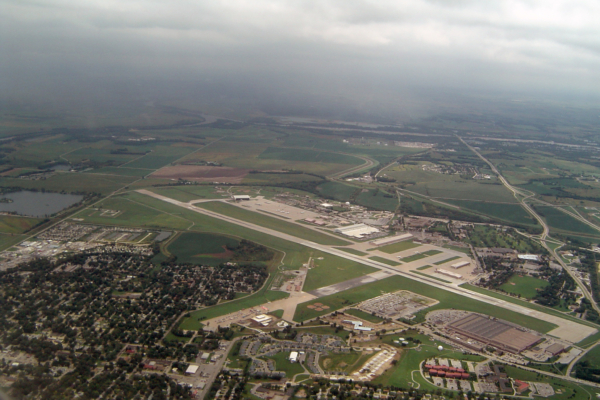
The case stemmed from his activities near Offutt Air Force Base (OAFB). The base houses the United States Strategic Command and is considered one of the Pentagon’s most sensitive military installations. The perimeter of the base is fenced off, restricting access, with signage indicating the area as restricted.
According to the FBI affidavit, on March 31, 2026, a witness on a public road outside the base spotted a man with a telephoto lens camera capturing footage of military aircraft on flight lines and runways, and promptly alerted authorities. Base security personnel and the Air Force Office of Special Investigations (OSI) swiftly intervened and identified the man as Tianrui Liang.
The investigation revealed that Tianrui Liang admitted to filming several sensitive military aircraft inside the base, including the RC-135 reconnaissance aircraft and the E-4B “National Airborne Operations Center” (commonly known as the “Doomsday Plane”). These aircraft are classified as highly strategic assets used for nuclear command, intelligence gathering, and wartime contingencies. Law enforcement authorities noted that Liang knew that his actions were illegal but proceeded with filming without obtaining permission from the base commander or relevant authorities.
According to the affidavit, Tianrui Liang is a student at the University of Glasgow in the UK, entering the US on a B1/B2 visa with a planned itinerary. On March 26, he flew from the UK to Vancouver, Canada, where he met with a friend studying at Columbia University in New York. The two entered the US by car on March 28, passing through Seattle, Washington, before reaching Billings, Montana. After the friend returned to New York that day, Tianrui Liang continued his journey alone.
Subsequently, Liang drove to Ellsworth Air Force Base (AFB) in South Dakota, originally planning to film the B-1B “Lancer” strategic bomber. He later moved to the Omaha region of Nebraska, where he filmed outside Offutt Air Force Base and captured multiple aircraft photos. Investigators pointed out that Liang used a “plane-spotting” website to locate filming positions, which provides guidelines for observing and filming flight lines from outside the base.
Further investigation revealed that Liang did not intend to leave immediately after filming but planned to proceed to Tinker Air Force Base in Oklahoma to film more similar aircraft, including the E-4B. Law enforcement officers believe that this indicates his actions were not spontaneous but rather a planned observation and documentation of specific military assets.
During equipment inspection, the FBI discovered numerous photos captured on the flight lines of Offutt Air Force Base in Liang’s Canon camera. Liang also possessed a DH Mavic 4 Pro drone, but claimed it was not his and was not used at OAFB. According to the affidavit, he told investigators that the images were for “personal collection” but also acknowledged knowing that “photographing military aircraft on the ground is illegal.”
In terms of the law, Section 795 of the US Code stipulates that important military facilities designated for protection by the President or the Department of Defense should not be photographed or recorded without authorization, with violators facing fines or up to one year in prison. Prosecutors argue that there is sufficient evidence to show that Tianrui Liang continued filming knowing it was illegal.
Following his arrest on April 7, a judge rejected the government’s detention request on April 8, granting him bail pending trial at $20,000. However, by April 10, the court agreed with the prosecution’s argument that he posed a “significant flight risk,” ultimately revoking bail and ordering his detention once again.
Currently, prosecutors have not charged Tianrui Liang with engaging in espionage activities for any foreign government or organization. However, court documents indicate that some aspects of the case are still sealed due to an ongoing investigation into a potential co-conspirator.