
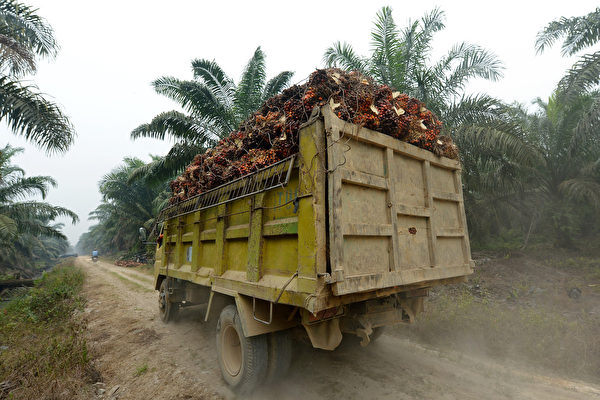
Since the outbreak of the Iran war, countries around the world have been stockpiling palm oil, causing a surge in demand for crude palm oil. Major palm oil exporting countries such as Malaysia and Indonesia have seen their export volumes rise to the highest levels in months, sparking concerns about long-term supply shortages. The short-term potential shortage of crude palm oil has prompted countries and businesses to increase their inventories, putting pressure on palm oil prices to rise.
Palm oil is widely used in various applications, from edible oils to margarine and instant noodles. In the long run, the rise in crude oil prices due to the Iran war has also stimulated the demand for palm oil as a biofuel feedstock.
A recent article by Nikkei News pointed out that the blockage of the Hormuz Strait, coupled with the destruction of production facilities due to the conflict, has led to an increase in fertilizer prices, forcing small farmers to delay planting. Additionally, the high temperatures caused by climate change have hindered palm oil yields. It is estimated that the production of Malaysia and Indonesia, the two largest palm oil producing countries that account for 85% of global production, will decrease, causing the Malaysian palm oil futures prices, a benchmark for international palm oil prices, to rise since the outbreak of the Iran war, reaching the highest level since December 2024 in April.
The rising palm oil prices have raised concerns in the food industry. The latest data from the UN Food and Agriculture Organization shows that the food price index reached 128.5 points in March, up 2.4% from February. The vegetable oil price index increased by 5.1% compared to February, a 13.2% increase from the same period last year. Analysts believe that the current market is selling off old inventories, and the global edible oil prices are expected to increase by 20% in the next two months.
Earlier this month, Nikkei News reported that wholesale palm oil prices in Japan rose by 17 yen (about $0.11) to 328-338 yen per kilogram in April.
The latest report from the UN Food and Agriculture Organization indicates that international prices of palm oil, soybean oil, sunflower seed oil, and rapeseed oil have all increased, as the spike in crude oil prices has led to stronger-than-expected demand for biofuels.
The article points out that this concern is most evident in the trade sector. Data shows that last year, palm oil exports from Indonesia and Malaysia were sluggish, but this year, exports have achieved double-digit growth, driven by strong demand from major consumption regions such as China, the Middle East, the United States, and the European Union. Malaysia’s crude palm oil exports in March grew by 41% to 1.6 million tons compared to the previous month, marking the highest level since October 2025.
Geopolitical turmoil has made food security a key issue, with major palm oil consumer countries accelerating stockpiling, leading to increased purchasing intentions.
The article states that the EU remains the largest buyer of Malaysian crude palm oil, accounting for 23.4% (963,000 tons) of Malaysia’s total crude palm oil exports in the first quarter of this year. Under the current geopolitical tension, Malaysia’s exports of crude palm oil to the Middle East have increased fivefold, soaring by 547.2% to 280,000 tons.
Indonesia’s exports of crude palm oil to China and the United States have also seen triple-digit growth, with increases of 132.6% to 233,000 tons and 210.5% to 169,000 tons, respectively. Experts note that Indonesian crude palm oil is relatively cheaper, and China is its fourth-largest buyer. In China, palm oil is mainly used for food processing, cooking, and industrial purposes, extensively used in processed foods such as instant noodles, snacks, and margarine. In the United States, palm oil is primarily used in processed foods, personal care products, and industrial applications.
According to a report cited by Jakarta Globe, data from Indonesia’s Central Statistics Agency reported that from January to February this year, Indonesia’s crude palm oil exports increased by 36.26% year-on-year, reaching 4.54 million tons. Since the outbreak of the Iran war, Indonesia’s domestic palm oil prices have risen by 8-10%, and future exports of Indonesian crude palm oil are estimated to face downward pressure due to a significant increase in insurance and freight costs, up to 50%.
Analysts warn that Southeast Asia is a dominant force in global palm oil production, with approximately 15% and 30% of Malaysia and Indonesia’s palm oil production coming from smallholder farmers. With a significant rise in fertilizer costs, it is estimated that planting will be delayed, and global palm oil production is likely to decline in the coming years. Meanwhile, global palm oil demand continues to surge.
GAPKI (Indonesian Palm Oil Association) warns that fertilizer costs have risen by about 50%, and if the Iran war continues, the production of fresh palm fruit bunches (FBB), a raw material for palm oil, will decrease. For smallholder farmers, fertilizers account for 60% of production costs. While farmers are not likely to stop planting entirely due to the rising fertilizer prices, they may reduce the planting area, leading to a decrease in production. This situation is expected to occur within the next 6 months to a year.
GAPKI points out that starting from July 1st, the Indonesian government plans to increase the mandatory blending ratio of palm-based biodiesel from 40% to 50%. This move will result in 1.5 million tons of crude palm oil being used for biofuel production, thus reducing export volumes by the same amount.
Another major concern is the aging of oil palms in Malaysian plantations. The Malaysian Palm Oil Council estimates that by next year, approximately 35% of oil palms in Malaysia will be at or over 19 years old, higher than the current rate of about 30%, further exacerbating production pressures.
In addition, weather risks are also increasing. The return of the El Niño phenomenon in the latter half of this year could push temperatures in Southeast Asia to historic highs. The National Oceanic and Atmospheric Administration (NOAA) predicts a 50% to 60% probability of the El Niño phenomenon occurring from July to September.
Furthermore, persistent drought conditions may lead to a decrease in fresh fruit bunch production. Past experiences indicate that once a strong El Niño phenomenon occurs, fruit bunch production in the coming years could drop by as much as 16%, and palm oil production could decrease by up to 14%.
Experts point out that due to Thailand and Indonesia prioritizing domestic biodiesel projects, regional export supplies are tightening. Coupled with the risks associated with the possible return of the El Niño phenomenon, palm oil prices are expected to continue to rise in the future.