
The European Commission stated on Tuesday (April 21) that China’s CRRC, which was selected to participate in the construction of the new metro line in Lisbon, has benefited from unfair foreign subsidies. As a result, the Chinese railway company has withdrawn from the Lisbon metro contract under pressure and it has been taken over by a Polish company.
The European Commission announced that the Lisbon metro company, responsible for the “Violet Line” project, has been given permission to hire a consortium led by Mota-Engil, on the condition that the consortium must replace the original subcontractor – China’s CRRC Tangshan Portugal company – with its Polish competitor PESA.
The European Commission initiated a thorough investigation at the end of 2025, finding that subsidiaries of the Chinese state-owned CRRC group have benefited from foreign subsidies. The Commission believes that these subsidies distort procurement procedures, giving them an “unfair competitive advantage,” which in turn harms the interests of other bidders.
According to Reuters, the consortium led by Mota-Engil had previously submitted the lowest bid of 598.8 million euros for the new line connecting the Portuguese capital. The consortium later proposed to replace CRRC Group with the Polish rail vehicle manufacturer PESA, and the European Commission accepted this commitment, deeming it sufficient to eliminate market distortion.
CRRC Tangshan Portugal did not immediately respond to requests for comments from Reuters.
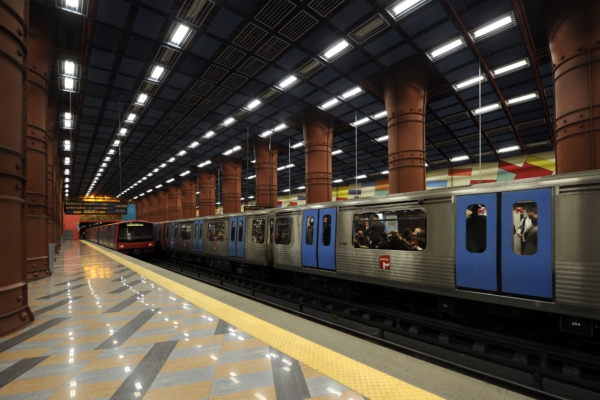
The Lisbon “Violet Line” is a new light rail metro connecting the city center to Odivelas and Loures to the north. The project, with an estimated price of around 600 million euros (approximately 705.72 million US dollars), is expected to be completed by 2029.
The Lisbon metro launched the bidding process in April 2025, and Brussels began a thorough investigation into CRRC Portugal’s involvement in the project based on the Foreign Subsidies Regulation in November of the same year.
An anonymous EU official revealed to the South China Morning Post that despite CRRC Portugal’s withdrawal from the bidding process and an inability to access or share information about other companies within the CRRC group, the European Commission has decided to continue its investigation. The official expressed concerns that the company might re-enter the bidding process through back channels, as Mota-Engil retained the price and technical arrangement matching CRRC’s original bid in their proposal.
The European Commission found that the CRRC group had received support and subsidies on a “billion-dollar scale” from the government. Although officials were unable to access the company’s full records, they made judgments based on “facts available,” a legal term that allows regulatory bodies to obtain information through other means when the parties involved do not cooperate or provide insufficient information.
The identified forms of subsidies in the investigation included direct funding, tax incentives (reducing the tax rate of some subsidiaries from 25% to 15%), discounted loans, and access to “opaque public procurement tenders.” Additionally, the EU found an “in reality” state guarantee that reduced the company’s costs and indirectly subsidized its innovation and research capabilities.
As early as 2024, CRRC had previously bid an extremely low price of 115 million euros in another Lisbon metro contract (14% lower than the Swiss manufacturer), but at that time, Lisbon’s metro ultimately chose the Swiss company Stadler Rail.