
The US House of Representatives’ Select Committee on the CCP has launched an investigation into the US Heartland China Association (USHCA), a non-profit organization, suspecting its deep connections with the Chinese Communist Party’s united front network, potentially acting as a foreign agent without proper registration.
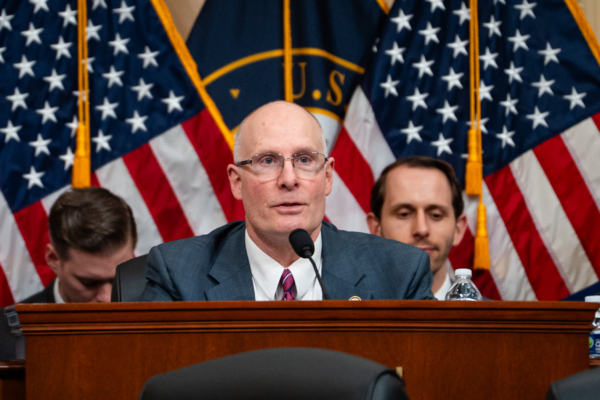
On Monday, Chairman of the Committee on the CCP, John Moolenaar, announced that he had recently sent a letter (PDF) to the USHCA expressing concerns about the various exchange activities organized by the organization. He believes these projects could be used to penetrate the United States and expand Beijing’s political influence.
Moolenaar demanded that the US Heartland China Association prove that it is not operating as an unregistered agent of the People’s Republic of China (PRC) or the CCP, and urged the organization to immediately sever its connections with the CCP’s united front system.
The letter pointed out that the association’s public activities and partnerships have raised serious questions about whether the organization is assisting foreign adversaries in covertly influencing American officials to achieve the political goals of the Chinese government.
Moolenaar emphasized in the letter, “I am writing to request that your organization provide verifiable assurances that the US Heartland China Association is not operating as an agent of the CCP or the PRC government and has not assisted foreign adversaries in covertly influencing local officials in our country to further their political objectives.”
The committee has requested that the association submit all project records by May 7, including roundtable meetings, seminars, student forums, exchange events held within China or jointly with Chinese organizations from January 1, 2021, to December 31, 2025. It must also provide a list of individuals and entities involved, records of contacts with US local and federal officials, all agreements signed with Chinese partners, and detailed information on funding sources.
The focus of this investigation is to assess whether the association has violated transparency provisions under the Foreign Agents Registration Act (FARA).
The investigation indicates that the US Heartland China Association has collaborations with several entities related to the Chinese Communist Party’s influence and intelligence systems, including the China People’s Association for Friendship with Foreign Countries (CPAFFC) and the China-United States Exchange Foundation (CUSEF), as well as other organizations associated with the CCP regime.
Moolenaar stated, “The CCP’s united front activities are relentless and pervasive, targeting decision-makers at every level within the United States. State governments and local leadership are particularly vulnerable. The US Heartland China Association should immediately terminate its relationships with all CCP united front actors and stop acting as pawns in the local-level influence operations of our country’s most significant foreign adversary.”
As specific evidence, the committee mentioned the “Yangtze-Mississippi River Basin Dialogue” held in Wuhan in October 2025.
According to Chinese sources, the US Heartland China Association, commissioned by the CPAFFC, was responsible for selecting and arranging American mayors, legislators, and experts to participate in the dialogue. However, crucial information regarding this arrangement was omitted in the association’s public description of the event.
“In the past, visits to China sponsored by the US Heartland China Association and the CPAFFC have been used to promote ‘sister city’ cooperation agreements between Chinese and American cities,” Moolenaar wrote in the letter. “The CCP leverages these sister city relationships as cover for its influence operations and united front work.”
According to information on the USHCA’s official website (link), members of the delegation to China included several elected officials from the US, such as Mayor Kim Norton of Rochester, Minnesota, Mayor Deborah Feinen of Champaign, Illinois, Mayor Shaundel Washington-Spivey of La Crosse, Wisconsin, Mayor Dan Gibson of Natchez, Mississippi, State Senator Hillman T. Frazier of the 27th District in Mississippi, and Commissioner Erika Sugarmon of Shelby County, Tennessee.
During the visit, Mayor Norton of Rochester and Mayor Washington-Spivey of La Crosse, among others, had direct meetings with representatives from their respective sister cities.
The US Heartland China Association also has problematic partners, including the China-United States Exchange Foundation (CUSEF). Previously, Moolenaar warned that CUSEF is a tool of the CCP’s united front strategy with the aim of shaping Americans’ perceptions of the Chinese regime.
Furthermore, in 2022, the US Heartland China Association signed a memorandum of cooperation with the China Association for Agricultural International Exchange (CAAIE) and frequently interacts with the China Center for International Economic Exchanges (CCIEE).
Moolenaar pointed out that CAAIE is under the authority of the CCP’s Ministry of Agriculture and Rural Affairs, while CCIEE is a think tank affiliated with the Chinese Academy of Social Sciences. This raises concerns that their agricultural roundtable meetings and business seminars may be influenced or funded by Chinese entities.
This investigation reflects the US Congress’s recent high level of concern over foreign malign influence activities. In addition to this case, earlier this month, Moolenaar, along with Jason Smith, Chairman of the House Ways and Means Committee, requested the Treasury Department and the IRS to investigate whether US-based non-profit organizations related to the CCP have violated their tax-exempt status by engaging in political activities and impacting US elections.
In March of this year, bipartisan lawmakers introduced the Combating Chinese Communist Party Influence Act, instructing the Director of National Intelligence to submit a comprehensive assessment report on the increasing overseas malign influence of the CCP and its impact on national security.