
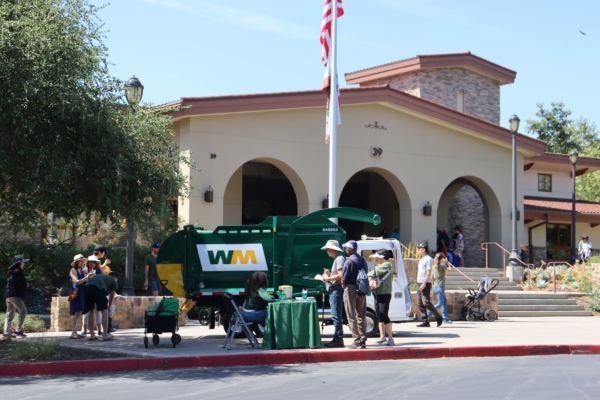
On April 18th, the city of Irvine hosted an Earth Day event at the Quail Mountain community center with the theme “Our Power, Our Planet.” The event featured booths, guided hikes, as well as workshops on solar projects, induction cooking, and composting.
As the 56th Earth Day on April 22nd approaches, Irvine had previously participated in the National Mayor’s Challenge for Water Conservation organized by the Wyland Foundation. They also held free compost distribution events, beginner seminars on electric cooking lifestyles, and used oil filter recycling and replacement activities. The organizers of the April 18th event included the Irvine City Government and several partner organizations such as Go Solar, Irvine Ranch Conservancy, OC Park, and Waste Management, Inc.
With nearly 30 years of composting experience, Lisa Ryder, an expert from WM, introduced several composting methods, stating that everyone can find a suitable way to compost whether or not they have a yard.
Ryder emphasized the importance of composting kitchen waste, as approximately 40% of food produced in the U.S. is ultimately discarded, including daily kitchen scraps and supermarket discards. Composting is a way of nature’s recycling process, transforming fallen leaves and branches into nutrient-rich soil for plants. Composting can help create a vibrant and beautiful garden, especially in Southern California where it is considered a drought-resistant tool.
Composting improves soil water retention by seven times when added to sandy soil, reducing the need for frequent watering. It can transform compacted soil into loamy soil, allowing water and nutrients to penetrate roots more easily. Composting also helps release nutrients, control plant diseases, and avoids the problem of overusing chemical fertilizers.
Ryder recommended using composting bins instead of open piles to prevent attracting animals like rodents, raccoons, or insects such as flies.
The compost “recipe” consists of two-thirds “browns” (dry, carbon-rich materials like dead leaves, straw, sawdust, and newspapers) combined with one-third “greens” (nitrogen-rich materials such as kitchen waste or yard clippings). Combining equal parts is also acceptable, but the excess moisture in green materials may cause odors due to lack of oxygen inside the compost.
Composting relies on the work of FBI – Fungi, Bacteria, and Invertebrates like earthworms, which thoroughly break down organic materials.
Keeping green materials covered or buried is crucial to deter pests. Maintaining moisture in the compost is essential for the FBI to thrive and work efficiently. Adding some “food” for them, like shredded newspaper, office paper (without coatings or plastic films), can enhance their efficiency. Eggshells are alkaline and attractive to red worms.
Regularly turning the compost speeds up the process, but a hands-off approach can take about a year for natural decomposition. Avoiding meat, oils, fast-food products, fried foods, pet waste, and diseased plants keeps the compost pure and healthy.
A couple at the event shared their experience of shredding materials before composting for easier breakdown, having practiced composting in their yard for years.
Ryder presented a Red Wiggler Composting Bin, a faster and odor-free composting method suitable for indoor or enclosed spaces like garages or patios. These bins, housing Eisenia fetida worms, can be maintained without emitting foul odors and are easily managed.
Red wigglers can be purchased at stores, initially recommended at a quantity of at least half a pound. Setting up the bin with materials like coir fiber, potting soil, and shredded newspaper at the bottom allows for food waste like fruit peels, grains, and crushed eggshells to be added. Red wigglers reproduce quickly and sustain themselves without additional purchases.
Ryder likened red wigglers to children, noting they dislike spicy foods like garlic and onions, as well as overly acidic foods that can harm their skin. Regular moisture maintenance, such as lightly spraying water to prevent them from drying out, is crucial for their survival.