
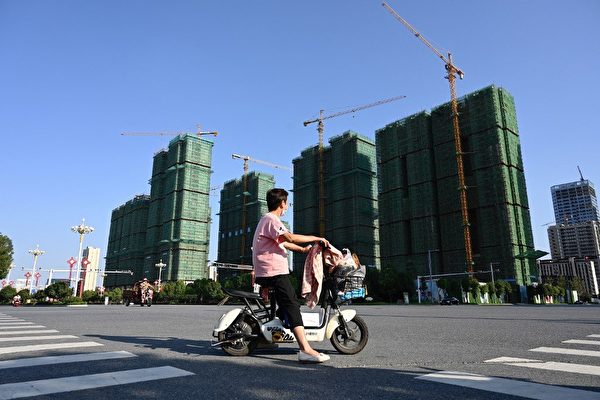
【Epoch Times News on April 20, 2026】Former Chinese real estate developer Pan Shiyi, who resides in New York, published a 5,000-word article titled “My Reflection” on his WeChat public account on April 16, which has now been blocked on the internet in mainland China.
In the article, Pan Shiyi focused on the high leverage and high expansion development model of Chinese real estate companies, bluntly stating that the development process of the Chinese real estate market is essentially a “Ponzi scheme” – meaning not making real profits, but constantly using new money to fill old holes. His final “reflection” stated that the most important thing to restore the Chinese real estate industry is to restore confidence in this industry from the outside.
This release of “My Reflection” marks Pan Shiyi’s first public statement after years of silence. The timing of the post coincided with the public trial of another former Chinese real estate tycoon, Xu Jiayin, arranged by the Chinese authorities shortly after. During the trial, Xu Jiayin admitted the “eight major crimes” listed by the CCP authorities.
Independent commentator Cai Shenkun, in an interview with NTD Television on April 17, expressed that the sudden “reflection” from “Old Pan” (Pan Shiyi) can be understood as “the voice of a survivor”; his statement also stands in stark contrast to Xu Jiayin’s case.
At 63 years old, Pan Shiyi has been active in the Chinese real estate industry since the 1980s. In 1995, he co-founded SOHO China with his wife, Zhang Xin. On September 7, 2022, SOHO China announced on the Hong Kong Stock Exchange that Pan Shiyi had resigned as chairman of the board, and Zhang Xin also stepped down as the company’s CEO. According to overseas media reports, as real estate policies in mainland China tightened and market conditions weakened, Pan Shiyi and his wife transferred most of their assets to New York, where they have successfully settled.
Cai Shenkun believes that in the article, Pan Shiyi ultimately places the blame on developers, directing his criticism towards them. Many people then raised another question: as a real estate developer himself, Pan Shiyi, who has now left China, can criticize developers openly, but why doesn’t he hold the CCP authorities accountable?
Cai Shenkun then analyzed the evolution of CCP real estate policies, reviewing the development process of the Chinese real estate industry.
He stated that in China, there is no private ownership of land; ordinary people, regardless of wealth, do not own land, as land belongs to the CCP government. Due to the lack of protection for private property by the CCP, for a long time, no one truly considered land as private property, and thus land in China remains extremely cheap. During the early stages of reform and opening up, foreign capital entered China, with many pieces of land even given away for free. Local governments, aiming to attract investment, handed over land that had been developed with infrastructure directly to investors.
Since the marketization of real estate in 1998, people started to see land resources as profitable. However, in this process, those who could obtain cheap or even free land were often privileged families. The earliest privileged families were known as the “princelings.” The princelings may have only acted as “white gloves,” helping developers acquire land. They didn’t need to spend a penny or much effort; a meeting, a meal, a phone call, or a note was enough to ensure cooperation from local governments in allocating land to relevant individuals.
In this process, some members of the CCP princelings tasted the benefits and gradually became involved themselves. However, rather than being directly involved, the princelings supported larger developers, holding shares or playing significant roles in them. This issue is not limited to a few families. Whether it’s Xu Jiayin or many other real estate companies, as long as someone has strong connections and backers, behind every large real estate developer, there are direct or indirect shares held by the privileged, involving substantial benefits.
In Cai Shenkun’s view, the interweaving of land ownership, rent-seeking power, and benefit transmission has laid the foundation for the current predicament of the Chinese real estate industry.
Therefore, he believes that the root cause of the current housing crisis in China and the enormous debt left by the real estate sector lies primarily with the government, rather than solely with real estate developers.
Cai Shenkun further analyzed that China attempted to replicate Hong Kong’s real estate development model, but it went astray from the start.
At that time, Hong Kong was a British colony, and it was impossible to establish true permanent property rights. Thus, Hong Kong adopted a leasehold land policy, where property rights lasted for decades. China could have instead extended land use rights long-term; however, the CCP chose the Hong Kong model. Including what later became known as “speculating on uncompleted properties” and mortgage systems, much was borrowed from the Hong Kong real estate model.
Moreover, while implementing the leasehold system, Hong Kong considered the housing needs of ordinary citizens. During the colonial era in Hong Kong, Cai Shenkun estimated that about 40% of Hong Kong residents could reside in government-provided affordable housing.
However, when the CCP began marketizing the real estate sector, they did not adequately consider the needs of ordinary people. Billions of people were thrust into the market, leading to severe market mismanagement and unidirectional property price growth. The increase in land fiscal revenue continuously drove up housing prices, forming a collusion between developers and the government that ultimately pushed the Chinese real estate sector into an unsustainable situation.
Over the past few decades, the Chinese real estate sector has seen rapid growth. The government has reaped benefits throughout this process far exceeding those of developers. Ultimately, the burdens and heavy debts have been passed on to ordinary homebuyers or every ordinary family.
On the one hand, local governments reduced land acquisition costs through administrative power, while on the other hand, they realized land liquidation through planning adjustments and used that as collateral to obtain bank loans, facilitating development rollovers. Through this cycle, land appreciation often reached tens to hundreds of times, resulting in significant windfalls for the government in land fiscal revenue.
This model kept strengthening. After tasting the sweet gains from land fiscal revenue, local governments further created a significant demand for home purchases through forced relocations and other methods. From a country’s long-term development perspective, whether it is high land prices or high housing prices, the harm is enormous. It not only impedes economic progress but also increases household burdens, leading to a decline in people’s well-being. Any fluctuation or downturn in the real estate market also triggers government nerves. In the past, whenever property prices dropped, the government implemented policies to sustain the bubble.
As a result, China’s real estate sector is now tightly intertwined with China’s economy, local governments, banks, and every Chinese family.
In this scenario, real estate developers compensated farmers very inadequately after large-scale relocations. Many compensations were insufficient to allow them to buy another house. This process led to numerous artificial group incidents, causing widespread petitions and protests across regions.
Cai Shenkun also quoted former Huayuan Real Estate Chairman Ren Zhiqiang’s remarks from early on, stating that when real estate development was happening, the government took the bulk of home sales revenue. Throughout the planning, land sale, construction, and sales process, while the houses themselves might not have been worth much, the government took the lion’s share with around 70% ending up in their pockets. There were nearly a hundred real estate-related taxes and fees.
Therefore, local governments have an inherent drive to inflate property prices. The higher house prices go, the higher land prices rise, increasing profits for local governments. Over the past few decades, the single-directional rise in real estate can be attributed significantly to the government itself.
Cai Shenkun bluntly states that in his article, Pan Shiyi only briefly touched upon the issues related to developers without delving into questioning the government, banks, land fiscal policies, and a series of other issues, thus failing to reflect on a policy level.
He expressed that Pan Shiyi’s recent lengthy article was not due to the Chinese real estate market stabilizing or the housing market settling down. It stems from the collapse of the logic that “real estate is always a pillar, prices always rise, and expansion equals success” in the past, leading to this introspection. However, this reflection, in reality, holds little significance for the current Chinese real estate market.
Cai Shenkun questioned whether Pan Shiyi truly intended to undertake a profound reflection on the Chinese real estate market this time, suggesting that his reflections are all on subjects that people have long been accustomed to.
As for Pan Shiyi’s reluctance to openly confront the CCP, Cai Shenkun believes that despite Pan Shiyi having transferred many assets and ensured his personal safety and that of his family members, and begun preparing to restart real estate endeavors in the United States, he still has billions of yuan of assets held by the CCP. Thus, any reflection by Pan Shiyi can only touch lightly upon issues, as he cannot risk addressing the substantial problems directly. If he were to confront them, the fate of his nearly 20 billion yuan in assets held in China remains uncertain. Cai Shenkun mentioned that in fact, the Beijing tax authorities have issued a fine notice to Pan Shiyi, claiming he owes taxes and demanding payment.
Moreover, many have speculated recently whether Pan Shiyi returned to China for the Qingming Festival to sweep his ancestors’ graves and quietly departed afterward. Cai Shenkun opined that it is unlikely Pan Shiyi returned because doing so at this time could lead the CCP to detain him in China to a large extent. Additionally, if he were retained in China, it’s unclear whether he’d be allowed to leave in the future.
Cai Shenkun speculated that Pan Shiyi would not take such a significant risk at this time to return for the sake of honoring his father or family members. More likely, he aimed to share some sentiments during the Qingming period and test the domestic public opinion environment, determining if he still has a voice under the high-pressure political atmosphere.
“Yet, we saw that following the publication of ‘My Reflection,’ it was quickly censored online. Furthermore, based on the current situation, Pan Shiyi’s speech has largely shut down any possibility for him to continue speaking out in the future,” Cai Shenkun added.
Reference: