
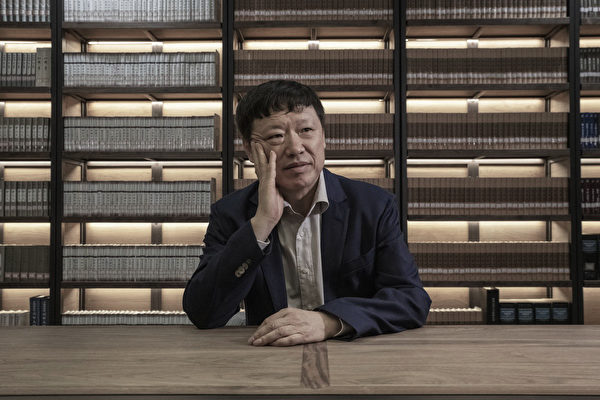
On December 25th, former chief editor of the Chinese Communist Party’s official media “Global Times”, Hu Xijin, published a lengthy post on Weibo revealing his painful experience in battling kidney disease over the past month. He disclosed that he had visited three hospitals, undergone kidney stone surgeries twice, and endured the excruciating pain of the lithotripter’s thousands of hits on his kidney.
Hu Xijin mentioned on Weibo, “Many people may have kidney stones or even kidney hydrops without knowing it. That was the case for me.”
According to Hu Xijin, in May of this year, he fell heavily down the stairs, resulting in six months of pain in the left back waist area. Missing the annual physical examination at his workplace, he discovered his kidney stones during a self-funded check-up at the end of October.
He said, “Until now, I can’t distinguish what is caused by the fall and what is due to kidney stones. When the pain is severe, I thought it was indigestion and that releasing gas could alleviate it. Sometimes, after releasing gas, the pain in the stomach continued, which puzzled me.”
The doctor at the first hospital Hu Xijin visited advised him to undergo surgery immediately because he already had “not light” kidney hydrops, which could lead to kidney damage if left untreated.
“I panicked. But the surgery required three hospital stays. The first stay involved placing a thin tube into the ureter to expand the urinary tract, two weeks later, the stones (lithotripsy) were removed, and about a month later, the tube was taken out during the third stay. Each hospital stay lasted only 1-2 days, and the surgery time was not long, but all required general anesthesia,” he said.
Hu Xijin hoped to undergo extracorporeal shock wave lithotripsy, but the stone’s location needed to be identified first. Eventually, he visited the second large hospital. After several examinations, he finally underwent lithotripsy using the hospital’s lithotripter.
He described the painful process of the first lithotripsy session, “I lay on the lithotripter bed, followed the doctor’s instructions to move my body several times for further calibration, then the lithotripsy began. It lasted for about forty to fifty minutes, feeling like a gun was shooting from the left side of my abdomen into my body, each strike causing pain, but it wasn’t as painful as a needle prick, so it was bearable. This repetitive striking process was repeated thousands of times.”
Hu Xijin also detailed postoperative reactions and experiences of illness, saying, “The lithotripsy process felt like a significant physical drain, but I was fine that day, with no fever. However, two days later, the pain started, making it difficult to sleep at night. In addition to direct pain, there was a very intense and uncomfortable urgent need to defecate. But when I sat on the toilet, nothing happened. Just having the urge to defecate without success lasted for hours, imagine how that feels! The first night, I took painkillers, and the second night, I couldn’t bear it and went to the emergency room. I struggled all night, had breakfast at a nearby shop in the hospital, and went straight to the outpatient clinic during the day.”
The doctor recommended a second extracorporeal lithotripsy session and introduced him to a third hospital, noting an outstanding lithotripsy specialist there.
So Hu Xijin went to the third hospital, and when describing the second lithotripsy process, he said, “Initially, a lithotripter was used to locate my stone, but it couldn’t be found. They switched to another lithotripter and told me they found it, ready for lithotripsy. It was on that new machine that I was struck 1563 times (this time I counted), feeling more painful than the first time.”
Hu Xijin also recounted in detail the postoperative pain after the second session. He said, “After the second lithotripsy, I had a fever and received intravenous fluids for two days. There was still pain and false urges to defecate, but it was much milder than the first time. A week later, I went for a follow-up, and four stones were shattered but blocking the urethra from passing out; they wanted to lithotripsy the largest one again for the third time, but couldn’t locate it, so they had to give up. The doctor advised me to drink more water and flush more. Another week later, three of the four stones had passed out, with one remaining. Another week passed, which is today, and old Hu went for another check-up, and the stones in the urethra had all passed out, the kidney hydrops had returned to a completely normal level, and my treatment was successfully completed.”
Looking back on the entire process, Hu Xijin expressed some fear. If he hadn’t gone for a check-up, he might have continued to endure the waist pain as indigestion, which could have been dangerous. He said, “When feeling unwell, it’s important to seek help. After more than a month of turmoil, numerous tests, I finally resolved the issue through extracorporeal shock wave lithotripsy.”
Last month on the 23rd, Hu Xijin revealed on Weibo that he had visited hospitals six times in the past two weeks. He also mentioned leaving CT scans taken in the hospital in a taxi and had to chase after it desperately, eventually catching up with the taxi at a turn. He said, “Today, coming out of the hospital, I felt like I had no strength left to walk.”
Due to Hu Xijin’s frequent endorsement for the authorities and being “favorably disposed to both sides,” he lost favor across all sides.
Regarding Hu Xijin’s kidney disease treatment this time, many netizens’ comments were mocking: “Hope the stones work harder,” “Won’t even look at kidney cancer,” “Unsubscribe if not healed,” “Darn it, progress is too slow!!”, “Looking forward to the disease overcoming old Hu,” “Old Hu should pay more attention to his kidneys, or how else will he be able to party at nightclubs?”
According to publicly available information, Hu Xijin was born in Beijing in 1960, is of Ru Zhou, Henan descent, graduated from the International Relations College of the People’s Liberation Army, joined the Communist Party in 1986, became chief editor of the Global Times in 2005, and publicly announced his retirement as chief editor in 2021. As an early advocate of the aggressive wolf warrior-style diplomacy of the Chinese Communist Party, his retirement was seen by the outside world as a signal from Beijing’s leaders to gradually soften the rhetoric of the “wolf warriors.”
In October 2020, Apple Daily disclosed that Hu Xijin’s son had immigrated to Canada. In December of the same year, Hu Xijin was reported by the Deputy Chief Editor of the Global Times, Duan Jingtao, accusing him of having “inappropriate relationships with two female subordinates and having each had a child with him,” all of which Hu Xijin denied.
On May 5, 2022, living in the Chaoyang District of Beijing, Hu Xijin expressed his dissatisfaction with the ongoing lockdown measures by the authorities. Hours later, Xi Jinping stated during the Politburo Standing Committee meeting that the “zero-Covid” policy would continue. Hu Xijin’s post was soon deleted.
On July 23, 2024, Hu Xijin posted an article on social media titled “Decide to Cancel the Dominance of Public Ownership,” which was quickly removed, and a few days later, all of Hu Xijin’s social media accounts stopped updating. On October 31, Hu Xijin posted his first Weibo in three months, showing that his account had been reinstated.