
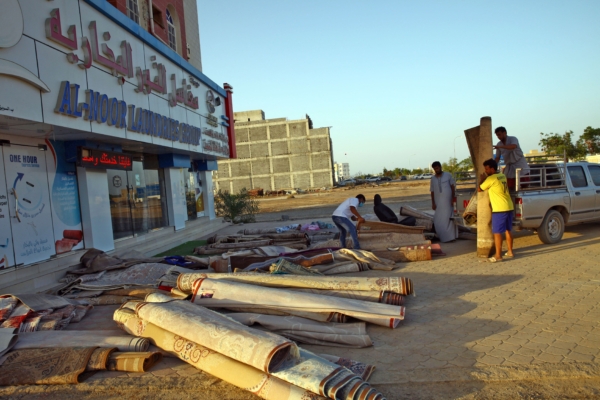
Every year, a large amount of carpets and other related textile waste is generated worldwide, causing severe environmental damage whether through incineration or burial. Scientists are currently researching the incorporation of fibers from carpets into concrete to enhance its toughness, turning waste into treasure.
In Europe alone, approximately 1.6 million tons of carpet waste are produced annually, with 60% going to landfills and the remainder to incineration plants. In the United States, the disposal of carpet waste accounts for 3.5% of the total waste management volume. Carpet fibers release toxic substances during the incineration and burial processes, significantly impacting environmental safety.
The reuse of fibers from carpets has always been a topic of interest among scientists. In September of this year, a paper was published in the journal “Construction and Building Materials,” showcasing how a team from RMIT University in Australia incorporated these fibers into concrete to enhance its strength and toughness. The research findings were announced on November 12 at the university’s news agency.
The research team from RMIT University collaborated with the Textile Recycling Association of Australia, the Victoria State Council, and others to utilize fibers from discarded carpets to improve the performance of concrete, reducing shrinkage cracks by 30% during casting.
Researchers added commonly used nylon, polypropylene (PP), polyester, and polytrimethylene terephthalate (PTT) fibers from carpets into concrete, casting them into cylindrical and square columns. They conducted compression, bending, splitting tensile, and dry shrinkage tests on the samples to observe the results and further optimize the improved concrete.
Results showed that when the volume ratio of hydrophilic PTT fibers, hydrophobic polyester, and PP fibers increased from 0.3% to 0.5%, the workability of concrete declined significantly.
Moreover, the team observed that as the drying time of concrete with the four carpet fibers increased (from 7 days to 90 days), the compressive strength slightly improved. However, increasing the fiber usage ratio from 0.3% to 0.5% led to reduced compressive strength but increased flexural and tensile strength of concrete. Concrete with thicker PTT and fibers exhibited decreased tensile strength due to the larger amount of fibers used.
Furthermore, all four types of fibers added to concrete reduced its shrinkage, aiding in minimizing internal microcracks during casting and drying. These fibers also lowered the porosity of concrete, with overall porosity decreasing as curing time lengthened. However, coarser fibers could lead to increased porosity, resulting in smaller cracks in the concrete.
The team identified the optimal ratios for adding nylon, polyester, and PTT carpet fibers to concrete. When the fiber length was 12mm, and the volume ratio was 0.3%, concrete exhibited the best performance. For PP fibers, the optimal volume ratio was 0.5% to achieve the best performance.
The fibers in concrete acted as bridges, bolstering the mechanical performance of concrete against crack formation. However, an excessive amount of fibers could cause fiber clumping, increasing cracks in the concrete and reducing its resistance to shrinkage and mechanical properties.
The researchers emphasized that the purpose of this study is to inform about the effective proportions of fibers that can enhance the strength of concrete. Future research will focus on increasing the performance of concrete by incorporating more fibers to broaden the application range of waste fibers, reducing the fate of waste carpets being incinerated or buried.
Dr. Chamila Gunasekara, Chief Researcher at RMIT University, mentioned that during the casting process, concrete is prone to volume shrinkage upon drying, leading to the formation of fine cracks that can result in premature corrosion, endangering the structural integrity and safety. “We found that these waste carpet fibers can increase the tensile strength of concrete by 40% and reduce the occurrence of excessive shrinkage and cracks,” she stated.
Dr. Shadi Houshyar, a textile and material scientist at the university, added, “Currently, up to 70% of textile waste can be transformed into usable fibers within concrete.”