
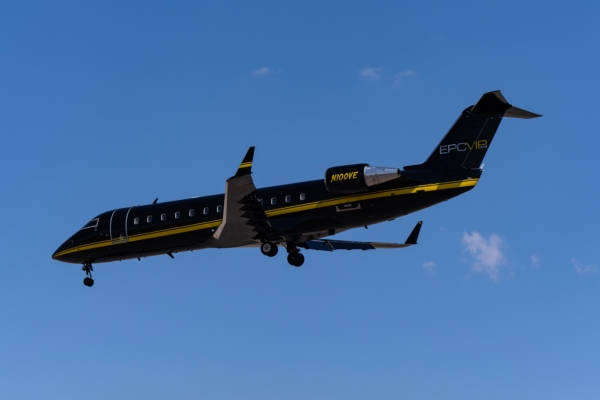
Amid the massive winter storm named “Winter Storm Fern” sweeping across the United States, a private business jet carrying 8 people crashed while attempting to take off from Bangor International Airport in Maine on Sunday evening, January 25th. The Federal Aviation Administration (FAA) confirmed that the accident resulted in the death of 7 people, with only one crew member surviving but in critical condition.
The aircraft involved was a twin-engine turbofan jet known as the Bombardier Challenger 600, which made the takeoff attempt around 7:45 PM on Sunday.
According to recordings obtained by the Associated Press, just about 45 seconds after being cleared for takeoff, staff at the tower frantically reported: “The plane flipped. We have a plane flipped.”
A government official revealed to Reuters that a violent fire broke out immediately after the plane crashed. Despite the first responders arriving at the scene in less than a minute, the large fire ultimately led to significant casualties among those onboard.
The aircraft was registered under a company based in Houston, Texas, with the same address as the Arnold & Itkin Trial Lawyers personal injury law firm. FAA records indicate that the plane was put into service in April 2020.
At the time of the accident, the New England region was under a winter storm warning. Jose Saavedra, the manager of Bangor Airport, mentioned that snow was continuing to fall at the airport during that time.
The National Weather Service reported that the airport received nearly 10 inches (about 25 cm) of snow on that day. Although the snow had just started when the plane crashed, visibility was already affected.
Due to the double impact of the accident and severe weather conditions, Bangor Airport has now been completely closed and is expected to remain so at least until Wednesday noon, January 28th.
This tragic crash is just one of the cases of transportation disruptions caused by Winter Storm Fern across the United States. According to data from flight tracking website FlightAware, about 12,000 flights were canceled and nearly 20,000 were delayed nationwide on Sunday.
From New York and New Jersey to Oklahoma, major air hubs in the United States have all been affected. The Department of Transportation has once again reminded passengers that under the new regulations, if a flight is canceled due to weather and passengers refuse to rebook, the airline must issue a refund automatically.
Currently, the National Transportation Safety Board (NTSB) has dispatched investigators to look into the crash. While initial findings suggest that the plane lost control during takeoff, the exact cause of the crash is still pending further analysis by experts on the ground.