
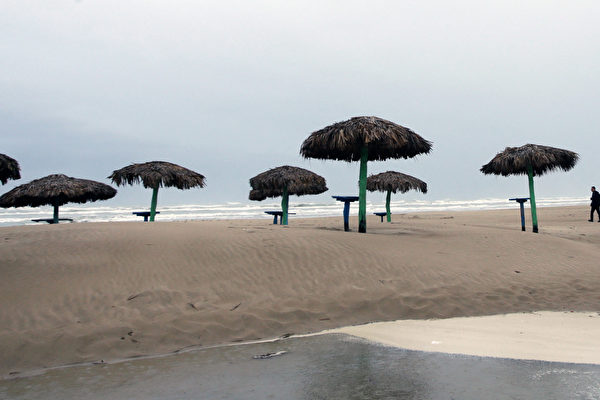
Thursday, June 20th – The first tropical storm of the Atlantic hurricane season, “Alberto,” struck northeastern Mexico, claiming the lives of at least three people. However, Mexican authorities stated that the storm brought welcome rainfall that is expected to alleviate the country’s severe drought.
Starting on Wednesday, June 19th, the first named tropical storm of the season, “Alberto,” hit the northeastern region of Mexico.
The Minister of Hydro Resources of Tamaulipas state, Raúl Quiroga Álvarez, mentioned during a press conference on that day that, “From the wind speed perspective, Alberto does not pose a risk… This is what we have been expecting in Tamaulipas for the past eight years (a storm that only brings rain).”
Mexico has been facing severe drought in most areas, with the northern region being particularly affected. Quiroga highlighted the water reservoir in the state being insufficient and Mexico owing a significant amount of water to the United States due to ongoing drought.
In the nearby Nuevo Leon state, the local civil defense department reported three deaths related to the storm “Alberto.” Among them, a man in the capital city of Monterrey drowned in the La Silla River, while two minors died from electric shocks in the city of Allende.
The Governor of Nuevo Leon, Samuel García, announced that the subway and public transportation services in Monterrey would be suspended from Wednesday night until Thursday afternoon until Alberto passes.
According to the National Hurricane Center (NHC) of the United States, as of Wednesday evening, Alberto was located approximately 135 miles east of Tampico, Mexico, and about 320 miles southeast of Brownsville, Texas, with maximum sustained winds of 50 miles per hour. The storm was moving westward at a speed of 9 miles per hour.
Alberto also brought heavy rain and flooding to the coastal areas of Texas.
The National Weather Service warned on Wednesday that flash flooding could occur in southern coastal regions of Texas and the possibility of tornadoes or waterspouts.
In Mexico, residents expressed hope that Alberto would bring rainfall to alleviate the severe drought in the region.
Blanca Coronel Moral, a resident of Tampico, ventured to the city’s beach on Wednesday, waiting for Alberto to arrive.
“We have been eagerly awaiting the rain. Thank God, let’s hope it’s just water we get (from the storm),” Coronel said. “The lagoon that supplies us with drinking water has completely dried up.”
To prevent flooding, authorities in Tamaulipas state have ordered schools to be closed for the remainder of the week.
According to the NHC, some areas along the Texas coast could receive 5-10 inches of rainfall, with localized higher amounts possible.
Rainfall amounts in some Mexican regions could reach up to 20 inches, leading to mudslides and flash floods, particularly in Tamaulipas, Coahuila, and Nuevo Leon states.
Alberto brought heavy showers on both sides of the US-Mexico border, extending to most areas of the southern coastal region of Texas and continuing south to Veracruz state in Mexico.
It is expected that Alberto will rapidly weaken on land and dissipate by Thursday.
The Atlantic hurricane season lasts from June 1st to November 30th, with most storm activity typically occurring from mid-August to mid-October.
Once a tropical cyclone’s maximum wind speed exceeds 39 miles per hour, it is classified more specifically as a tropical storm. When sustained winds reach 74 miles per hour or higher, it becomes a hurricane.