
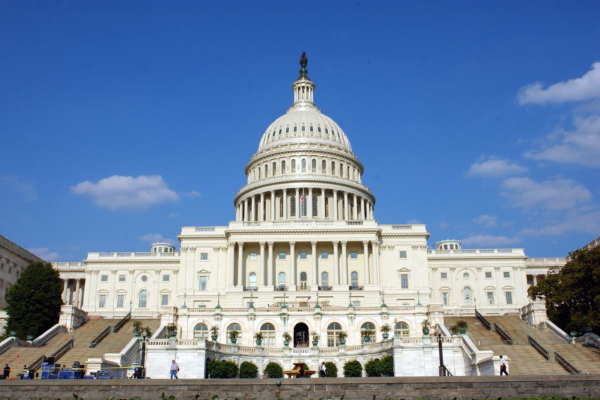
Recently, the US Congress has introduced a reporting mechanism aimed at the academic community, encouraging the disclosure of research cooperation risks related to the Chinese Communist Party (CCP). Against the backdrop of escalating US-China tech competition, this move is seen as an important step to enhance research security. Scholars analyze that this is both a response to existing security vulnerabilities and a reflection of the tightening institutional dynamics in US-China tech competition.
The House Select Committee on the CCP officially launched a “whistleblower” reporting mechanism on April 7 on its website and the social media platform X, urging American university professors, scholars, researchers, and research security professionals to report the influence and infiltration activities of the CCP within the US academic research system.
This reporting mechanism specifically targets three major “gray areas” in academic cooperation: concealing foreign funding, conflicts of interest, and hidden dealings with entities linked to the CCP’s military background.
The committee not only set up an exclusive encrypted channel but also publicly advised whistleblowers to take “physical isolation” measures, such as avoiding the use of campus networks and office equipment, to guard against potential retaliation risks.
At the same time, the committee addressed academia, researchers, and research security professionals on the X platform, saying, “We hope to hear your opinions.”
This move by the House Select Committee on the CCP is seen as a continuation of the US’s ongoing efforts to tighten research security policies in recent years. Xie Peixue, deputy researcher at the Taiwan Institute for National Defense Security and Decision Support Research, told Dajiyuan that this is a product of structural great power competition and a result of existing specific security vulnerabilities.
Xie pointed out that the CCP has long promoted the “civil-military fusion” national strategy, systematically transforming US basic research achievements into China’s industry and military capabilities through programs like the “Thousand Talents Plan.” “The US Department of Justice has previously taken action against the CCP, providing many cases,” he said.
Researcher Wang Xiaowen from the Taiwan Institute for National Defense and Security told Dajiyuan that after the 2008 financial crisis, US universities expanded cooperation with China under financial pressure. China deepened its involvement through financial and talent exchanges, “objectively increasing the risks of technology outflow.”
Before the introduction of this reporting mechanism, national security incidents within US universities had already garnered widespread attention. In 2025, the University of Michigan witnessed several cases, including a postdoctoral researcher charged with smuggling potential agricultural bioterror weapons and a Chinese student arrested for filming military facilities. The university’s statement on these incidents being “not isolated” during a congressional hearing undoubtedly provided evidence for the implementation of this reporting mechanism.
As early as 2021, the Washington Freedom Lighthouse reported that Beijing University of Aeronautics and Astronautics (BUAA), which was blacklisted by the US government for export control, had established cooperative relationships with five US institutions including the University of Michigan.
BUAA is one of China’s most important “seven sons of national defense research,” with 60% of its research budget allocated to defense activities. After the exposure of these incidents, the relevant cooperation records were deleted.
Opaque cooperation between US universities and Chinese military-related institutions has long been a subject of ongoing concern in the US Congress.
In March 2026, the House Select Committee on the CCP Chair John Moolenaar wrote to the US National Science Foundation (NSF), requesting a suspension of funding to the University of Washington and Texas A&M University and an investigation into the research security practices of both universities.
Moolenaar listed 12 high-risk cooperation cases in his letter, including joint research with Chinese military medical institutions and National Defense University.
Regarding these cases, Wang Xiaowen directly pointed out the US’s “awakening moment”: although the US was aware of the CCP’s technology theft, based on its confidence in its research capabilities, it did not consider it a threat. “However, when the CCP deliberately showcased weapons in areas such as AI, unmanned vehicles, aerospace, and underwater, all clearly prioritized for military applications, the US realized it was under threat from the CCP and swiftly closed the door to cooperation.”
In addition to the reporting mechanism, the US is also advancing on multiple fronts at the legislative level. In February 2026, the US government utilized legal provisions to mandate universities to disclose foreign funding background of $250,000 or more to enhance national security reviews.
According to data from the US Department of Education, in 2025, the total amount of foreign funding disclosed by universities reached $5.2 billion, with China being one of the main sources. Previous investigations found that a significant amount of funds were not reported as required.
The DETERRENT Act passed by the House in 2023 further tightened reporting requirements, reducing the reporting threshold for funds from specific countries to zero and setting stricter penalties.
Xie Peixue believes that the US’s “zero-tolerance” policy reflects the shifting frontlines in the US-China tech war.
He analyzed, “Traditional export controls can only intercept physical products, but at the early stages of AI and semiconductor R&D, the real assets are ‘early innovative concepts.’ Therefore, regulatory defenses must extend from factory floors to university labs and even to professors’ desks.”
However, the reporting mechanism may also bring negative effects. Xie Peixue believes that encouraging internal reporting or eroding campus trust may lead to increased scrutiny, especially for Chinese-American scholars, potentially affecting normal academic cooperation. He noted that such trends had emerged even during the Cold War era.
Wang Xiaowen anticipates a significant contraction in US-China research exchanges at the personnel and financial levels, while not ruling out Beijing taking reciprocal measures. She believes that the trend of technological divergence will deepen further.
In response to criticism from the Chinese Ministry of Foreign Affairs calling this move a “suppression and containment of China,” Xie Peixue characterized this as a typical manifestation of a “security dilemma.” He said, from restrictions on advanced chip manufacturing equipment to now extending to basic research fields, “the CCP’s strategic judgment is undoubtedly that the US intends to cut off its lifeline at all innovation sources.”
Both experts agree that regardless of whether this mechanism can effectively curb technology outflow in the short term, it reflects a fundamental loss of strategic trust between China and the US. Xie Peixue pointed out that both sides now interpret each other’s policies based on the mindset of “there will definitely be a future war.” This is the deepest signal behind the ongoing struggle for research security.