
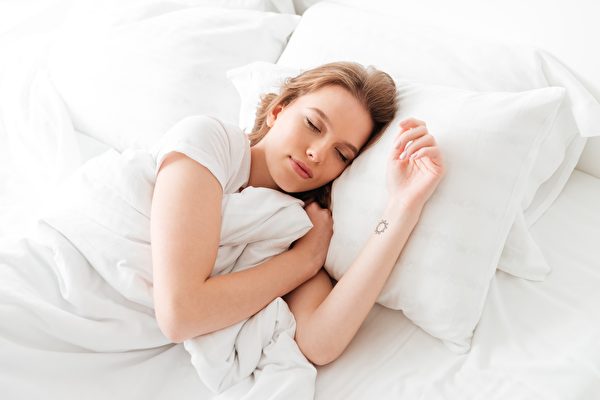
“People often say, ‘I need to get a beauty sleep’ – meaning to go to bed early before midnight, as it is believed to be beneficial for appearance and health. In fact, some doctors suggest that ‘beauty sleep’ does have its effects, helping with skincare and making one look radiant.
According to a report from the Huffington Post, Dr. Clarisse Glen, a pulmonary physician at Sacramento Medical Center in California, diagnoses and treats the root causes of sleep discomfort and disorders, and provides advice to patients on the relationship between beauty factors and good sleep.
Dr. Glen points out that ‘beauty sleep’ is not a myth. Besides positively impacting people’s emotions and attention span, consistent quality sleep can also enhance one’s appearance.
Dr. Hannah Kopelman, a dermatologist practicing in New York, says that getting a good night’s sleep is ‘one of the simplest but most effective ways to improve skin appearance.’
She states, ‘I always tell my patients, you can spend a lot of money on skincare, but if you’re not getting enough quality sleep, you’ll have a hard time seeing all the benefits.’
Dr. Kopelman explains that during sleep, especially skin enters a repair mode. It’s because during this time, ‘our bodies produce fewer stress hormones and more growth and repair hormones.’
Another dermatologist, Dr. Hadley King, practicing in New York, mentions that our bodies balance moisture during sleep, aiding in skin cell regeneration, repairing damage caused by environmental stress, and producing collagen – crucial for reducing wrinkles and maintaining youthful skin.
Furthermore, Dr. Glen states that quality sleep can also strengthen hair, making one feel more beautiful. A study from 2023 revealed that sleeping patterns and circadian rhythms affect hair growth cycles, which in turn impact hair loss.
As for the duration of ‘beauty sleep,’ Dr. Alain Michon, a dermatologist practicing in Ottawa, states that ideally, people should aim for 7 to 9 hours of sleep each night to allow the skin time to repair and renew.
If that’s not feasible, Dr. Marianna Blyumin-Karasik, a dermatologist in Florida, suggests that ‘several nights of 8 hours of sleep a week can rejuvenate the body, mind, and skin.’
She recommends spending at least 30 minutes in a comfortable, cool, dark, and tech-free environment before bedtime to achieve rest with beauty-enhancing effects. Writing a gratitude journal or meditating before sleep can relieve stress and promote a peaceful slumber.
Dr. Michon advises sticking to a consistent bedtime, allowing the body to maximize its recovery process during sleep.
Dr. Glen emphasizes that ‘beauty sleep’ doesn’t have to be complicated. Prioritize getting 7 to 8 hours of sleep each night, establish good skincare and bedtime routines, so you wake up radiant in the morning.
Adequate rest is a crucial aspect of ‘beauty sleep.’ There are some simple supplementary methods that can assist in making the most of sleep time.
Dr. Kopelman recommends using a silk pillowcase for significant benefits to your skin and hair. ‘Silk minimizes friction, so waking up with less facial wrinkles and prevents hair breakage and tangling.’
She also suggests using high-quality bedsheets, as they aid in regulating temperature and reducing sweating, which can clog pores and lead to acne.
She advocates for using an eye mask during sleep as she believes it promotes better blood flow around the eyes, aiding faster sleep onset and reducing puffiness and dark circles.
Dr. Michon suggests using a humidifier to prevent overnight air from drying out the skin.
Dr. Glen adds that sleeping posture can affect morning appearance. She recommends sleeping on your back to reduce sleep-induced wrinkles, as it avoids direct contact between the face and the pillow.
She suggests ‘using an extra pillow to elevate yourself, reducing fluid accumulation on the face, which can cause morning eye puffiness.’
Conversely, poor sleep can lead to wrinkling, fine lines, dark circles, red or swollen eyes, pale skin, sagging eyelids and mouth corners, and a sad appearance. Inadequate sleep can increase skin infections and accelerate skin aging.
These doctors point out that many of these issues are attributed to cortisol. Lack of sleep increases cortisol levels, breaking down collagen, leading to more wrinkles and sagging skin. Cortisol also generates stress-induced acne, increases sebum production, making hair greasy, and potentially causing hair loss.
It’s important to note that the effects of poor sleep manifest quickly. Dr. Kopelman states that several nights of poor sleep can have long-term or permanent effects on the skin, including ‘weakening skin elasticity, reducing its self-repair capabilities, and accelerating signs of aging.'”