
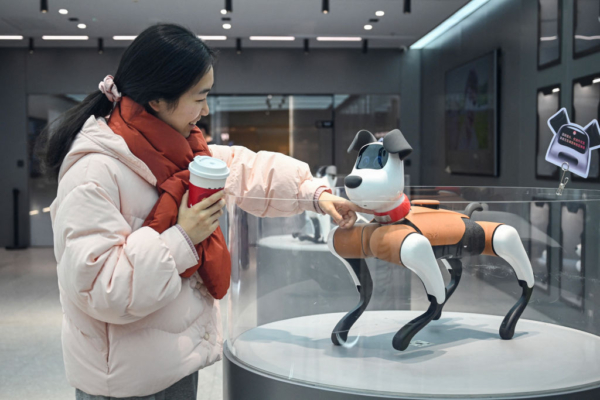
Recently, the terms “emotional consumption” or “emotion-driven consumption” have been dominating the headlines in mainland China media reports. The Chinese Communist Party (CCP) is vigorously promoting “emotional consumption” as the “new engine” of the economy in 2026, even enshrining it in government reports. How did this wave of operation come about? Why is the CCP embracing “emotional consumption” at this time?
Despite emotional consumption being a global trend, the expansion rate in the Chinese market far exceeds the global average. From 2022 to 2025, the domestic emotional consumption market maintained an average annual growth rate of 18.63%.
Research indicates that in China, “emotional consumption” has become highly normalized and frequent, with “mood healing” (51.2%), “stress relief” (50.0%), and “self-rewarding” (48.8%) being the core driving factors.
What sets Chinese “emotional consumption” apart is that it has achieved counter-trend growth amid a slowdown in consumer spending. The Chinese trendy toy market surged from 6.3 billion yuan in 2015 to nearly 70 billion yuan in 2024, with categories like blind boxes experiencing explosive annual compound growth rates exceeding 100%.
In contrast, the experiential economy in the United States has grown steadily, but emotional consumption (such as travel, entertainment) runs parallel to major expenditures (such as automobiles, housing).
Professor Wanjun Qiu from Northeastern University in Boston, USA, told media outlets that emotional consumption is prevalent worldwide, citing examples like Korea’s idol economy, Japan’s otaku culture, and many Americans using consumption to cope with psychological pressures. However, the uniqueness of China lies in its occurrence against a backdrop of economic decline, diminishing expected incomes, labor market volatility, high employment pressure, and negative real estate assets, all while emotional consumption surges, encouraged by policy guidance.
He questioned whether this could be considered profiting from suffering. While there is voluntary demand involved, fundamentally, structural issues such as employment and housing problems should be addressed instead of relying on emotional consumption to divert attention from the real issues.
China specialist Wang He noted that in Western countries, economic development and the emotional industry run in parallel, whereas China’s growth in emotional industries against economic decline indicates that the psychological motivations for emotional consumption in China far surpass those in the West, contradicting the CCP’s “bright economic theory.”
He highlighted that emotional needs are intrinsic to human nature, and with China’s per capita GDP exceeding 13 trillion US dollars, according to international norms, there should be a significant surge in cultural product consumption. However, many normal outlets have been suppressed by the CCP, such as disappearing talent shows like “The Voice of China” and numerous shutdowns of current talk shows.
“Wang He mentioned that the CCP’s marketized emotional management and control stem from fear of losing control. In such a landscape, the CCP avoids opening up to freedom of press, leading to the emergence of ’emotional consumption’ as a distorted cultural industry mechanism inherent to its nature. Given the CCP’s fickle policies, any industry could potentially face setbacks in the future, leaving uncertain prospects for the emotional consumption industry.
In the CCP’s official media reports on the “emotional economy,” scholars and commentators also warned that emotional value is challenging to consistently measure, leaving room for price distortions, impulsive consumption, and excessive speculation.
In reality, the CCP is endeavoring to industrialize emotional economy, viewing it as a “new growth point.” Last November, six CCP departments issued a document aiming to form three trillion-yuan consumption sectors and ten billion-yuan consumption hotspots by 2027, with emotional consumption being one of the ten billion-yuan hotspots. They actively promote the development of pet peripherals, animation, trendy clothing, and playful consumer products.
Beijing is eyeing this trend not just for its surface appeal but also for deeper strategic reasons. Interest-driven consumption implies less dependence on debt-driven real estate wealth and aligns with current policies to support domestic demand, encourage local brands, develop the service industry, and cultivate new consumption categories without relying on traditional real estate stimulus policies.
Professor Xie Tian from the University of South Carolina’s Darla Moore School of Business mentioned that in China, amid economic decline, the CCP is encouraging what it calls interest-driven emotional consumption. In reality, emotional consumption doesn’t require government guidance; if people are affluent enough, have disposable income and time, they will naturally pursue various interests and hobbies.
He explained that in economics, there are two types of incomes: Disposable income (after-tax income) and Discretionary income (the money left after paying for basic needs like food, housing, and transportation). Discretionary income is typically allocated towards various interests and hobbies in normal countries.
Xie Tian stated that the CCP’s current promotion of emotional consumption effectively encourages people to spend their Discretionary income. However, once taxes, housing, and food expenses are settled in China, there is often little money left over. Despite the CCP’s exhortations, this may provide a temporary stimulus but is not sustainable.
He emphasized that since the outbreak of the pandemic, emotional consumption has surged in China, causing despair among the youth. The CCP is making them earn money through suffering, which is absurd. To truly address people’s economic well-being, the key lies in increasing people’s income, like reducing taxes, redistributing wealth from CCP elites, privatizing land, and raising people’s incomes to drive consumption.
“So, the CCP doesn’t understand economics, doesn’t comprehend consumption, and most critically, doesn’t grasp the biggest issue – distributing China’s wealth,” Xie Tian remarked.
Professor Wanjun Qiu noted that emotional consumption, characterized by low unit prices, high frequency, strong volatility, and trendiness, has growth constraints in the long run. Emotional consumption cannot replace major expenditures like real estate, as their economic structures are fundamentally different. The supply chain for emotional consumption is short and doesn’t have significant leverage effects on the macro economy compared to real estate, steel, cement, and finance supply chains, which contribute substantially to China’s GDP.
Experts pointed out that emotional consumption does not address the psychological issues facing Chinese youth and may actually deflect from resolving true issues.
Qiu Wanjun stated that to alleviate emotional stress, societal functions play a crucial role, and relying on consumption is akin to seeking relief through drugs, tobacco, or marijuana to numb oneself. As the effects diminish, there is a need for higher doses or stronger stimuli, leading to dependency and financial pressures, exacerbating the overall issue.
He mentioned that a common characteristic of emotional consumption is diverting attention to satisfy short-term sensory needs, which can be harmful for long-term and profound contemplation. The promotion of this culture in Beijing could inadvertently sidestep addressing the actual problems.
Xie Tian highlighted that the CCP encourages emotional consumption among the youth, diverting them into decadence and hedonistic pursuits, which neither addresses their psychological issues nor leaves time to understand how a normal society functions. The CCP is truly persecuting this generation of Chinese youth.
According to the principles of Dr. Sun Yat-sen, politics concern everyone, focusing on survival as the most critical issue. Nowadays, the youth in China are experiencing the most basic survival pressures. The strategy of emotional consumption won’t be effective; the younger generation tacitly awaits the downfall of the CCP, as the CCP constantly fears a youth rebellion.
“I believe Chinese youth will find ways to express themselves through various channels, whether through peaceful movements, circumventing censorship, or satirizing the CCP using historical cues,” he remarked. He added that the day China moves towards freedom may swiftly arrive in an unexpected manner.