
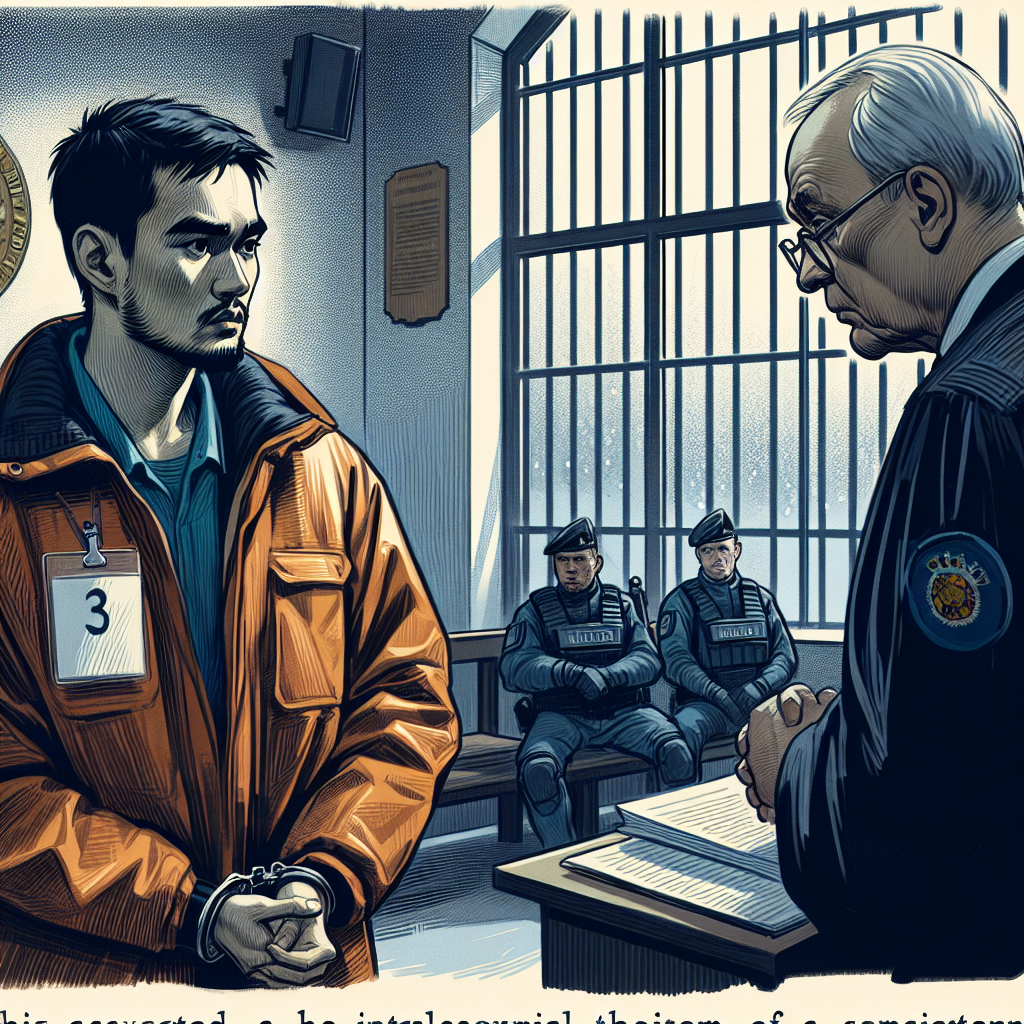
On Monday, December 9th, a court in the Netherlands extended the detention period of a former Russian employee of semiconductor equipment manufacturer ASML. The employee is suspected of stealing intellectual property and selling it to buyers in Russia, in violation of European sanctions.
The suspect, German Aksenov, aged 43, previously worked at ASML’s subsidiary Mapper and chip technology company NXP. He is accused of stealing microchip designs, microchip equipment, and manuals with potential military applications from ASML, Mapper, NXP, and Delft University of Technology, through his work access to these manuals.
During the preliminary hearing on Monday, prosecutors stated that Aksenov brought USB drives containing information to Moscow and handed them over to Russian state-owned enterprises in exchange for cash. Russia’s intention in acquiring these trade secrets was to establish a microchip factory.
Aksenov was arrested on August 28th and has been in custody since then, denying all allegations against him. Prosecutors have requested an extension of Aksenov’s detention until the next hearing in February next year, citing concerns that he may flee and continue leaking secrets.
Prosecutors argued that the facts of the case warrant “a significant period of imprisonment.”
Before the hearing, a spokesperson for ASML acknowledged the criminal case, stating, “According to our policy, we have also filed an appeal.” A spokesperson for NXP mentioned that the company is cooperating with the authorities and indicated that the materials allegedly taken were not highly sensitive.
Court documents revealed that Aksenov sold the documents for at least 43,900 euros ($46,440), knowing that the money was from criminal activities and concealing the source of the funds.
The document stated, “The defendant has a habit of money laundering.”
In 2019, ASML acquired the bankrupt Dutch company Mapper for 75 million euros. The acquisition, as detailed in the 2024 book “Focus on ASML’s Way,” allayed concerns from the Dutch government and the US military about Mapper being acquired by Russian or Chinese buyers.
Mapper had planned to manufacture a similar lithography product to ASML’s but using e-beam instead of light to etch tiny circuits, a technology known as e-beam lithography. Ultimately, the product was not successful, leading ASML to integrate 100 engineers from Mapper into its smaller metrology or chip measurement business.
ASML is a significant player in the high-end semiconductor equipment manufacturing industry globally and a focal point in the US-China chip war. Lithography technology is crucial for chip manufacturers to produce the most advanced microchips. Currently, ASML is the only company globally capable of manufacturing extreme ultraviolet (EUV) lithography machines. Under US pressure, ASML has not been authorized to sell the most advanced EUV lithography machines to China.
In February last year, Dutch tech company ASML Holding NV announced that a former Chinese employee was suspected of stealing company data. Bloomberg reported that US investigators are looking into potential ties between the former employee and the Chinese government, while ASML is conducting its own similar investigation.
According to research firm Gartner Inc, ASML is crucial to the chip industry. As of 2021, ASML controlled over 90% of the global lithography equipment market worth $17.1 billion. The company nearly monopolizes the most advanced lithography systems, making ASML a key player in the chip industry and a target for Chinese espionage activities.