
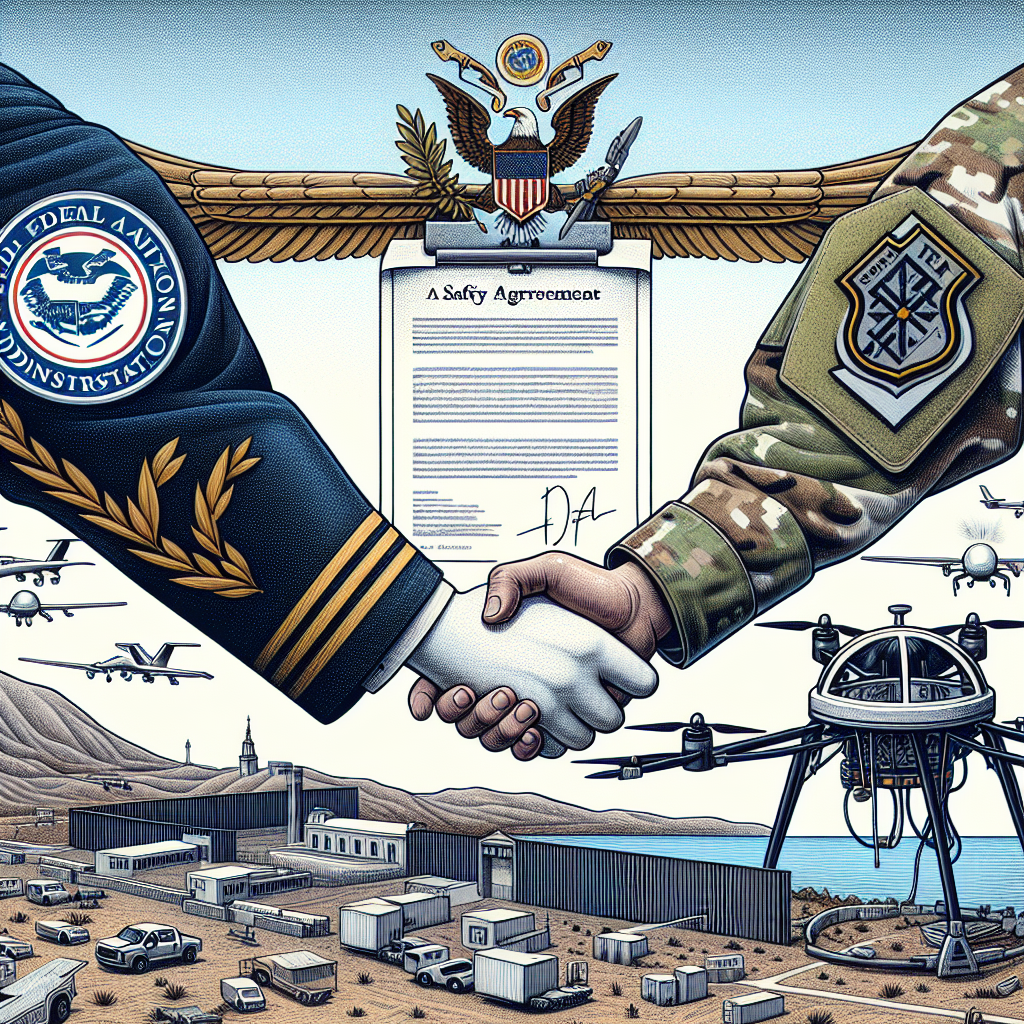
On Friday, April 10th, the Federal Aviation Administration (FAA) and the Pentagon officially announced that they have reached a crucial safety agreement allowing the military to deploy anti-drone laser systems along the southern border of the United States with Mexico. The agreement aims to address the increasing threat posed by drones while ensuring the safety of civilian aviation systems.
Last month, both parties completed safety assessments and demonstrations at the White Sands Missile Range in New Mexico, confirming the system’s safety before reaching this decision.
FAA Administrator Bryan Bedford stated in a press release, “FAA’s primary mission is to protect the safety of the American aviation public, and we value our cooperation with the Department of Defense in this regard. Following a comprehensive, data-driven safety risk assessment, we have determined that these systems will not pose higher risks for the public.”
Major General Matt Ross of the Army expressed that through collaboration with interagency partners like the FAA, the Pentagon has demonstrated that “these state-of-the-art capabilities are safe, effective, and ready to protect all flying passengers in our national airspace from the threats of illegal drone activities.”
The agreement specifies safety measures to be followed when activating the laser systems to protect incoming and outgoing passengers.
The signing of this agreement is seen as a significant advancement in interagency cooperation. In February of this year, El Paso International Airport in Texas experienced airspace disruptions due to the activation of a laser system, leading to flight delays and confusion.
In late February, a military laser system mistakenly shot down a drone belonging to the US Customs and Border Protection near Fort Hancock, Texas while on a mission.
The new agreement aims to prevent similar events from causing airport closures in the future.
According to official data, the security situation along the US border is severe. Officials informed Congress last summer that in the second half of 2024 alone, over 27,000 drone detections were made within 1,600 feet (500 meters) of the southern border. These drones are often used by Mexican cartels for drug trafficking or surveillance purposes.
To enhance response capabilities, the Trump administration has allocated over $600 million for the procurement of relevant military technology.
According to the Department of Defense, the Pentagon has committed to allocating $100 million from this funding to enhance anti-drone technology for the 2026 FIFA World Cup, focusing on deploying mobile systems to protect venues and fan zones spread across 9 states and 11 cities.
While Congressional members have expressed approval for strengthening interagency coordination, some Democratic lawmakers are urging the FAA to provide more detailed briefings to ensure transparency and specificity in safety measures.
House Committee on Transportation and Infrastructure’s Chief Democratic member Rick Larsen stated, “Continuing meaningful interdepartmental cooperation is crucial, and the FAA must be involved in all counter-unmanned aircraft systems (counter-UAS) deployment decisions that could impact national airspace security.”