
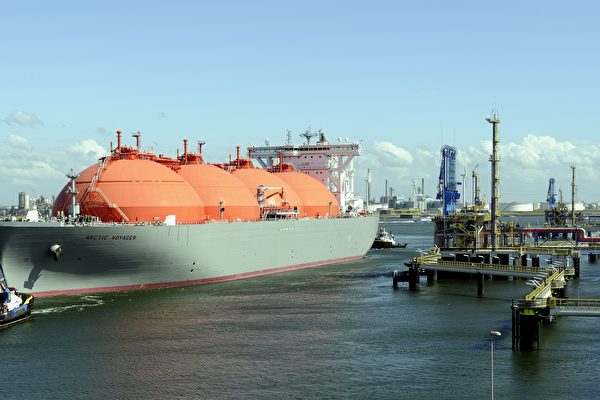
Japanese shipping giant Mitsui O.S.K. Lines CEO has warned that despite a two-week ceasefire, the shipping in the Hormuz Strait will continue to be disrupted. He anticipates that the Iran war will prompt a large-scale adjustment of the global supply chain and lead to long-term inflationary pressures.
CEO Jotaro Tamura of Mitsui O.S.K. Lines, in an interview with Nikkei Asia, stated that Iran’s closure of the Hormuz Strait would be a “turning point for rethinking the resilience of energy and natural resource supply chains.”
He said that companies and governments usually prioritize economic rationality by sourcing resources at the lowest possible cost. However, in the future, they may need to source from farther distances or “accept higher costs for the sake of security.”
Tamura warned that the war is creating a situation where “irrationality will become rationalized,” and the shipping industry cannot bear the additional costs alone, eventually leading to the entire market sharing the burden.
“I believe this will also be a factor in exacerbating inflationary pressures in the future,” he said.
Tamura mentioned that the temporary ceasefire between the US and Iran is positive as it increases the possibility of vessels currently detained in the Persian Gulf leaving the area. However, he believes it is premature to allow ships to leave now before ensuring safety.
“I see almost zero possibility of the situation being resolved by the end of April,” he told Nikkei.
He revealed that Mitsui O.S.K. Lines still has “a few” ships detained in the Persian Gulf.
Since the outbreak of the war on February 28, three ships belonging to the Japanese shipping giant have successfully left the Persian Gulf. A liquefied natural gas carrier and two liquefied petroleum gas carriers associated with Mitsui O.S.K. Lines passed through the Strait in early April, even before the ceasefire agreement reached by the US and Iran on Tuesday.
It was reported that two Very Large Crude Carriers (VLCC) owned by Mitsui O.S.K. Lines – the Mayasan and Yakumosan – began sailing eastward along the Persian Gulf towards the Hormuz Strait on Thursday evening. This is seen as the first tentative move of the oil tanker fleet stranded in the Persian Gulf for over a month, but the prospects for passage remain uncertain.
Each of these two ships carries about 2 million barrels of crude oil and has been anchored near Ras Tanura, Saudi Arabia, since mid-March.
Currently, more than 800 cargo ships are stranded in the Gulf due to the war, with most of them awaiting to depart. The Hormuz Strait is a crucial channel for about 20% of global oil transport.
When asked about Iran’s threat to attempt toll collection, Tamura stated that the company will “adhere to the transit passage rights stipulated in the United Nations Convention on the Law of the Sea (UNCLOS).”
A spokesperson for the Japan Shipowners’ Association, representing Japanese shipping companies, said, “We have heard that the Iranian Revolutionary Guard is sending radio messages to ships, instructing them to follow ‘proper procedures’ if they intend to pass through the strait.”
The spokesperson added that the association is coordinating with the Japanese government, although there is no clear consensus among companies yet, each is wary of taking unilateral actions.