
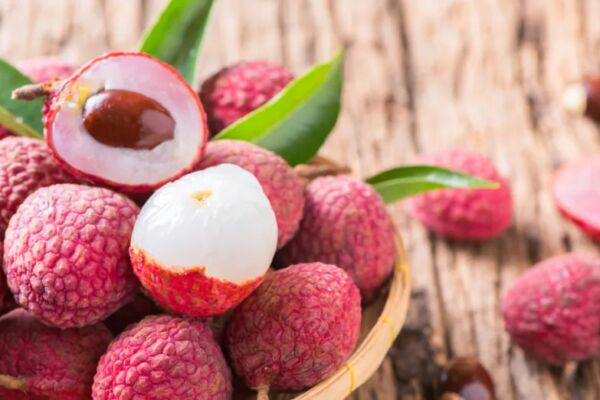
In 2026, due to the prolonged fruiting cycle last year that resulted in nutrient depletion in the trees, coupled with the impact of multiple climate factors such as the warm winter and drought this year, major lychee-producing areas like Dajing and Xinwei in Houjie Town, Guangdong, have seen a significant decrease in production. Some high-quality lychee varieties have even yielded only 10% of last year’s output.
According to reports from Guangdong Broadcasting and Television Station and Dongguan Sunlight Network, as another year approaches with lychee blossoms, the usual sight of lychee flowers blossoming across the mountains in Dongguan, Guangdong, is noticeably absent this year. Varieties like Guiwei, Nuomi Cizi, and Bingli have generally shown lower flowering rates in Houjie this year, with many fruit trees only sprouting leaves but no flowers.
Field managers state that the production decline this year is almost certain. For example, for late-ripening lychee varieties like Guiwei and Nuomi Cizi, the yield is expected to be only about 10% of last year’s. Varieties like Xian Jinfeng may see a yield of around 40-50% compared to last year.
It is reported that traditional high-quality lychee varieties like Guiwei and Nuomi Cizi may face extreme scarcity in the market supply, leading to a situation where lychees are hard to come by, and prices are expected to rise accordingly. Continued management remains crucial in addressing the situation.
Farmers estimate that the retail price of Guiwei and Nuomi Cizi this year could exceed 50 RMB per pound, or even higher.
Previously reported by Southern Net, Liu Wei, Deputy Director of the Lychee Cultivation and Physiology Research Lab at the Guangdong Academy of Agricultural Sciences, stated that, based on their field visits, there will likely be a reduction in yield for middle and late-season lychee varieties.
He Jinming, a major lychee grower in Baqiao Village, Genzi Town, Gaozhou, Guangdong, with over 200 mu of lychee trees, mentioned that their early-ripening varieties like Feizi Xiao and Bai Tang Ling have a flowering rate of around 80%. However, their late-ripening varieties like Guiwei are experiencing a decrease in flowering due to insufficient nutrient accumulation, resulting in only about 20% of the yield compared to last year.
In Shizhuang Village, Zengcheng District, Guangzhou, Sanzhen Orchard mainly cultivates late-ripening lychees on about 180 mu of land, including approximately 30 mu of Guiwei and Nuomi Cizi, and 150 mu of Xian Jinfeng. The orchard’s manager, Yuan Huanxin, mentioned that this year’s lychee flowering has reduced to about 20% of the previous year, indicating a clear decline in production. He hopes to fetch a good price to offset the losses caused by the reduced yield.
Pang Xiaoyu, the president of the Guangdong Lianjiang Agricultural Creativity and Quality Variety Breeding Professional Cooperative, noted that with an approximate lychee planting area of 1300 mu, featuring varieties like Feizi Xiao, Guiwei, Bingli, and Xian Jinfeng, they are anticipating significant production declines this year. For instance, Feizi Xiao is expected to decrease by 40%, Guiwei by 90%, Bingli by 50%, and Xian Jinfeng by 40%. The reduction in production is already a reality.
Jiang Shufeng, a director at the Guangdong Lychee Industry Association, stated that this year’s lychee production is definitely lower compared to last year. Based on his recent research findings, the flowering rates of lychee trees across various regions are lower, with some places even showing fewer flowers than in the lean year of 2024. Overall, it appears that middle and late-season varieties like Guiwei and Nuomi Cizi have a flowering rate of only 20-40%.