
Japan’s Strategic Awakening
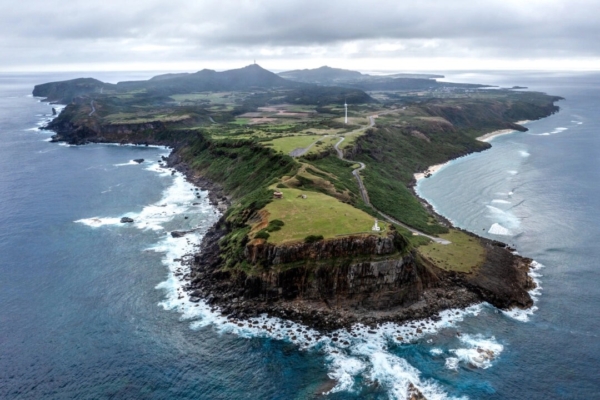
Japan’s strategic awakening is no longer just a theoretical concept but a real-time development. In recent weeks, Tokyo has confirmed plans to deploy an advanced air defense missile system on Yonaguni Island in the west. Yonaguni Island is Japan’s westernmost inhabited island, located just about 70 miles (110 kilometers) from Taiwan. This deployment is part of a broader effort to strengthen Japan’s defense system in the southwestern island chain, a key area in the emerging Indo-Pacific power balance.
However, Japan’s security transformation did not start with this deployment. The roots of its strategic shift can be traced back to a century and a half ago. History serves as a window to understanding the future.
In 1854, Commodore Matthew Perry led a fleet of warships, including the flagship USS Susquehanna, to Japan, compelling the country to end its isolationist policy and initiating one of the most impactful geopolitical contacts in modern history. This moment not only opened Japan’s ports to the world but also permanently altered its development trajectory, forging one of the most critical strategic relationships in the contemporary world.
As Japan expands its military capabilities and reevaluates the limitations of its post-war security posture, it has not abandoned the past but is responding to the evolving strategic realities in the Indo-Pacific region.
To comprehend Japan’s current transformation, one must understand the long history of U.S.-Japan relations, a history marked by uniqueness and contradictions.
Since the arrival of Commodore Perry, Japan embarked on an extraordinary period of modernization. To avoid colonization by Western powers, Japan rapidly studied foreign military systems, advanced industrialization, and built a nation capable of surviving in a fiercely competitive international system. However, this period also fostered the dark sides of militarism and imperialism in Japan.
By the early 20th century, this island nation had risen as a major power, eventually leading to the catastrophic conflict with the United States during World War II.
Japan’s defeat in 1945 marked a profound reshaping of the strategic landscape. The imperial era ended, and under American leadership, a new security order was established. Japan renounced war in its constitution, with the U.S. pledging to ensure its security.
This arrangement yielded remarkable results. Japan became one of the world’s largest economies, maintained its democratic system, and the U.S.-Japan alliance became a cornerstone of stability in East Asia. Japan became an unsinkable aircraft carrier for the United States.
The post-war order rested on two assumptions: America’s dominance in the Pacific would remain unchanged, and regional threats would remain manageable. Today, these assumptions are unraveling.
Communist China is rapidly transforming into a formidable military power in maritime, missile, cyber, and space domains. Beijing continues to increase defense spending as part of its long-term strategy to modernize its military and expand regional influence.
North Korea possesses usable nuclear weapons and long-range missile capabilities, while Russia continues to advance its military modernization in the Pacific region.
Japan now finds itself sandwiched between these three nuclear-armed countries, all posing existential threats to Japan and the U.S.-led order.
For decades, Tokyo heavily relied on America’s nuclear umbrella, maintaining only limited conventional forces. This arrangement allowed Japan to focus on economic growth while American strength upheld regional order.
Today, this strategic environment is being tested.
Merely relying on extended deterrence is insufficient to maintain stability without deeper integration, stronger conventional military capabilities, and more coordinated combat operations among the U.S. and its allies. Japan is not seeking to develop nuclear weapons but rather enhancing deterrence through missile defense, counterstrike capabilities, alliance consultations, and integrated military planning.
In a more perilous strategic environment, credibility must be built on substantive capabilities, which are the two pillars of true deterrence.
The geographic position of Japan’s southwestern islands clearly underscores this reality. Tokyo has begun enhancing military infrastructure on these islands, deploying advanced missile defense systems, and expanding monitoring capabilities. These islands serve as a natural barrier, obstructing Chinese forces from entering the Pacific.
Geographically, Japan sits at a strategic crossroads between the East China Sea and the vast Pacific.
As with many major conflict scenarios involving Asia, the Taiwan issue always captures attention. Any conflict involving Taiwan would immediately impact Japanese territory and the U.S. military bases stationed there. Chinese military planners are acutely aware of this. Operations against Taiwan would likely include strikes on Okinawa and its surrounding bases.
For Tokyo, Taiwan is not a peripheral issue but a core concern for Japan’s security.
Japan’s evolving defense posture reflects several mutually reinforcing priorities: strengthening defenses on southwestern islands, dispersing military infrastructure, enhancing maritime and aerial deterrent capabilities, and deepening joint operational planning with the United States.
This is not militarism but the inevitable development of geopolitics.
However, the immediate and pressing danger today comes from North Korea.
Pyongyang possesses nuclear warheads, mobile launch systems, and increasingly sophisticated missile technology. North Korea’s missile tests frequently fly over Japanese airspace, underscoring the urgency for Japan to enhance missile defense and civil defense preparedness.
In Northeast Asia, deterrence must be multi-layered because the threats themselves are multi-faceted.
Japan’s strategic transformation is not a sudden occurrence. Former Prime Minister Shinzo Abe played a decisive role in establishing the institutional framework of Japan’s modern security posture. Abe established the National Security Council of Japan, expanded legal grounds for collective self-defense, and strengthened strategic coordination with the U.S. and regional partners.
The current Japanese leadership is building upon this foundation. Japan is increasing defense spending to levels comparable to other major democratic nations, bolstering economic security policies, and strengthening supply chains for critical technologies. Current Prime Minister Sanae Takaichi advocates amending Article 9 of the constitution – known for renouncing war, maintaining no military forces, and denying the right to wage war – to shift from a focus solely on self-defense to a stance of “proactive defense.”
Japan is transitioning from strategic discussions to strategic execution.
External pressure is once again driving internal reforms in Japan, a scenario reminiscent of key historical moments. The Meiji Restoration in Japan followed Western incursions, while the formation of the Cold War alliance stemmed from the strategic realities of post-war reconstruction. Today, the rise of Chinese influence and regional security instability are accelerating internal change in Japan.
For U.S. policymakers, Japan’s transformation carries significant strategic implications.
The future stability of the Indo-Pacific region will heavily rely on Japan’s infrastructure, logistical support, and political resolve. Without Japan, projecting U.S. military power in the Western Pacific will become extremely challenging. With Japan, deterrence remains credible.
Therefore, Japan’s awakening strengthens the power balance in the Indo-Pacific region.
From Commodore Perry’s Black Ships to the Cold War alliance and now to 21st-century strategic competition, Japan’s development has unfolded in continuous interaction with American power.
The U.S.-Japan alliance is entering a new phase. We must not only focus on the harsh geopolitical realities but also on the moral aspect: the rising democratic Japan, alongside democratic Taiwan and South Korea, not only aligns with American values but also with global human rights and freedoms. This will become a solid fortress against the tyranny of China, North Korea, and Russia.
Japan is no longer simply relying on the U.S. as a protective umbrella but is preparing to work hand-in-hand with America to uphold regional order.
The future stability of the Indo-Pacific region is not solely determined by Washington or Beijing but hinges on the strength and resilience of the U.S.-Japan partnership – a partnership that was established in 1854, reshaped in 1945, and is now entering one of its most critical periods in history.
—
This rewritten and translated article delves into Japan’s strategic awakening, its historical background, current security challenges, and evolving defense posture. It highlights the importance of the U.S.-Japan alliance in maintaining regional stability in the Indo-Pacific region.