
On February 17, 2026 (Tuesday), China officially ushered in the “Bingwu Horse Year.” According to the traditional Chinese calendar, this year is characterized by the heavenly stem “Bing Fire” and the earthly branch “Wu Horse,” marking the rare occurrence of a “Bingwu Fire Horse Year” which happens once every 60 years.
The Fire Horse symbolizes strong vitality, transformative breakthroughs, and enthusiasm, but it also implies challenges brought about by extreme energy. From the New Year’s Eve family feast to the Lantern Festival celebrations, this guide combines Chinese traditional culture, global events, and auspicious practices to help you navigate the Fire Horse Year with success.
In the Five Elements theory, Bing represents fire, and Wu is also associated with fire, making 2026 known as the “Red Horse” or “Fire Horse” year. Historically, Bingwu years are often accompanied by intense social dynamics and emotional fluctuations.
Characteristics of the year:
Innovation, breakthroughs, and speed. This is a year suitable for initiating new projects, seeking career transitions, and boldly expressing oneself.
Lucky color palette:
Gold, orange, and green (wood enhances fire) are also considered lucky colors for this year.
Expert reminders:
Due to the powerful fire energy, experts advise approaching matters with calm rationality, avoiding impulsive investments or verbal conflicts.
According to traditional culture, before formally entering the new year, one must go through a series of rituals to cut ties with the misfortunes of the past year. All of these customs stem from ancient fears of the monster “Nian,” eventually evolving into a series of heartwarming and intriguing traditions.
On the 24th day of the twelfth lunar month (February 11):
Making pastries. The word for “cake” sounds like “high,” symbolizing advancement step by step.
On the 28th day of the twelfth lunar month (February 15):
Spring cleaning. It is necessary to sweep away the bad luck before the New Year’s Eve.
Driving away evil spirits:
According to the “Nian” beast myth, wearing red clothing, hanging red couplets, and setting off firecrackers are essential actions to protect family peace.
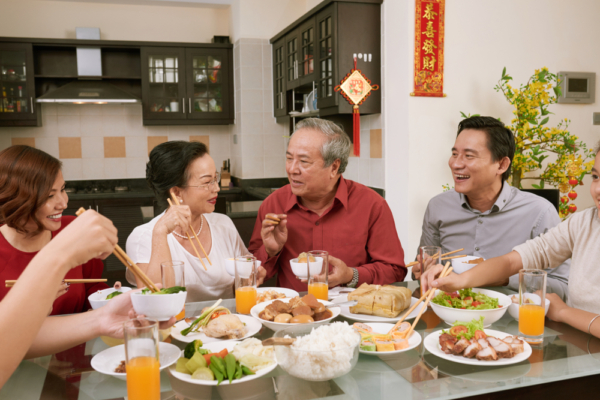
The New Year’s Eve is the most crucial moment in this guide, signifying not only family reunion but also an opportunity to realign wealth and good fortune.
Reunion dinner:
In the northern regions, dumplings and noodles are common dishes. The former resembles gold ingots, symbolizing prosperity, while the latter signifies longevity. In the south, it is customary to have rice cakes, symbolizing career advancement and progress in life.
In areas like Xinjiang and beyond:
The practice of “Yusheng” is prevalent, where individuals use chopsticks to toss the ingredients high and declare “may there be abundance year after year.”
At the beginning of the new year, every action is believed to influence one’s luck for the entire year, resulting in a variety of intricate and fascinating customs.
On the first day of the first lunar month (February 17):
It is prohibited to wash hair or cut it as these actions symbolize washing away wealth. Additionally, sweeping the floor should be avoided to prevent sweeping away the good luck just brought in.
Red Packets:
The giving of red packets is not only the exchange of money but also a ritual to ward off evil. In Cantonese and overseas Chinese communities, married individuals distribute “lai see” to unmarried juniors, signifying smooth sailing in all endeavors. For 2026, it is recommended to choose red packets with images of a golden horse or the words “Dragon Horse Spirit.”
On the second day of the first lunar month (February 18):
Traditional day for visiting the maternal family. Married daughters bring their spouses and children to visit their maternal homes and bring gifts in pairs to symbolize harmony.
On the third day of the first lunar month (February 19):
“Chi Kou” day is prone to disputes, and it is advisable to seek blessings or appease the ruling deity (especially for those born in the Year of the Horse, Rat, Ox, or Rabbit).
However, in northern provinces like Shandong and Hebei, the third day of the lunar year holds significant importance as a day for visiting the maternal family. Unlike the tradition of visiting on the second day in other regions, Shandong customs believe that the third day is the auspicious day for married daughters to return with their spouses, highlighting the unique understanding and scheduling of family reunions in northern culture.
Days from the 8th to the 14th:
This period is typically reserved for mutual visits among relatives and friends. The ninth day is the “Tian Gong Sheng” (birthday of the Jade Emperor), where Fujianese Chinese conduct grand worship ceremonies.
This marks the climax of the New Year celebrations. People enjoy flower lanterns and solve lantern riddles. In ancient times, the Lantern Festival provided a rare opportunity for women to emerge from seclusion and encounter men.