
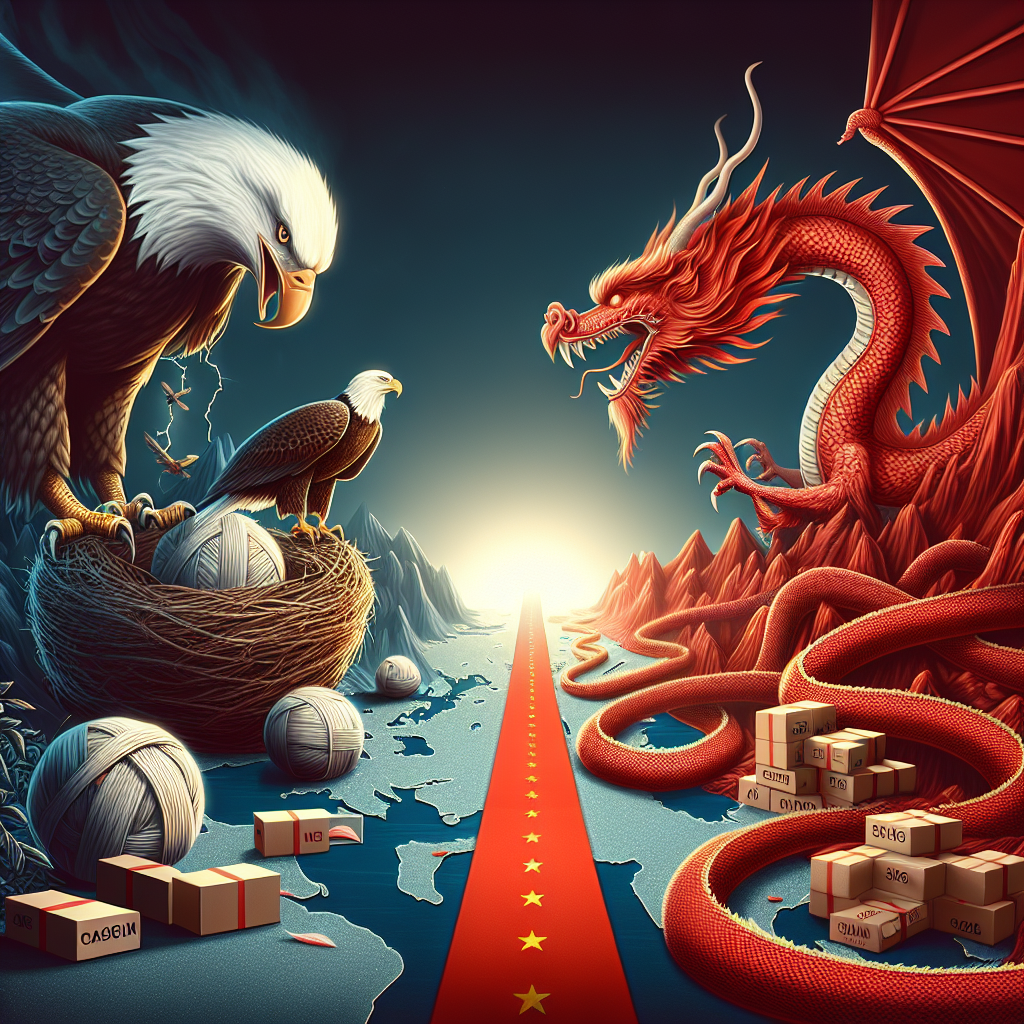
Before President Trump officially began his second term, there have been frequent reports of the United States preparing for a major tariff war, with the most severe impact being on China. Chinese Communist Party leader Xi Jinping emphasized the promotion of the Belt and Road Initiative to address geopolitical challenges in Beijing. However, with the impact of high tariffs driven by Trump’s new policies, can China’s Belt and Road Initiative withstand the pressure?
At the BRICS summit in October of this year, discussions were held to establish a new international payment system to replace the dominance of the US dollar. President-elect Trump issued a warning on his social media platform, Truth Social, on November 30, cautioning BRICS countries not to act rashly, or they will face 100% tariffs.
China has been dominating the BRICS countries and advocating for de-dollarization within the BRICS circle and beyond, with talk of replacing the dollar with the yuan gaining traction.
Following Trump’s warning, the onshore Chinese yuan plummeted by 374 points on December 2nd, hitting a four-month low at 7.2706, while the offshore yuan slipped to its lowest level since July, dropping over 380 points to 7.2895.
Trump had initially proposed a tariff rate of 60% against China, but in case of unexpected events, he mentioned raising the tariff to 100% or even 200%.
The port of Chancay in Peru, a collaborative project between China and Peru, held its opening ceremony on November 14. Trump’s transition team then announced a 60% tariff on goods passing through the port to the US.
Many analysts believe that with China’s weak domestic economy and concerns raised by excess export capacity, the Chinese government may struggle to resist Trump’s “tariff stick.” The US-China tariff war is likely to impact China’s economic growth in 2025 and may prompt a devaluation of the yuan in response.
Due to the impact of Trump’s high tariffs on Chinese products, the yuan’s spot exchange rate against the US dollar has been falling for two consecutive months, with a 1.64% drop in November. Capital Macro predicts that the yuan could depreciate to 8 by the end of next year.
Economic scholar David Huang pointed out that the US’s ability to wield the tariff stick is related to its significant contributions in global consumption, technology, GDP share, and financial sector importance. The article goes on to elaborate on the various aspects of US economic influence globally.
Incumbent BRICS economist Jahangir Alizadah and others recently stated in a report titled “Preparing for the Storm” that emerging economies will be impacted by Trump’s pledge to increase trade tariffs, with significant changes expected in trade policies towards China, which will bear the brunt of the impact.
Against this backdrop, Xi Jinping, the leader of the Chinese Communist Party, acknowledged the challenging international environment during the fourth Belt and Road Initiative construction symposium in Beijing on December 2nd. He emphasized the need to address various risks and challenges and protect China’s overseas interests in the face of rising unilateralism, protectionism, and geopolitical conflicts.
The Belt and Road Initiative, proposed by Xi Jinping in 2013 and led by the Chinese Communist Party, aims to build a transnational economic belt investing in over 60 countries and regions. However, criticism has arisen over the years regarding China’s use of the initiative to export excess capacity and trap local countries in debt.
David Huang explained that the USD makes up about 60% of global foreign exchange reserves, and over 80% of global trade is settled in dollars. Any move by Trump to threaten those attempting to replace the dollar with tariffs could potentially lead to capital inflows to the US and exacerbate tensions among those countries.
Especially for the Belt and Road countries burdened with heavy debt, a substantial percentage of which is denominated in dollars, any increase in tariffs or restrictions in using the dollar would undoubtedly be a significant blow to these countries.
Huang also pointed out that over 85% of China’s foreign exchange surplus in the past 20 years came from the US. Although China exports to Belt and Road countries, it doesn’t accumulate much foreign exchange surplus. Implementing a 100% tariff by the US could quickly deplete China’s foreign exchange reserves.
Furthermore, China continues to provide large amounts of funds annually to countries in Asia, Africa, and along the Belt and Road. With the significant impact of a 100% tariff from the US, China’s financial situation would face severe challenges.
Huang further emphasized that the future survival of the Belt and Road Initiative in a globally divided landscape remains a question. Originally proposed to reduce economic and political pressures from Europe and the US, the viability of the initiative against a full-blown trade war is significantly weakened in the current environment.
Regarding China’s response to the trade war, the official strategy has been to promote a combination of internal and external circulation; however, it has recently shifted to focus more on internal circulation. This adjustment has been perceived as a move towards self-reliance and has raised concerns about potential isolationism.
As the trade war between the US and China continues, the ability of the Belt and Road Initiative to withstand these challenges depends on China’s response capabilities, strategies, and the dynamics of global economic and trade relations.
It is certain that with rising trade costs, particularly with high tariffs imposed on Chinese goods by the US, the competitiveness of Chinese exports in the US market is directly affected, impacting the profitability of enterprises related to the Belt and Road Initiative. High tariffs may force Chinese companies to realign their supply chains, increasing operational costs.
The uncertainty in the investment environment and escalating trade frictions may dampen investor confidence, leading to hesitancy in investment plans in countries along the Belt and Road, affecting capital inflow and project implementation.
Huang suggested that China may need to strengthen regional cooperation efforts, such as trade relations with ASEAN countries. However, these trade partnerships are less profitable and cannot compensate for the reduced exports to the US.
Despite the strategic value of the Belt and Road Initiative in diversifying risks and enhancing cooperation between China and emerging markets, the initiative faces significant challenges when pitted against alliances such as those of the EU and the US.
To resist US sanctions, the Chinese government has been promoting external and internal circulation. However, China’s economic structure, largely based on a socialist system, presents challenges for increasing consumer welfare, ultimately affecting the effectiveness of the internal circulation strategy.
Monthly meetings of the Chinese Communist Party’s Central Political Bureau typically include press releases, but the absence of reports from the November 2024 meeting signals a rare occurrence. With former US President Trump potentially reigniting a trade war, the upcoming December Central Political Bureau and Central Economic Work Conference are closely watched for signs of new stimulus policies.
In response to the ongoing trade war with the US, China’s ability to cope and whether the Belt and Road Initiative can withstand the challenges depend on the Chinese government’s capabilities, strategies, and global economic and trade dynamics.
The complexity of the current situation suggests that the Chinese government may still be evaluating the efficacy of existing policies and preparing for future measures. The effectiveness of these measures remains to be seen, and the market is still in a wait-and-see mode, with future challenges looming for the Chinese economy.