
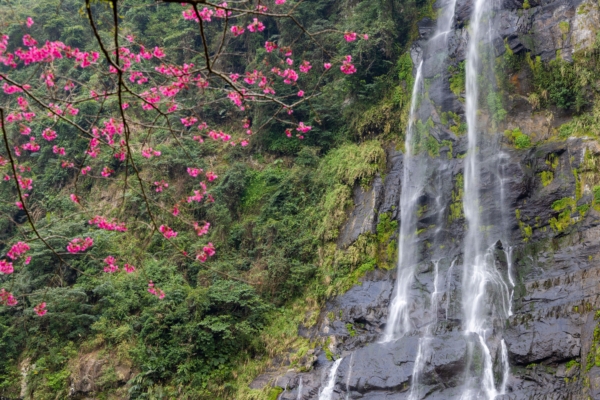
In the Democratic Republic of Congo, researchers have witnessed a miraculous scene in the natural world: thousands of small fish collectively climbing a vertical waterfall reaching 15 meters (50 feet) high. Their astonishing perseverance and skill put even human rock climbers to shame.
These small fish are scientifically known as Parakneria thysi, belonging to the family of Shellear fish. Researchers have documented how they climb the Luvilombo Falls in the upstream of the Congo Basin. The Congo Basin boasts vast river systems, nurturing the world’s second largest tropical rainforest.
Observations reveal that these fish typically climb along the vertical rock walls against the seasonal floods towards the end of the rainy season in April and May.
The main participants in this “extreme sport” are small to medium-sized fish measuring between 3.7 to 4.8 centimeters in length. Larger fish measuring up to 9.8 centimeters, due to their excessive weight, struggle to be supported by their fins to complete the climb.
The journey to the summit is extremely challenging, with a single fish possibly taking up to nearly 10 hours to complete. The climbing process involves bursts of rapid movement and frequent rests.
The lead author of this study, Pacifique Kiwele, a fish biology researcher at the University of Lubumbashi in the Congo, emphasized the significance of maintaining waterway connectivity, particularly in the fish behavior research in the relatively unexplored Congo Basin. The study was published in the journal Scientific Reports in April 2026.
Kiwele expressed, “Without close-up recordings, who would believe that fish could climb waterfalls? This demonstrates that miracles in the world far exceed imagination.” While a Brazilian research team discovered thousands of bumblebee catfish collectively climbing waterfalls last year, witnessing such behavior in Africa is a first.
Research indicates that Shellear fish choose to advance in the “splash zone” on the sides of waterfalls where water splashes to keep the area moist. They utilize their pectoral fins against the rock surface, supported by their pelvic fins, and grip the surface firmly with tiny hook-like structures called “unculi”. Then, they generate upward thrust by swinging their bodies left and right.
“They are like swimming vertically,” explained Kiwele. Proportionately, this is equivalent to humans climbing hundreds of meters vertically.
The climb is fraught with risks. Sudden surges of water often throw the small fish off the rock walls, especially when crossing overhanging rock layers. Though fish that fall into the water can regroup, individuals that directly plunge onto rocks often struggle to survive. Emmanuel Vreven from the Royal Museum for Central Africa in Belgium, a co-author, pointed out that most of the 10-hour journey is actually spent resting.
Scientists are currently unsure whether this behavior is to escape predators at the bottom of the waterfall or to seek mates or food upstream. Clearly, Shellear fish possess a strong climbing drive.