
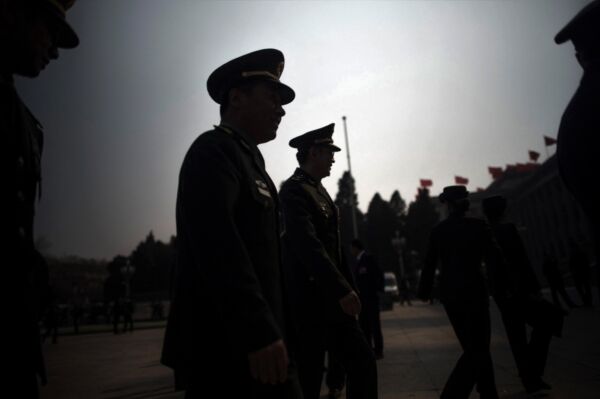
In an unprecedented shake-up at the core of the Chinese Communist military leadership, a ripple effect of uncertainty has been triggered. The Chinese Ministry of National Defense confirmed on Saturday that Vice Chairman of the Central Military Commission, Zhang Youxia, and Chief of Staff of the Joint Staff Department, Liu Zhenli, are under investigation for “serious violations of discipline and law.” Analysts suggest that this move signifies President Xi Jinping’s ongoing “purge” reaching deep into the “second-generation reds,” causing a chain reaction of fear and suspicion within the Chinese Communist Party and complex implications for the situation in the Taiwan Strait.
According to a front-page editorial in the People’s Liberation Army Daily on Monday, the official political condemnation of these two senior military leaders is harsh, accusing them of “serious betrayal of trust and responsibility, seriously undermining and trampling on the system of the Chairman’s responsibility within the Military Commission.” The editorial warns sternly that “status does not grant immunity, and merits are not a shield against punishment,” emphasizing that the anti-corruption campaign must not show any leniency.
Reuters quotes analysts suggesting that invoking the “Chairman’s responsibility system” implies that Zhang and Liu not only face allegations of corruption but are also seen as a challenge to the absolute leadership authority of Xi Jinping. Given Zhang Youxia’s longstanding oversight of equipment research and procurement, coupled with the downfall of his close ally, former Defense Minister Li Shangfu, this investigation not only involves systemic corruption in military procurement but also reflects Xi Jinping’s extreme distrust of loyalty within the military.
Experts from Washington suggest that this upheaval in the core of the Chinese Communist military power indicates that the ousting of Zhang Youxia could have complex implications for the situation in the Taiwan Strait.
Jonathan Czin, an expert from the Brookings Institution and a former senior CIA analyst, notes that both Zhang and Xi come from influential families and belong to the red aristocracy. Czin believes that this purge has now reached the “asteroid belt” of Xi Jinping’s political solar system, indicating that even deep personal connections cannot provide political immunity in Xi’s eyes, fostering an environment of pervasive fear within the Chinese Communist Party.
Czin further analyzes that the removal of Zhang Youxia could have complex implications for the Taiwan Strait situation. Both he and Neil Thomas, a researcher from the Asia Society, highlight that a significant purging of senior military officials implies that Xi Jinping is not considering immediate major military escalation towards Taiwan. As the Military Commission’s 7-member body shrinks to just 2 individuals (Xi Jinping and Zhang Shengmin) and the command chain faces “hollowing out,” the military needs time to “clear the runway” and rebuild its system, making short-term military adventurism unpredictable.
Experts caution that the ultimate goal of the purge is to elevate a group of obedient military commanders. Professor Weng Lüzhong from Sam Houston State University’s political science department analyzes that viewing this restructuring period in Taiwan as a “safe period” rather than a “preparation period” could be extremely risky. Once the cleansing is complete, future military leadership will no longer have individuals like Zhang Youxia with combat experience and the courage to express dissenting views in internal meetings (such as concerns about insufficient troop logistics), potentially leading to more unpredictable and radical Taiwan actions.
Amid the intense turmoil within the Beijing military, Taiwanese Minister of National Defense, Gu Li-hsiung, stated during a legislative interview on Monday that Taiwan is closely monitoring the “unusual changes” among the top echelons of the Chinese Communist Party, government, and military.
He emphasized that despite the internal upheaval in the Chinese Communist Party, the Taiwanese military will not let its guard down. Gu stated, “We will not lower our guard or relax our level of preparedness just because of the removal of any individual from office.”
Gu Li-hsiung further pointed out that the threat from China has not diminished due to the personnel shake-up. Taiwan’s current strategy includes comprehensive intelligence gathering to detect any potential Chinese intentions through various joint intelligence, surveillance, and reconnaissance means.
The Taiwanese Defense Minister noted, “It is not sufficient to infer whether China is accelerating its aggression towards Taiwan based on key personnel movements alone.” Taiwan places greater importance on a comprehensive assessment that incorporates both military and non-military aspects (such as defense budget growth, societal indicators, etc.).
Gu Li-hsiung bluntly stated that China has never abandoned the option of reunifying Taiwan by force, and Taiwan must focus on various warning signs to maintain a high state of readiness to address the constantly evolving geopolitical risks.