
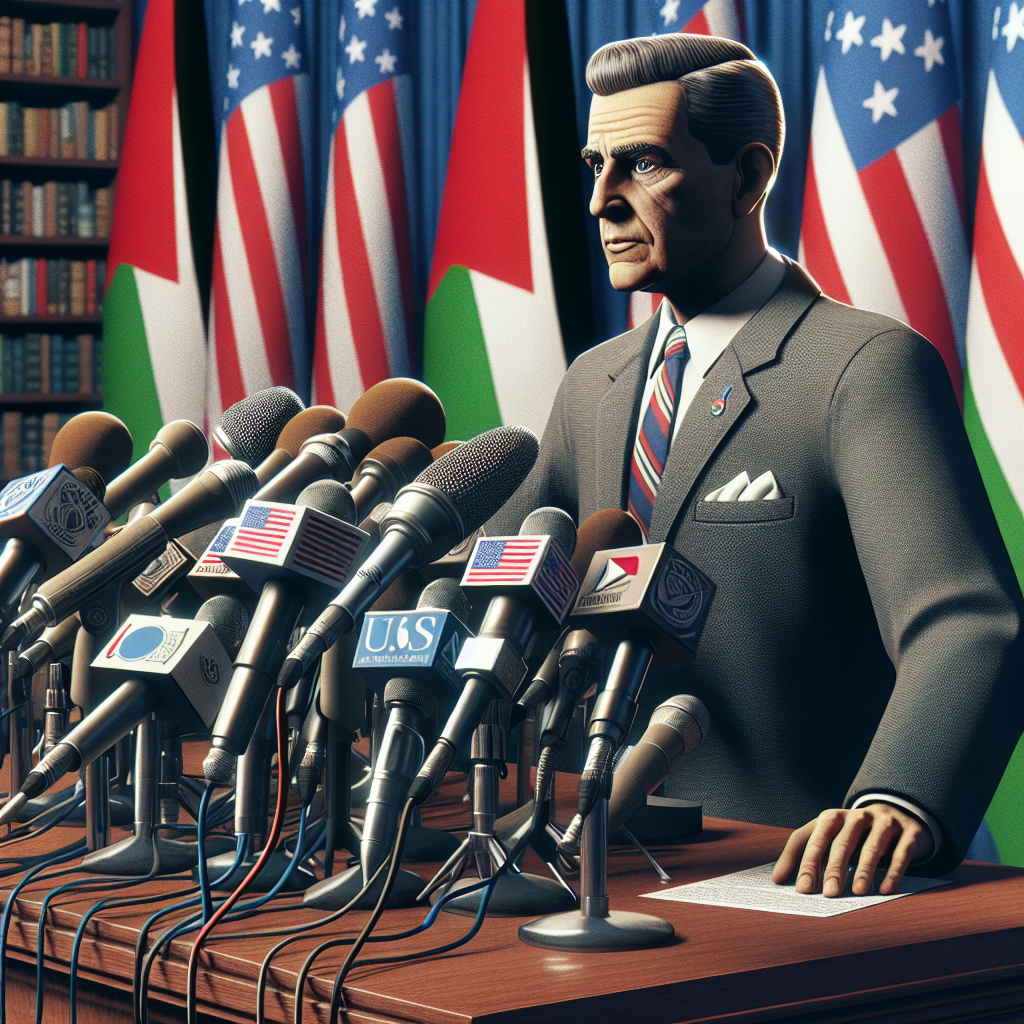
On January 16, 2026, U.S. President Trump officially announced his full support for the newly established Palestinian technocratic government – the “National Committee for the Administration of Gaza.” This marks a significant milestone in the U.S.-backed Gaza ceasefire plan as it transitions towards a new phase of governance.
President Trump expressed his support for the expert team responsible for governing Gaza during the transitional period, as endorsed by the Board of Peace. He praised the Palestinian leaders’ unwavering commitment to a peaceful future.
With the support of Egypt, Turkey, and Qatar, President Trump outlined a comprehensive agreement with Hamas to disarm completely, surrender all weapons, and dismantle all tunnels. He emphasized Hamas’s immediate compliance, including the return of the final body to Israel and swift progress towards full disarmament.
President Trump stated, “As I have said before, they can choose the easy path or the hard way. The people of Gaza have suffered enough. The time is now. Strength for peace.”
The committee, consisting of 15 Palestinian experts, is led by civil engineering Ph.D. and former Palestinian government official Ali Shaath. Shaath’s appointment signifies a shift towards governance by non-political professionals in Gaza after years of Hamas rule.
Shaath envisions a bold engineering project to clear the estimated 68 million tons of post-war rubble in Gaza by using bulldozers to create new islands and land from the debris.
He aims to restore infrastructure within three years and make Gaza more prosperous than before the war within seven years, aligning with Trump’s vision of transforming Gaza into the “Riviera of the Middle East.”
The jurisdiction of the National Committee for Gaza will begin in areas controlled by Hamas and gradually expand as Israel further withdraws its troops, as requested by the U.S.
The formation of the committee has gained support from various factions within Palestine. Hamas senior official Bassem Naim welcomed the establishment of the committee, urging international mediators and the U.S. to empower the committee.
Palestinian Authority President Mahmoud Abbas also expressed support for the committee’s importance during the transitional phase.
However, Israel remains cautious about the substantive implications of the second phase of the ceasefire. Israeli Prime Minister Benjamin Netanyahu described the committee’s establishment as a symbolic gesture and underscored the importance of recovering the remains of the last captured soldier.
Though diplomatic progress has been made, the situation in Gaza remains dire. Nine people were killed in several airstrikes in Gaza on Thursday, resulting in over 450 deaths since the ceasefire agreement in October.
A previous UN report anticipated that Gaza’s reconstruction could extend until 2040, requiring over $50 billion in funding.
For Gaza residents facing their third winter of conflict, tangible survival guarantees are more urgent than political blueprints. Local resident Hamza Abu Shahab expressed a desire for visible changes such as easier access to food, fuel, and medical services rather than mere promises.
He told the Associated Press, “We need this news to become a reality so we can return home and to residential areas in the second phase… Hopefully, this won’t be just empty promises.”
Coordinating the disarmament, deploying international forces, and facilitating the entry of heavy equipment and building materials into Gaza will require further coordination among relevant parties.