
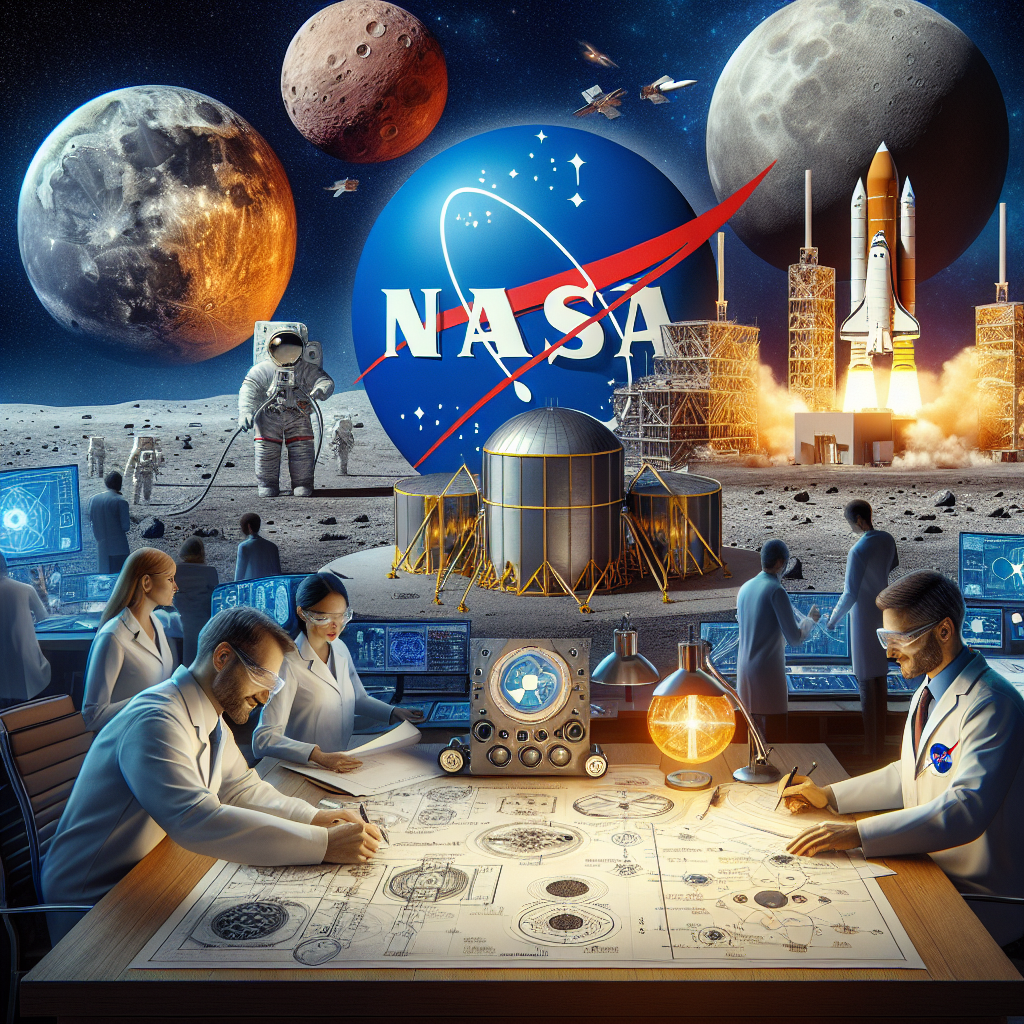
NASA and the Department of Energy announced on Tuesday that they will reaffirm their long-standing partnership and collaborate on developing nuclear power sources for lunar surface operations by 2030 to support the Artemis mission and future NASA Mars missions.
This initiative comes in response to President Trump’s vision for U.S. space superiority. After signing a memorandum of understanding recently, NASA and the Department of Energy have formalized their collaboration and will jointly work on developing suitable nuclear reactors for use in orbit and on the lunar surface. The importance of this research and development for future space missions, including Mars exploration, has been emphasized by both parties.
According to NASA Administrator Jared Isaacman, under President Trump’s national space policy, the United States is committed to returning to the moon, establishing long-term infrastructure, and making necessary investments for the next leap towards Mars and beyond. The use of nuclear energy is seen as essential to achieve these goals. The agreement between NASA and the Department of Energy aims to create crucial capabilities needed for a golden age of space exploration and discovery.
This renewed agreement aligns with NASA Acting Administrator Sean Duffy’s plan announced in August 2025, requiring NASA to complete this technological development by the end of 2030.
NASA’s press release highlighted the deployment of a reliable and efficient “fission-based surface power system” that can operate continuously for years without the need for refueling. This system will provide ample power to sustain lunar missions beyond the limitations imposed by sunlight and ensure that the United States maintains global leadership in space exploration, commerce, and security.
The system that NASA is developing must meet specific criteria set by Duffy: it should have a 100-kilowatt power capacity and weigh less than 15 tons to comply with payload restrictions of heavy-lift rockets like SpaceX’s Starship.
While solar panels have been the primary energy source for space travel for decades, any permanent lunar base would face challenges during the weeks of darkness in each lunar phase.
After Duffy’s announcement of this development program, Lockheed Martin released conceptual images on social media to illustrate the potential appearance of the reactor and explain why an alternative to solar panels is needed.
In a statement, the company emphasized the necessity of lunar fission reactors as a foundational element for advancing human exploration. The limited sunlight on the moon during its dark and cold periods necessitates a sustainable lunar base construction that can be supported by a reliable space-based fission power source. To achieve this goal, ongoing research and development efforts are being invested.
The collaboration between NASA and the Department of Energy to build, license, and deploy nuclear reactors on the lunar surface builds upon over fifty years of successful cooperation. This partnership aims not only to drive technological advancements and enhance national security but also to advance the progress of space exploration.
U.S. Secretary of Energy Chris Wright stated, “From the Manhattan Project to the Apollo missions, history has shown that when American scientific and innovative forces combine, our country can lead the world in exploring new frontiers once deemed impossible.” He added that this agreement continues this tradition and, under President Trump’s leadership and his ‘America First’ space policy, the Department of Energy is honored to work with NASA and the commercial space industry to achieve one of the greatest technological advancements in the history of nuclear energy and space exploration.
Furthermore, NASA clarified that the reactor development will be integrated into its broader “Moon to Mars” framework, aiming to establish core elements and a blueprint for crewed deep-space exploration missions that encompass the moon, Mars, and beyond.