
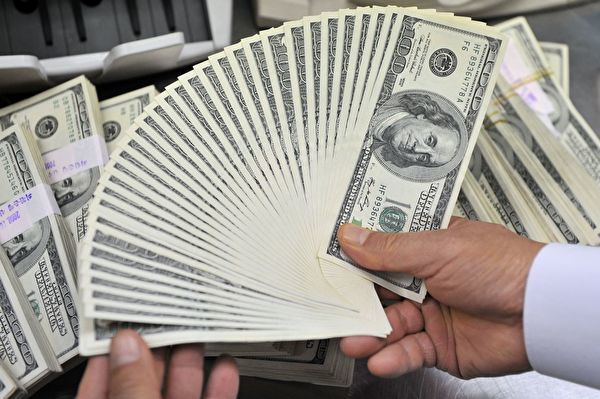
With the widespread use of credit cards and digital payment platforms such as Venmo, PayPal, and Cash App, people’s reliance on cash has significantly decreased. Nowadays, most individuals rarely carry cash with them, let alone store all their money at home.
According to a survey conducted by GOBankingRates in 2024, 14% of Americans have only $500 to $1000 in cash at home; 11% have $1000 to $2000 stored at home; 5% have $2000 to $3000, and only 6% of people have over $3000 in cash at home.
However, some unexpected events like hurricanes, wildfires, power outages, or other natural disasters could potentially result in digital payment failures. In emergencies, cash becomes the only means to purchase necessities such as gas, food, and medication. Therefore, experts recommend keeping a reasonable amount of cash at home for unforeseen circumstances.
So, how much cash should one store at home? The answer varies depending on the individual. Let’s see what the experts have to say.
Ryan McCarthy from Castle Rock Investment Company suggests that from a security perspective, cash is the riskiest asset. He recommends keeping the amount of cash at home no more than 10% of an emergency fund or $10,000.
Danielle Miura from Spark Financials believes that having $100 to $200 in cash at home is sufficient to cover basic expenses in case of emergencies, such as buying gas or tipping for home deliveries.
Jasmine Pernell from The Wallet Moth recommends keeping $1000 at home to cover expenses for “temporary accommodations, food and beverages, gas, and medications,” among other urgent needs.
Jesse Kramer from Cobblestone Capital Advisors warns against keeping more than $1000 in cash at home, citing cases where cash stored at home was destroyed in fires. She suggests keeping the rest of the money in the bank for added security.
However, experts unanimously agree that regardless of the amount of cash stored at home, the safety of the money is paramount. Some experts suggest using a fireproof safe to store cash and securing the safe in a fixed location to protect against flooding or fires. Additionally, it is advisable to regularly replace cash to prevent currency deterioration.
In summary, experts recommend that each household store $100 to $1000 in cash at home based on individual needs and safety considerations. This amount can effectively address emergencies without increasing the risk of theft or fire hazards due to storing excessive cash. When storing cash, using a fireproof safe and maintaining it regularly while monitoring inflation’s impact on cash value is crucial. By planning cash reserves effectively, individuals can balance convenience and security in the digital payment era and prevent potential risks.
(This article is for general informational purposes only; it does not provide any recommendations. Epoch Times does not offer investment, tax, legal, financial planning, real estate planning, or other personal finance advice. For specific investment matters, please consult with your financial advisor. Epoch Times does not assume any investment responsibility.)