
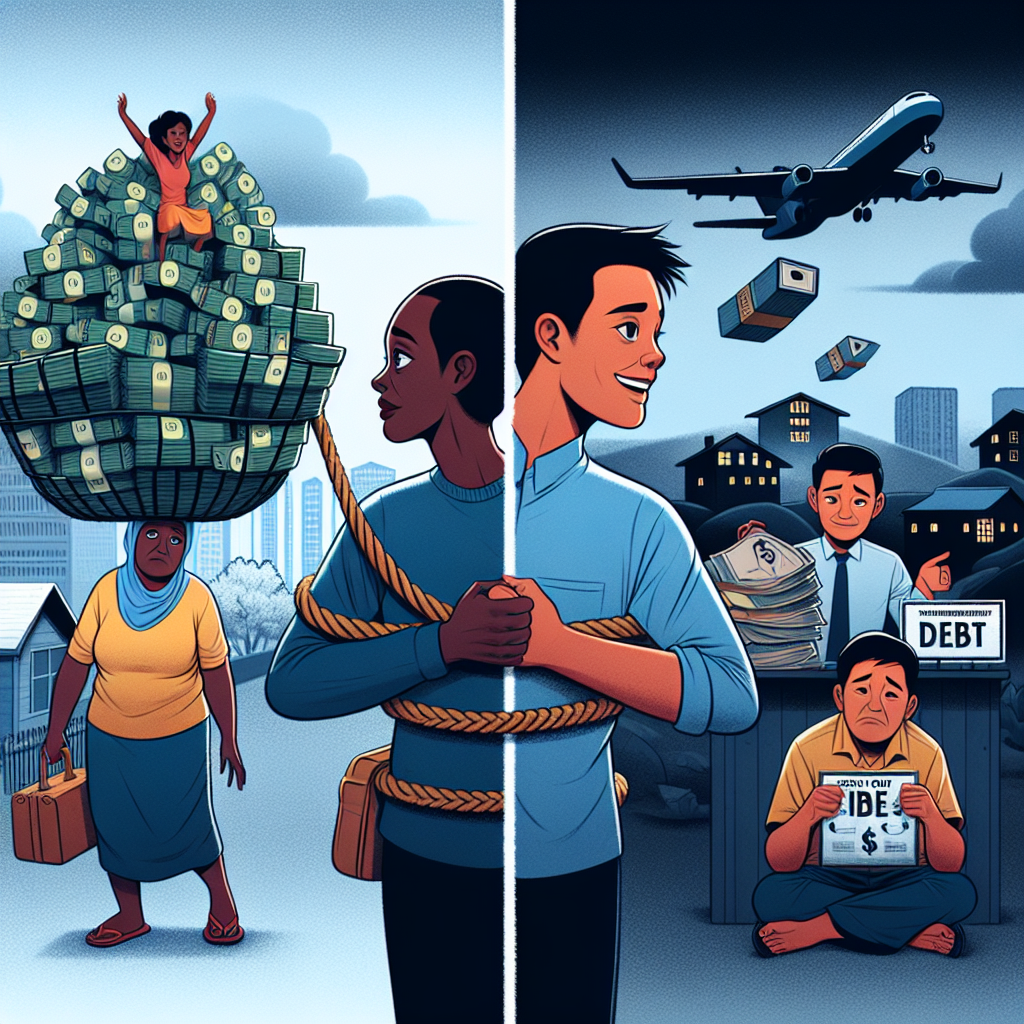
If given the choice, nobody would willingly choose to live burdened by debt. Especially among the Chinese community, there is a common belief in the saying, “Without debt, one is light and free.” However, reality often contradicts one’s wishes, as individuals or families find themselves saddled with heavy debt due to higher education, healthcare, taxes, and various other reasons, struggling under the weight of loan repayments and interest.
When facing financial difficulties caused by debt, it’s important not to succumb to despair and lamentation, but rather bravely confront the situation, search for ways to break free from the burden, and take proactive measures.
In the United States, under certain circumstances, some debts can be permanently reduced or forgiven. For example, when dealing with student loans, medical debt, and tax obligations, one should explore various methods to seek partial or complete forgiveness of their debts. The following information is compiled from recommendations on sites like gobankingrates.
Many university graduates in the U.S. carry the burden of student loan debt. Depending on the type of loan and individual circumstances, there may be eligibility criteria for reducing or forgiving student loan debt.
One such program is the Public Service Loan Forgiveness (PSLF) initiative designed for individuals working for qualifying public service organizations such as government or non-profits. Eligible individuals may have the remaining loan balance forgiven after making 120 qualifying monthly payments.
There’s also teacher loan forgiveness. Teachers working in low-income schools or educational service agencies may qualify for loan forgiveness. Depending on the subject taught and years of service, up to $17,500 of Direct Loans or FFEL Program loans can be forgiven.
Borrowers permanently and totally disabled may be eligible for Total and Permanent Disability Discharge (TPD) of federal student loans.
Various methods can help reduce medical debt. Firstly, one should review all medical service bills received from hospitals and healthcare providers to ensure the charges are accurate, as billing errors are shockingly common. It’s possible that the amount owed for medical services is not as much as claimed.
Next, contact the hospital’s billing office to request discounts and potentially lower the amount owed, especially if able to make a lump sum payment or pay the full amount within 30 or 60 days, which may lead to discounts.
Subsequently, get in touch with the medical insurance company to confirm they’ve covered all expenses they should. It’s common for insurance claims to be denied due to incorrect coding by the doctor’s office. If a claim is denied, one can appeal the decision. A 2024 federal study found that 50% of those who appealed insurance denials successfully reversed the initial decision.
Additionally, numerous non-profit organizations in the U.S. provide medical debt assistance for low-income or financially struggling patients, offering partial or full forgiveness of their medical expenses. Contact the hospital’s billing office to inquire about potential financial assistance programs that meet your circumstances.
If you owe money to the Internal Revenue Service (IRS), there are various methods to obtain debt reduction or payment suspension.
An Offer in Compromise (OIC) is an agreement between a taxpayer in debt and the IRS, allowing the taxpayer to settle the tax debt for an amount lower than the current owed sum. To qualify for an OIC, one must demonstrate that paying the full amount would cause economic hardship, or that they are financially incapable of paying. Each OIC application is individually assessed by the IRS, considering factors such as income, expenses, and asset value.
Sometimes, acknowledging tax debt but being unable to pay due to current financial circumstances can result in having your account labeled “Currently Not Collectible” (CNC) by the IRS. While this doesn’t fully forgive the debt, it temporarily halts IRS actions like garnishing wages or freezing bank accounts.
In certain circumstances, tax debt can also be discharged through bankruptcy. To meet the requirements, the tax debt must meet specific criteria such as being income tax debt with at least three years of history and not related to fraud or tax evasion.
The debt reduction methods explained above may also be applicable to other types of debts.
It’s important to note that since each individual’s situation and eligibility criteria differ, when considering debt reduction initiatives, it’s crucial to consult with a lawyer or tax professional to determine the most suitable approach for your specific circumstances.