
In recent months, China’s economy has been showing signs of weakness, prompting state-owned banks and other financial institutions to aggressively purchase low-risk domestic government bonds. This has led to a significant drop in government bond yields. Despite warnings issued by the People’s Bank of China, the bond yields continued to decline, indicating a lack of confidence in China’s economy among its own financial institutions.
Furthermore, concerns have been raised regarding the credibility of policy-making in the Chinese leadership, with the current economic situation exacerbating the ongoing economic challenges.
Throughout this year, Chinese government bond yields have been steadily decreasing, with a rapid acceleration in the decline since the end of November. As of Friday, December 20, the five-year government bond yield dropped by 5.9 basis points to 1.361%, while the 10-year government bond yield decreased by 0.4 basis points to 1.69%, reaching new lows for the year. The yields for both 10-year and 30-year government bonds have dropped by over 80 basis points this year.
Government bond yield refers to the annual income generated from investing in government bonds as a percentage of the total investment amount. Industry experts attribute the decrease in Chinese government bond yields to the widespread purchasing of low-risk domestic government bonds by various institutions. Despite reassurances provided during the Central Economic Work Conference on December 11th and 12th, the market remains skeptical of the government’s promises of increased fiscal and monetary policy support.
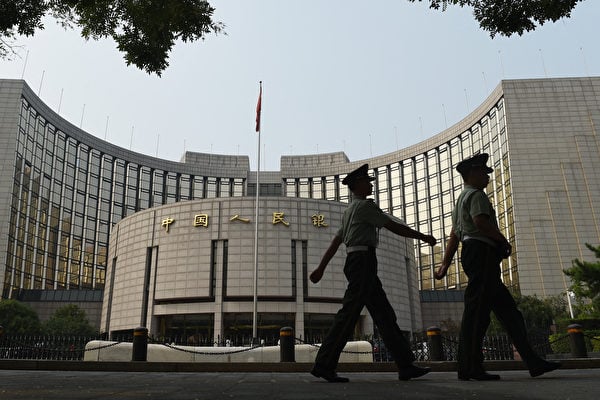
On December 18, as the yields of both five-year and ten-year government bonds hit new lows, the People’s Bank of China summoned several financial institutions engaged in aggressive trading in the bond market in an attempt to stem the continuous decline in bond yields. Institutions called for the meeting included banks, securities firms, insurance asset management companies, financial subsidiaries, funds, trusts, and others. The central bank urged these entities to strengthen the prudence of their bond investments and warned of “zero tolerance” towards any illegal activities in the bond market.
Market analysts believed that the central bank’s action was meant as a warning to financial institutions to cease buying government bonds. However, the continued downward trend in government bond yields suggests that the warnings have not been effective in curbing the market behavior.
David Huang, an American economist, stated on December 20 that Chinese financial institutions, particularly those investing in long-term government bonds, are doing so due to the economic slowdown and lack of market confidence. This has led to decreased interest in corporate lending and other higher-risk investments, with a shift towards safer assets like government bonds for risk aversion.
He further explained that in times of economic downturn and uncertainty, financial institutions tend to increase their allocation to low-risk assets, such as government bonds. This heightened demand for government bonds could further complicate financing for the real economy, exacerbating the downward pressure on the economy.
Bloomberg’s analysis suggests that despite repeated warnings from the central bank regarding the risks of a bond market bubble, the bond market frenzy continues due to the ongoing economic and credit challenges in China. Regulatory interventions have inadvertently provided opportunities for financial institutions to enter the market.
Reuters reported that despite multiple warnings about the risks of a bond market bubble, the bond market remains robust due to the lowering deposit rates and promises of further monetary policy loosening by the Chinese government.
In a report by The Wall Street Journal, it was noted that while the Chinese authorities and online influencers remain steadfast in promoting a positive outlook on the Chinese economy, recent trends in the bond market are signaling a potential economic downturn. A Chinese investment banker was quoted saying, “With demand so weak now, what else is there to invest in?”
The Chinese government’s hopes for economic support are placed on state-owned banks, insurance companies, and funds. However, these institutions are opting to hedge their funds in the bond market rather than providing financing for commercial ventures or elsewhere. Despite the government’s promises to support the economy, the actual impact has yet to be realized, leading to a “policy credibility crisis” within the core of China’s governance.
Chinese affairs expert Wang He also expressed doubts on the effectiveness of central bank warnings towards financial institutions, attributing it to the economic downturn that has left these institutions with limited options. The investment in government bonds reflects a hesitance to invest in riskier projects amid the current economic turmoil.
He emphasized that China’s push for state-guided market practices is not a true reflection of a market economy. The economic miracles that China boasted about in the past have now faced bankruptcy in recent years. The intensification of various economic policies has raised concerns about the lack of confidence in the Chinese government, prompting a move towards safer assets like government bonds.
In conclusion, the decreasing government bond yields reflect the overall economic downturn and the challenges faced by financial institutions, highlighting the need for comprehensive strategies to address the underlying issues and restore confidence in China’s economic future.