
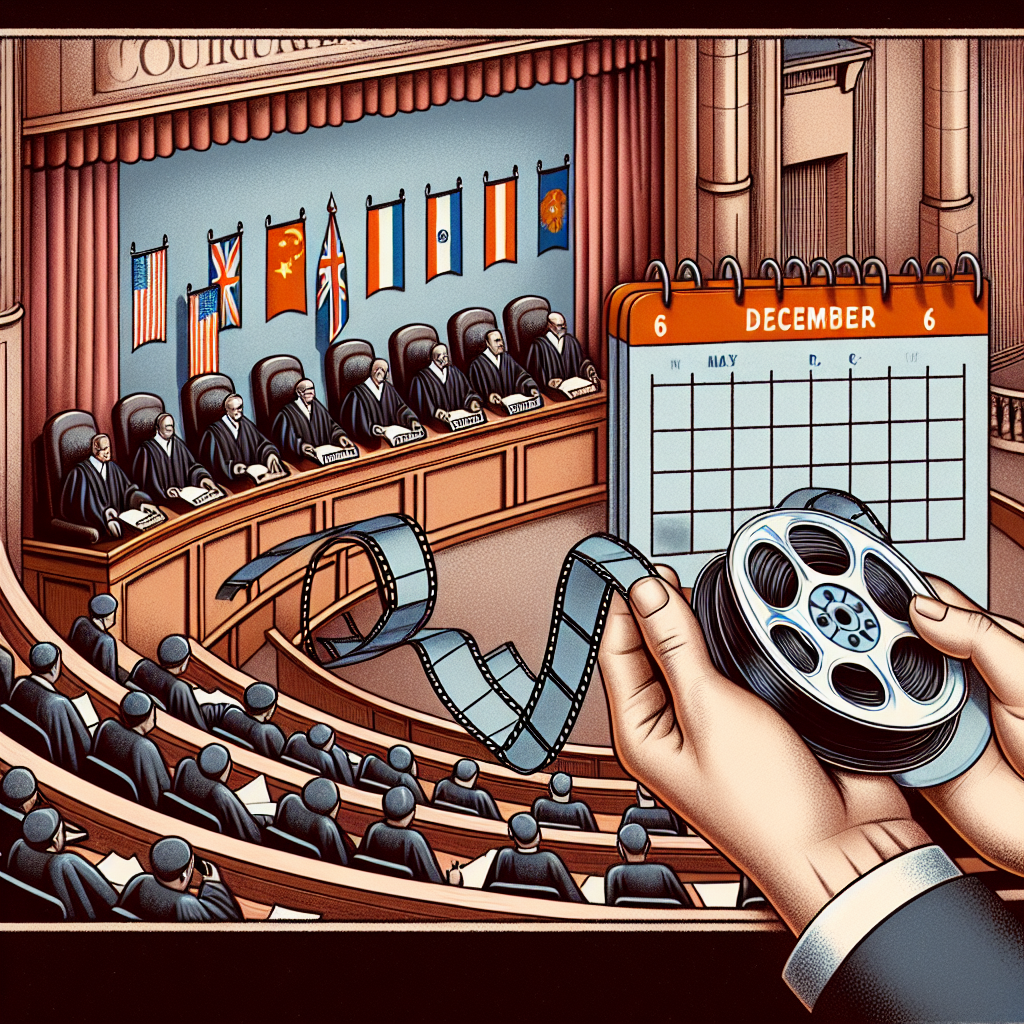
The U.S. Federal Court of Appeals upheld a law on December 6 that will require the Chinese company ByteDance to sell its American subsidiary – the short video application TikTok. The judges rejected TikTok’s appeal, stating that the U.S. Constitution protects American freedom of speech, not to be exploited by adversaries. With this ruling in place, what lies in the future for TikTok?
On December 6, a panel of three judges at the U.S. Court of Appeals for the District of Columbia Circuit made a decision based on the national security threat posed by China to the United States.
This ruling has caused a stir. TikTok and its Chinese parent company, ByteDance, had previously filed a lawsuit in federal court seeking to block a law passed by the U.S. in April this year, which required ByteDance to divest TikTok within nine months, or else TikTok would be fully removed in the U.S. TikTok and ByteDance argued that this law would violate the First Amendment of the U.S. Constitution, which protects the right to freedom of speech.
However, the judges squarely dismissed this argument in their ruling on December 6.
Judge Douglas Ginsburg stated that the U.S. Constitution protects American freedom of speech, not to be used by adversaries to infringe upon the U.S. He wrote in the main opinion of the ruling, “The existence of the First Amendment is to safeguard American freedom of speech. The sole purpose of U.S. government actions is to protect this freedom from being violated by foreign adversaries and to limit their ability to collect data on Americans.”
Judge Neomi Rao, along with Judge Ginsburg, shared the same viewpoint, stating that the law requiring ByteDance to divest TikTok is part of bipartisan efforts in Congress and previous governments over the years in response to the threat from China.
They said in their ruling, “For years, the two political branches have worked to investigate the national security risks posed by TikTok’s platform and considered potential remedial measures put forward by TikTok.”
“The law is the result of bipartisan action. It was carefully crafted as part of a broader effort to address the proven national security threat posed by the People’s Republic of China (PRC).”
Due to the threats to U.S. national security and businesses posed by the Chinese government through TikTok, the judges believe that TikTok users should consider transitioning to alternative platforms.
They stated in the ruling, “Therefore, TikTok’s millions of users will need to find alternative means of communication. This is attributable to the mixed commercial threats posed by the PRC to U.S. national security. The U.S. government has engaged with TikTok over the years, working to find alternative solutions.”
Additionally, the judges believed that since ByteDance, headquartered in Beijing, China, is controlled by the Chinese Communist Party, the law requiring ByteDance to divest TikTok also applies to all of ByteDance’s subsidiary companies and platforms.
Furthermore, Judge Sri Srinivasan argued that because of TikTok’s impact on freedom of expression, the U.S. must separate TikTok from Chinese control to protect national security. In his supporting opinion to the two aforementioned judges, he said, “170 million Americans use TikTok to create and view various forms of free expression, interacting with each other and the world. However, it is precisely because of the platform’s widespread influence that Congress and multiple presidents have decided to detach it from Chinese control, which is critical to protecting our national security.”
“The goal of Congress is to protect our national security from covert actions by specific foreign adversaries, regardless of the potential impacts of various views that may appear on the platform.”
Judge Srinivasan also mentioned the need to uphold the original law, rejecting TikTok and ByteDance’s appeals. “Given the serious national security threats faced, Congress deemed it necessary to address this risk. As the records indicate that Congress’s decision was deliberate and in line with long-standing regulatory practices without suppressing particular information or ideas, we cannot set it aside.”
The TikTok divestment law will come into effect starting January 19, 2025, the day before Donald Trump is sworn in as President of the U.S. once again.
Until January 19 next year, TikTok and ByteDance can continue to appeal this decision to the Supreme Court. Last year, TikTok also took similar legal actions to block a ban on the app in Montana. Montana had issued a preliminary ban on TikTok.
TikTok first became a target of the U.S. government during Trump’s first term in office. In August 2020, then-President Trump attempted to ban TikTok and WeChat through executive orders, but was stopped by the U.S. courts.
In June 2021, President Joe Biden revoked a series of Trump administration executive orders banning WeChat and TikTok.
Subsequently, lawmakers in Congress began introducing multiple bills aimed at banning TikTok, including one that forced ByteDance to divest TikTok, or else face a ban. The bill received overwhelming support in both the U.S. House of Representatives and the Senate.
When President Biden signed the bill into law in April this year, the countdown began on the 270-day deadline given to ByteDance to divest TikTok. To qualify for the divestment, it must be certain that TikTok is no longer controlled by Chinese entities and no longer has operational ties with Chinese entities.
If the Biden administration determines that TikTok has made progress towards a qualified divestment and has formulated a legally binding agreement, evidence suggests that ByteDance’s sale of TikTok has made “significant” progress, then Biden can authorize an additional 90 days to complete the sale and divestment transaction.
This additional time will give the final say on TikTok’s fate to Trump, who will be in office by then. Trump initially proposed barring TikTok, but as TikTok’s user base continued to grow significantly, he also stated during this year’s presidential campaign that he would not allow TikTok, used by 170 million Americans, to be banned. However, Trump cannot ignore the bipartisan-supported TikTok divestment law.
A Chinese technology list was revealed to require approval from the Chinese government for export. Experts say that TikTok’s recommendation algorithm is on that list, making it very difficult for ByteDance to divest TikTok. The actual outcome of the TikTok divestment law will likely result in TikTok being banned in the U.S.
If U.S. tech companies continue to allow access to TikTok after January 19, they may face fines in the billions of dollars.