
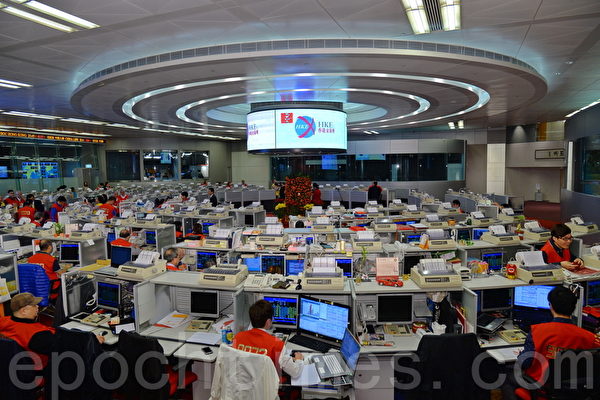
With the continuous decline of the Chinese economy and increasing geopolitical risks, foreign capital has been fleeing in large scale in recent years. Starting from August 19th, the Shanghai and Shenzhen stock exchanges have restricted the disclosure of trading information for the Shanghai-Hong Kong Stock Connect and Shenzhen-Hong Kong Stock Connect, no longer disclosing real-time trading data representing foreign capital known as Northbound Funds, which has sparked market attention.
The Shanghai Stock Exchange and Shenzhen Stock Exchange previously announced adjustments to the trading information disclosure mechanism for the Shanghai-Hong Kong Stock Connect and Shenzhen-Hong Kong Stock Connect starting from August 19th.
Specifically, after the end of each trading day for Shanghai (Shenzhen) Connect, the exchange will disclose the total trading volume and number of transactions for that day, ETF (Exchange Traded Funds) trading volume, top ten securities by trading volume, and total trading volume, among other information.
The Hong Kong Stock Connect has also been adjusted accordingly. On the trading day, if the remaining quota for the Hong Kong Stock Connect (representing the Northbound Funds) is above 30%, it will show “quota is sufficient”; if the remaining quota is below 30%, the daily remaining quota balance will be disclosed in real-time. After the end of each trading day for the Hong Kong Stock Connect, the exchange will publish the buy and sell transaction amounts and number of transactions, as well as the total turnover and total number of transactions, covering ETF trading volume as well.
The Shanghai-Hong Kong Stock Connect allows Hong Kong investors (generally representing foreign capital) to trade Shanghai Stock Exchange-listed stocks in Hong Kong, while Shanghai investors can trade Hong Kong-listed stocks in Shanghai; while the Shenzhen-Hong Kong Stock Connect represents that Hong Kong investors can trade Shenzhen Stock Exchange-listed stocks in Hong Kong, and Shenzhen investors can trade Hong Kong-listed stocks in Shenzhen.
This news has sparked market attention.
Financial commentator Guo Yiming analyzed, “Under the trading information disclosure mechanism of the Shanghai-Hong Kong Stock Connect and Shenzhen-Hong Kong Stock Connect, the real-time trading data for Northbound Funds has been canceled. Investors who rely on Northbound Funds for short-term investment and trading strategies are indeed significantly affected. For a period of time, the market seems to have lost its main direction, and the investment strategies of some short-term investors have become uncertain.”
CIE financial manager “Godly Hand Zhang Big Brother” posted, saying, “It’s chaotic! On August 19th, Monday’s closing of the Chinese stock market, just learned of a major news related to the Chinese stock market, which is shocking. What exactly happened? A sincere reminder to 220 million shareholders!”
“Previously, the real-time trends of Northbound Funds on a daily basis have been changed to be disclosed after the closing, allowing for viewing of the total turnover of Northbound Funds and the top 10 active securities traded at the close. This is still somewhat useful for retail investors. This is shocking… Market reports indicate that foreign capital is bullish on the Chinese stock market, but the Northbound Funds are clearly net selling. On one hand, they say they are bullish on the Chinese stock market, but on the other hand, the Northbound Funds are net selling, leaving many retail investors puzzled.”
Another netizen commented, “Data not being disclosed makes people afraid that if they see Northbound Funds selling stocks, they will lose confidence in taking over. ‘A poor student has many things to deal with; without fundamentally changing the nature of a poor student, they will always be a poor student. What’s the use of more tools?’ ‘Even the leek roots have been cut, not knowing where the vegetables come from.'”
Moreover, “Old Savage Channel,” a long-time follower of Chinese economic data, posted on the social platform X, expressing that the scale of foreign capital fleeing China is astonishing: “The speed of net outflow of foreign capital is still accelerating fiercely. In July, the monthly difference between bank sales and purchases of foreign exchange was -$54.4 billion, setting a record for monthly outflows since 2016. Folks, what you must know is that the difference between bank sales and purchases of foreign exchange represents the scale of foreign capital inflows and outflows. When positive, it is net inflow of foreign capital, when negative, it is net outflow of foreign capital. If this pace continues, the net outflow of foreign capital will soon surpass the levels during the 2015 stock market crash.”
“With China’s existing foreign exchange reserves, at this pace, they won’t support it for half a year, and strict foreign exchange conversion bans will have to be imposed by then.”
On August 16th, according to data released by the Chinese Ministry of Commerce, foreign capital continues to withdraw from China. In the first seven months of this year, foreign direct investment (FDI) in China decreased by 29.6% compared to the previous year. In 2023, China’s total foreign direct investment was $33 billion, an 82% decrease from 2022, hitting the lowest level since 1993.