
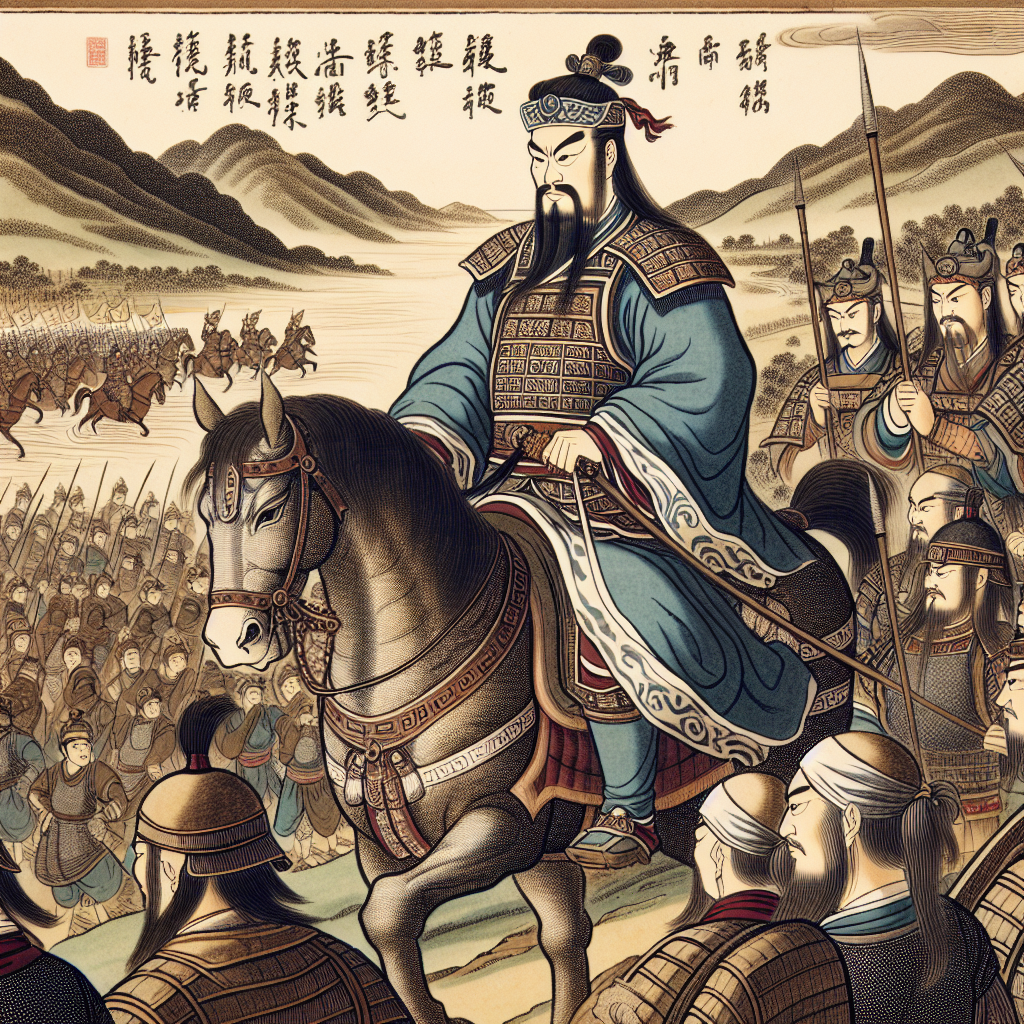
In the 14th-century classical Chinese novel “Romance of the Three Kingdoms,” a strategic military advisor of the Shu Kingdom during the ancient Three Kingdoms period, Zhuge Liang (181-234 AD, styled as Kongming, also known as Wolong), led his troops south to suppress a Southern Barbarian rebellion. The rebel leader Meng Huo was captured seven times. Each time, Zhuge Liang released him, hoping to win genuine loyalty through kindness and military superiority. However, Meng Huo kept returning, forming new alliances and bringing stronger armies, including the Vine Armor soldiers of the King of the Nanman, who wore armor soaked in oil, making them difficult to defeat with conventional weapons.
Finally, it came down to a decisive strike. Zhuge Liang lured the enemy into the narrow valley of the serpent trap. Pre-buried landmines and oil were ignited; the valley turned into a sea of fire in an instant. Tens of thousands were burned alive. Zhuge Liang stood on the mountain top, watching the thick smoke and the smell of burning flesh permeating the air, unable to hold back his tears, lamenting:
“Although I have contributed to the country, I will surely lose my life!”
He reflected that while destruction was necessary to end the cycle, it also wounded his soul. The rebellion was quelled, Meng Huo genuinely submitted, but the commander always remembered the price paid.
What resonates in later generations is the stark strategic dilemma revealed by this event: when one party views agreements as an opportunity to rearm, hides their capabilities among civilians, and believes that the massive loss of their people can serve a greater purpose, the other side is ultimately left with a choice between enduring endless, low-intensity attrition or crossing moral lines to respond with overwhelming force.
Similar dilemmas are now echoed in places like the Middle East. In Gaza, Lebanon, and Iran, repeated attacks and retaliations have led to or may lead to devastating destruction, with civilians bearing the heaviest impact.
On October 7, 2023, Hamas-led terrorists and their associates breached the border, attacking southern Israel, resulting in approximately 1,200 deaths (mostly civilians) and the kidnapping of over 250 hostages. Many were killed in their homes or at music festivals. Hamas’ atrocities included rape, dismemberment, burning children alive, and more. In the years before and after the attack, Hamas launched thousands of rockets at Israeli communities, and built a vast tunnel network beneath densely populated residential areas in Gaza, often intercepting aid shipments and hiding military forces among civilian populations.
Israel subsequently launched sustained operations aimed at destroying Hamas’ military capabilities and preventing large-scale attacks in the future. A fragile ceasefire agreement took effect on October 10, 2025, which is currently mostly holding, although sporadic incidents of conflict still occur.
The Gaza Strip with its 2.3 million people has endured catastrophic impacts. Data from the Gaza Health Ministry (widely cited by UN agencies) shows that since October 2023, over 72,000 Palestinians have lost their lives, mostly women and children. Approximately 80% of structures in the region have been destroyed or damaged, with a large number of people displaced, living among rubble, facing severe shortages of water, food, and medical resources.
Israeli leaders believe that showing restraint in the years following rocket attacks would only give Hamas the opportunity to rearm. The scale of the October 7, 2023, attack reinforced their belief that limited responses would only invite more deadly attacks. By launching assaults from civilian areas, Hamas turned each attack into a humanitarian tragedy.
The ordinary people of Gaza bear the heaviest burden. Hamas leadership seems willing to accept – even exploit – massive civilian casualties to uphold their narrative of “resistance.” This cycle seems to leave no room for compromise.
After Hamas’ attack on Israel on October 7, 2023, Hezbollah, the political and military organization based in Lebanon, created a “support front” in support of Hamas, launching thousands of rockets and drones at northern Israel, resulting in dozens of civilian and military deaths, and tens of thousands of border residents being displaced. In September 2024, Israel initiated “Operation Beeper,” targeting the Hezbollah leadership and conducting extensive bombings. A ceasefire agreement reached in November of the same year under US mediation. However, in early March 2026, conflict escalated between Israel and Iran, with Hezbollah launching rocket attacks on Israel once again. Israel responded by intensifying airstrikes, ground operations, and evacuation orders in southern Lebanon.
Lebanon has paid a heavy price both in the past and in the present. According to the Ministry of Public Health in Lebanon, since early March 2026, over 1,000 people have died due to Israeli military actions, including over 120 children. At the peak of the conflict, nearly one million Lebanese – about one-fifth of the country’s population – were displaced. Israel ordered most residents south of the Litani River in Lebanon to evacuate north, turning large areas into war zones.
Israeli leaders state that continuous rocket attacks and Hezbollah’s refusal to completely withdraw from the area north of the Litani River leave Israel with no choice. Hezbollah’s entrenched position among Lebanese civilians, and ongoing weapons replenishment, minimize the effectiveness of limited response measures.
Many ordinary Lebanese – including some traditional supporters of Hezbollah – have openly expressed dissatisfaction, blaming the Hezbollah organization for dragging the country into another catastrophic war for the sake of Iran, resulting in losses of lives and homes for Lebanese people. Civilians are once again the hardest hit, while Hezbollah leadership believes that sustainable “resistance” justifies paying these costs.
Over the years, the Iranian theocratic regime has supported terrorism globally, including terrorist activities against Americans. It backs proxy militia groups, advances its nuclear program, calls for the destruction of the US and Israel, and develops ballistic missiles. The “12-Day War” in the summer of 2025 severely damaged Iran’s nuclear and ballistic missile programs but did not lead to any progress in negotiations. On February 28, following a stalemate in indirect nuclear talks, the US and Israel carried out extensive airstrikes. The initial strikes resulted in the deaths of Iran’s Supreme Leader Ayatollah Ali Khamenei (1939-2026) and other high-ranking officials. Iran retaliated with missile and drone attacks targeting Israeli and American military bases and infrastructure in the Gulf region, disrupting normal shipping in the Strait of Hormuz.
The casualties from these airstrikes were significant. Reports from Iranian officials and independent observers indicate that the strikes resulted in the deaths of over 1,900 to 3,000 people, including many civilians (though so far, this number seems lower than the casualties from Iranian regime’s crackdown on January protests). Damage near a girls’ school in Minab, Iran (apparently a mistaken target), extensive displacement, power outages, and destruction or damage to homes and medical facilities intensified casualties and property losses.
US and Israeli leaders believe that years of proxy wars, nuclear development, and failed sanctions channels have severely restricted options to contain Iran. On March 30, US President Trump posted on “Truth Social,” stating progress in negotiations with what he termed a “new, more rational (Iranian) regime,” but also warning that if an agreement is not reached soon, and the Strait of Hormuz remains closed, the US will “bomb and utterly destroy” Iran’s power plants, oil wells, its main oil export hub Kharg Island, and possibly even desalination plants. These targets have so far intentionally avoided attack.
The current situation remains uncertain. Many ordinary Iranians, already burdened by economic hardships and suppressed protest activities, now face the prospect of greater infrastructure destruction, affecting power, fuel, and drinking water supplies, with additional economic pressures in the future.
Here, the similarity to the ancient story is particularly striking: the responding party appears to confront the same grim choice as Zhuge Liang did back then – enduring endless cycles or crossing an even harsher threshold.
The deep sigh of Zhuge Liang from the Three Kingdoms era sheds light on the profound meanings behind the Gaza, Lebanon, and President Trump’s ultimatums to Iran today. Unfortunately, no ancient tale can provide simple answers for contemporary conflicts, especially when they involve ideologies, densely populated areas, and asymmetric tactics. Leaders must navigate difficult balances between security needs and moral considerations, and make cautious choices between short-term force and long-term stability. However, one truth echoes in the serpent trap of the Three Kingdoms era and the Middle East battlefield today: when rulers view their people as expendable pawns, it is the civilians who ultimately pay the price, losing their lives, homes, and futures.
Author’s Bio:
Tamuz Itai is a journalist and columnist based in Tel Aviv, Israel.