
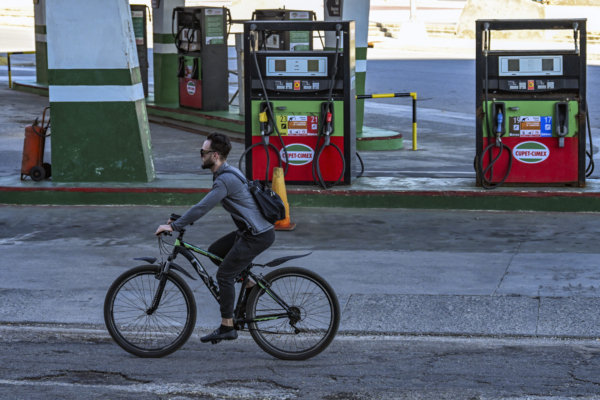
Following the United States taking over Venezuela’s oil exports, Cuba is facing its most severe fuel shortage. Residents in Havana are digging out dusty old bicycles from warehouses, fixing worn-out tires, and many are even learning to ride bicycles again, sparking a “bicycle fever” in the area.
For over 25 years, Venezuela has been a crucial ally of Cuba, serving as the main supplier of oil and fuel to this communist island nation. In return, Cuba provided security guarantees for the previous Maduro regime. However, since the arrest of Maduro by the United States in January, this energy lifeline has been cut off.
Furthermore, the U.S. has threatened tariffs on countries supplying oil to Cuba. As a result, Mexico has recently halted fuel shipments to Cuba, citing the collaboration between Cuba, China, and Venezuela as a threat to U.S. national security.
The depletion of oil supply has made life in Cuba increasingly difficult. Residents are not only dealing with frequent power outages but also facing skyrocketing prices of food, transportation, and fuel (even if available). Even for those with money, fuel is often hard to come by.
Some Havana residents are turning to solar power for electricity. They are transitioning to electric cars and rushing to install solar panels on their homes and businesses.
Others are opting for non-energy-dependent modes of transportation to cope with rising transportation costs. For 23-year-old Gabriela Barbon, the cost of driving has tripled, prompting her to start cycling for the first time.
Barbon, participating in a bicycle training camp organized by the local group “Citykleta” in the city park, stated, “Cycling is no longer just a leisure activity or something you do at a certain stage of life, it has become a necessity for survival.”
Beside her, many adults are striving to find balance on two wheels. She noted, “The ‘Learn to Pedal’ event is happening just in time and meets my urgent needs perfectly.”
Yasser Gonzalez, the organizer of the “Citykleta” event, had anticipated only 100 sign-ups, but due to the urgent need for alternative means of transportation in the capital, the actual participation is nearly four times higher.
Gonzalez remarked, “The demand from people wanting to learn to ride a bike is just snowballing.”
For Yoandris Herrera, cycling is not unfamiliar. However, accustomed to riding motorcycles for transportation, he had left his dismantled bicycle under the bed collecting dust for nearly a year.
Now, this four-year-old bicycle has found a second life on the streets, serving as Herrera’s means of commuting and picking up his children from school. He mentioned, “Fuel prices are just too high now; biking is much more practical.”
This fuel crisis has unexpectedly boosted the business of bicycle repairman Pedro Carrillo. Operating a temporary repair stand along the sidewalks of Havana, he is meticulously truing bicycle wheels, with bike tires lining the wall behind him.
Carrillo exclaimed, “Business is booming!” However, he admitted that this bicycle frenzy has also sparked a shortage of supplies; at times, he cannot find the necessary parts to repair customers’ bikes because some materials are simply unavailable in the current market.
(Reference: Reuters)