
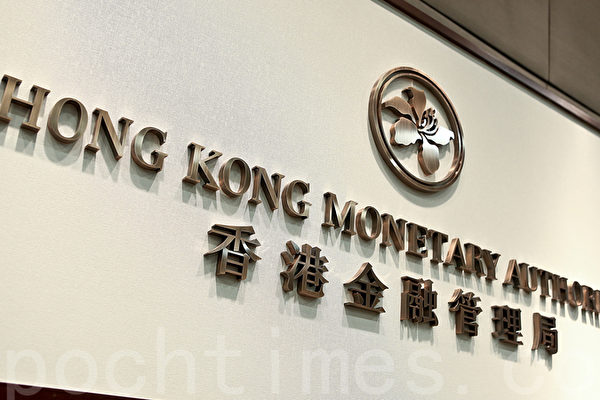
The Hong Kong government recently announced the utilization of 150 billion Hong Kong dollars from its foreign exchange fund for infrastructure projects, highlighting the financial crisis facing the government. This move has raised concerns externally, as it may jeopardize the credibility of Hong Kong’s linked exchange rate system and serve as a signal of detachment between the Hong Kong dollar and the US dollar.
On February 25, Hong Kong Financial Secretary Paul Chan unveiled the “2026/27 Budget,” allocating 150 billion Hong Kong dollars from the foreign exchange fund to support projects in the northern metropolitan area and other infrastructure developments. This marks the first time since 1984 that the Hong Kong government has tapped into the foreign exchange fund.
Furthermore, in order to expedite infrastructure projects in the northern metropolitan area and other public works, the Hong Kong government plans to increase the borrowing limits for two programs, green bonds and infrastructure bonds, to a total of 900 billion Hong Kong dollars.
The primary purpose of the Hong Kong foreign exchange fund is to maintain the Hong Kong dollar’s exchange rate against the US dollar within the range of 7.75 to 7.85, ensuring financial stability and attracting investments. It serves as a crucial safeguard for Hong Kong as an international financial center and a gateway to mainland China.
The Hong Kong Monetary Authority issued a statement indicating that the proposed fund transfer will not affect the fund’s capacity to support the currency peg and the financial system, emphasizing that the foreign reserves are sufficient and continuously increasing.
Detaching the Hong Kong dollar from the US dollar could raise concerns among stakeholders. Kelvin Lam, a senior China economist at the London-based Temple of All Gods Institute for Macroeconomic Research, expressed to Bloomberg that such a move could “open Pandora’s box,” leading to unforeseen consequences.
He stated, “What is worrying is that if this method of fund transfer becomes a norm and there is a lack of checks and balances within institutions, along with the government’s inadequate political or financial controls, the credibility of the linked exchange rate system will inevitably be damaged. Investors or currency holders will sooner or later lose trust in the system, even if the fund size is far from its designated threshold.”
Financial and economic influencer “Xiaocui Politics and Finance” with 337,000 subscribers on YouTube also voiced concerns about the Hong Kong linked exchange rate system in a self-media program.
She believes that even though Hong Kong’s foreign exchange fund currently holds a substantial amount of money, utilizing these funds sends a dangerous signal that Hong Kong is no longer interested in maintaining the linked exchange rate and peg to the US dollar, focusing instead on infrastructure development.
She said, “I think it is clear that Hong Kong indeed wants to detach the Hong Kong dollar from the US dollar, there is no other interpretation, it is evident that they no longer care about the Hong Kong dollar, they only care about whether commercial buildings can be constructed.”
Regarding Hong Kong’s use of the foreign exchange fund, Xiaocui further analyzed that the foreign exchange fund serves as Hong Kong’s safety net, and the government’s decision to allocate 150 billion Hong Kong dollars for large-scale infrastructure projects in the northern region indicates that Hong Kong’s finances are now depleted.
Xiaocui believes that these infrastructure projects will likely be predominantly awarded to mainland China, effectively handing money over to Xi Jinping. She criticized these projects as being riddled with corruption and mismanagement, ultimately leading to draining Hong Kong’s finances, resorting to tapping into the foreign exchange fund, deeming it “truly deplorable.”
Epoch Times previously reported that Hong Kong is facing an unprecedented financial crisis. Over the past three fiscal years, the comprehensive deficit has been around 100 billion Hong Kong dollars, surpassing deficits seen in major economic downturns such as the Asian Financial Crisis. Simultaneously, the fiscal reserves have hit a historical low.
According to estimates by PwC in early 2025, by March 31, 2025, Hong Kong’s fiscal reserves are projected to decline to 639.8 billion Hong Kong dollars, equivalent to approximately 10 months of government spending, marking the lowest level on record. Following 1997, the highest recorded level of fiscal reserves for the Hong Kong government was 28 months, with the fiscal reserves reaching a high of 1.16 trillion Hong Kong dollars at the end of the 2019/20 fiscal year.