
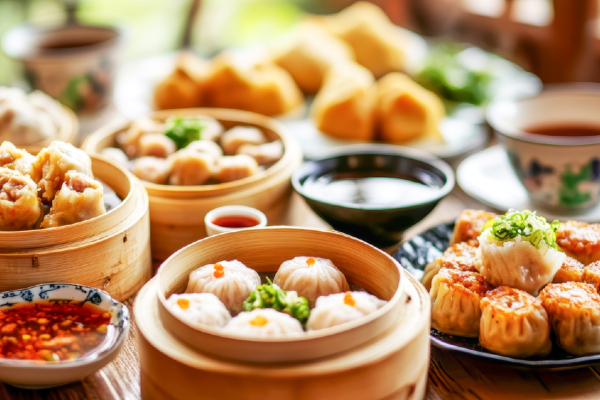
In recent years, the way people in New York celebrate the Chinese New Year’s Eve dinner is quietly changing. Instead of preparing a full table of dishes at home as in the past, more and more Chinese families are choosing to either dine out with special Lunar New Year menus at restaurants or order takeout Chinese New Year dishes to spend the eve, thus preserving the symbolic meaning of the holiday while reducing the burden of cooking and preparation, gradually becoming a new norm for overseas Chinese to celebrate the Lunar New Year.
In several major Chinatowns in New York, before the Lunar New Year, many Chinese restaurants have already introduced special New Year menus featuring traditional dishes symbolizing good fortune, such as whole chicken, steamed whole fish, hair moss with dried oysters, longevity noodles, and communal hot pot combinations. Unlike the focus on large family gatherings in the past, the current menu designs emphasize flexibility with options for two, three to four people, making it more appealing to small families and younger generations.
This shift is closely related to the changes in the structure and pace of life in Chinese families. For many families working abroad, having to work or attend to daily affairs on New Year’s Eve and then spending hours preparing the traditional feast at home is not easy. Therefore, booking a restaurant package or ordering ready-made New Year dishes has become a practical choice that balances time constraints with maintaining the festive atmosphere.
It is worth noting that even without personally cooking, the “flavor of the New Year” is still considered indispensable. Many restaurants incorporate traditional symbolic elements into their Lunar New Year menus, from dish names to packaging design, integrating meanings of “reunion,” “great fortune,” and “surplus year after year,” turning the New Year’s Eve meal into not just a meal to fill the stomach but one carrying blessings and a sense of ceremony.
The way the younger generation celebrates the New Year has further driven this trend. While some second-generation Chinese may not be familiar with the traditional ways of preparing Lunar New Year dishes, they still want to “eat like it’s the New Year’s Eve” on the auspicious night, so by dining out or ordering takeout packages, they can enjoy the holiday with family or friends. The focus of the New Year’s Eve meal is gradually shifting from “who cooks and how many dishes are prepared” to “whether they can sit together and enjoy a good reunion meal.”
Amidst the ongoing pressure of inflation, consumer behavior is also adjusting. Compared to the past elaborate banquets with more than ten dishes, recent Lunar New Year packages tend to offer moderate portions at manageable prices while retaining key symbolic New Year dishes, reflecting the Chinese community’s balance between tradition and reality.
Despite the changing form of the Lunar New Year’s Eve dinner from home gatherings to restaurant packages, the core essence of the holiday has not disappeared. For many overseas Chinese, as long as they can sit around a table on New Year’s Eve and enjoy a meal symbolizing reunion and blessings, whether at home or at a restaurant, the New Year spirit remains present.