
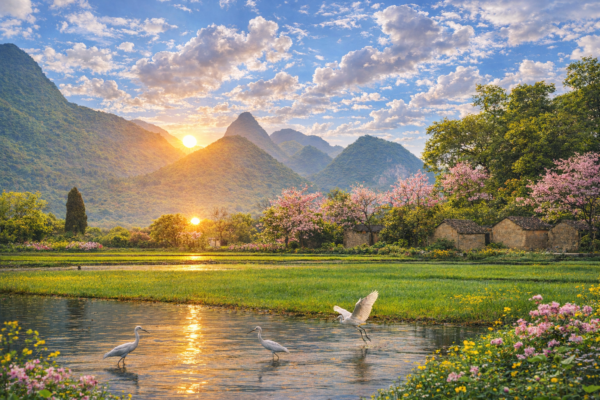
As winter continues, the body still needs to be bundled up tightly, but spring is quietly approaching. With the transition from winter to spring, it means the sun is getting warmer, the days are getting longer, flowers are beginning to bloom, and the rain is increasing.
When will spring come, whether it is what the groundhog says or what the calendar says, spring will definitely arrive as scheduled. It’s time to countdown to welcome the days of beautiful spring sunshine. What are some things to look forward to this spring?
According to the “Old Farmer’s Almanac,” the spring equinox in the Northern Hemisphere is March 20th. During the spring equinox, the sun shines directly on the Earth’s equator. The Smithsonian Science Education Center (SSEC) points out that at this time, the Northern Hemisphere is neither tilted towards nor away from the sun, with almost equal lengths of day and night.
Some people may prefer to believe in the predictions of groundhogs. This year, on February 2nd, groundhog Phil saw his shadow, which means winter will continue for another six weeks. Thus, the start date of spring is March 16th, a few days earlier than the spring equinox.
With the arrival of spring, there will be more opportunities for outdoor activities. Daylight saving time in the United States (most states) begins at 2 a.m. on March 8th. On March 8th, clocks will be set forward one hour to 3 a.m., making sunrise and sunset about an hour later than the previous day, meaning longer daylight in the evening and shorter daylight in the morning. This change lasts until November, extending daylight hours.
The vast geography of the United States means not all regions will immediately experience sunny weather. According to AccuWeather, some areas may experience early warming temperatures while others may have an extended winter. Cold weather will linger in the Northeast, Midwest, and Northern Plains regions. As summer approaches, the southern regions may experience a strong warming trend. These extreme temperature variations may bring about dangers. Drought in the southern regions could lead to wildfires, while snowmelt and spring rains in the Mississippi and Ohio River basins could result in floods.
For spring break tourists, now is the time to pack your swimsuits. The National Weather Service (NWS) predicts that temperatures in Florida will remain above normal from February to April. In late February to early April in California, wildflowers will bloom, offering many natural beauties for people to share online. By late March, the pink cherry blossoms in Washington, D.C. will be in full bloom, marking the annual cherry blossom viewing feast for Americans.
As spring arrives, many Americans will head to warm destinations for vacations, while some will stay at home to tidy up their houses and yards, taking advantage of spring to relax and recharge. Spring not only brings many religious holidays but also graduations and various outdoor music festivals.
Some people will soak in the spirit of spring by watching sports events. The Major League Baseball (MLB) season kicks off on March 25th, the National Hockey League (NHL) Stanley Cup Finals will crown a champion. The Women’s National Basketball Association (WNBA) regular season starts in May, while the National Basketball Association (NBA) Finals take place in June. Some will feel the spring vibe from the start of “March Madness” (NCAA Men’s Basketball Tournament).
Others are preparing to welcome spring by doing a thorough spring cleaning or taking a relaxing trip to an all-inclusive resort. Whatever spring brings, this year’s spring is eagerly anticipated, so be sure to make the most of it to reward yourself and prepare for the arrival of summer in June.