
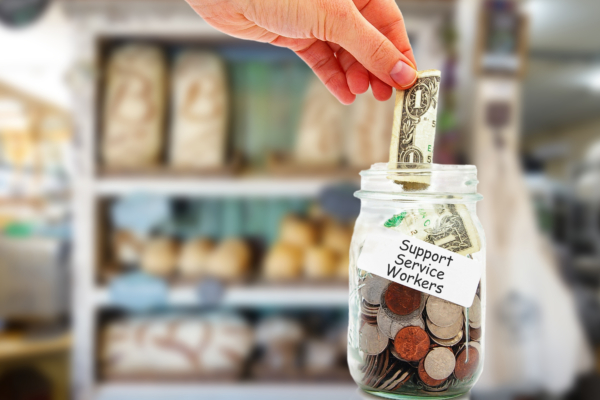
A recent survey conducted by the American financial website Bankrate reveals a cooling trend in the “tipping culture” during this year’s holiday season. As Americans strive to be more frugal with every dollar spent, service providers may receive fewer gifts and tips this holiday compared to previous years.
Consumers finance expert Bobbi Rebell remarked, “Most people care about important service workers in their community, but they are also facing financial pressures, anxieties, and budget constraints.”
Rebell noted, “These issues make it difficult for people to be as generous with tipping as usual, with generous behavior often seen as optional. Unfortunately, many people are forced to make tough choices during the holiday season to avoid overspending and financial distress.”
Overall, tipping levels across the United States have not only remained stagnant but have even decreased, reflecting a trend of careful spending that may leave hard-working service providers feeling empty-handed in the two weeks leading up to Christmas.
The survey of 2,445 adults by Bankrate indicated that this holiday season, garbage and recycling collectors are expected to receive the least amount of tips, with only 21% of Americans planning to offer gratuities or gifts. Mail carriers rank second to last, with only 27% of Americans expecting to give holiday bonuses.
Gardeners and snow removal workers come in third from the bottom, with 37% of people planning to tip or give gifts.
The survey also revealed that housekeepers are the service providers most likely to receive tips this holiday season, with 56% of Americans planning to offer gratuities. Childcare workers and teachers tie for second place, with approximately 47% of individuals intending to tip.
However, the likelihood of childcare workers receiving tips is declining. The survey shows a significant decrease in gratuities for childcare workers, dropping from 55% last year to 47% this year. Teachers follow closely, dropping from 53% last year to 47% this year.
The survey anticipates little change in the amount of tips this year. Bankrate’s senior industry analyst Ted Rossman stated, “It looks like if you’re tipping this year, the amount will likely be similar to last year.”
The survey found that Generation Z and Millennials are more inclined to tip than older age groups. Data shows that 44% of Generation Z (ages 18–28) and 42% of Millennials (ages 29–44) believe it is obligatory to give extra tips.
Consumer finance expert Rebell added, “Young consumers are accustomed to seeing tipping prompts everywhere, making them more likely to tip. But that doesn’t mean they have the ability to provide the desired or socially expected amount. Society does indeed place expectations and pressures on tipping.”
In conclusion, the survey reflects a changing landscape in holiday tipping practices, with economic considerations playing a significant role in individuals’ decisions on how to show appreciation for service providers during the festive season.