
On January 24th, Vice Chairman of the Chinese Communist Party’s Central Military Commission Zhang Youxia and Chief of the Joint Staff Department Liu Zhenli were announced to be under investigation, sparking discussions both domestically and internationally. As the situation continues to escalate, various revelations have emerged. According to the latest information, Zhang and Liu were controlled by the authorities using the method called “Hongmen Banquet.” This arrest operation bypassed the Central Commission for Discipline Inspection and was directly orchestrated by the Central Secretariat. Prior leaks indicated that this military purge involved 17 senior generals, leading to chaos within the military ranks with many officers submitting resignation reports.
Chinese state broadcaster CCTV reported on January 24th, citing the Ministry of National Defense, that Zhang Youxia, a member of the Politburo of the Central Committee and Vice Chairman of the Central Military Commission, along with Liu Zhenli, a member of the Central Military Commission and Chief of the Joint Staff Department, were suspected of serious violations of discipline and law, leading to an investigation being initiated based on the decision of the Central Committee. This announcement confirmed previous rumors circulating in the past few days.
Just before the official announcement of the investigation into Zhang and Liu on January 20th, Australian independent media personality Jiang Wang revealed on platform X that Zhang Youxia had been summoned for questioning, his son, confidential secretary, and Liu Zhenli were also under investigation.
Independent commentator Cai Shenkun disclosed on platform X on January 23rd that the news of the arrests of Zhang Youxia, Liu Zhenli, Xiao Tianliang, Zhong Shaojun, and 17 other senior generals was “absolutely accurate.” The Public Security Bureau, Central Guard Bureau, and Central Commission for Discipline Inspection were all involved in the arrest operation.
On Monday (January 26th), Jiang Wang, citing “reliable sources,” detailed the process of how Zhang Youxia and Liu Zhenli were captured by the authorities.
According to the information revealed, at 3 p.m. on January 19th, Central Secretariat Secretary Cai Qi called Liu Zhenli under the pretext of discussing personnel and military issues, requesting his presence at the Central Office. Unaware of any suspicion, Liu Zhenli only brought along a confidential secretary and a guard. Upon arrival, the guard was directed to a lounge while Liu Zhenli entered an office where Director of the Central Guard Bureau Lin Zhifeng led dozens of special agents to detain him.
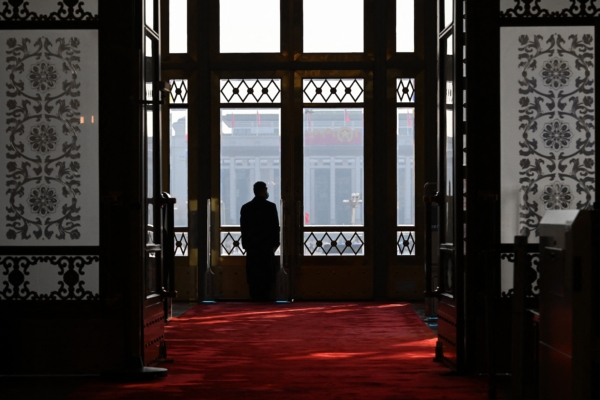
The process of controlling Zhang Youxia is even more intriguing. At 5 p.m. on the same day, Xi Jinping invited Zhang Youxia to a family banquet at the Great Hall of the People, where Xi Yuanping also attended. Zhang Youxia brought along family members, and his security detail and secretaries were arranged to dine in a separate restaurant. During the banquet, Cai Qi coordinated with the Central Office, Guard Bureau, and Special Agents Bureau to capture Zhang Youxia’s security detail and secretaries, eventually taking Zhang Youxia to a specific location.
Jiang Wang emphasized that the operation employed a “four-to-one” personnel configuration, with four special agents assigned to each of the target’s accompanying personnel. Of particular note, the operation was not spearheaded by the Central Commission for Discipline Inspection but was directly orchestrated by the Central Secretariat.
It is alleged that key figures such as Li Xi, Sun Xinyang, and Liu Jinguo of the Central Commission for Discipline Inspection were not informed in advance, and even the Central Political Bureau and Political Bureau meetings were not convened. The decision was solely made by Xi Jinping, Cai Qi, and Li Qiang.
Jiang Wang analyzed that the fallout between Zhang Youxia and Xi Jinping was not due to economic issues like military corruption but rather because Zhang Youxia disrupted Xi Jinping’s layout within the Central Military Commission. It is rumored that prior to 2024, Xi Jinping had complete trust in Zhang Youxia, but subsequent developments caused Xi Jinping to change his stance. As the 21st National Congress approaches, to ensure absolute control and prevent Zhang Youxia from dominating the next round of appointments, Xi Jinping ultimately decided to eliminate this faction within the military.
Following the investigation of Zhang Youxia and Liu Zhenli, the military system swiftly entered a state of control. Jiang Wang revealed that all deputy-level or higher military leaders, especially provincial military commanders or political commissars, were instructed to work in the offices of the Provincial Party Committee and prohibited from using their military headquarters. These officers were provided with dedicated offices and rest areas within the Provincial Party Committee office.
Take the example of Bai Zhongbin, the Commander of the Tianjin Garrison and Deputy Secretary of the Party Committee, who was informed that he must operate from the Tianjin Municipal Party Committee office. Cai Qi specifically called the Secretary of the Tianjin Municipal Party Committee, Chen Min’er, to “monitor” Bai Zhongbin and dispatched a specialized security team for Bai Zhongbin’s safety, while his original security forces were all withdrawn to the Tianjin Garrison. According to Jiang Wang, similar measures were simultaneously implemented in Hebei, Zhejiang, Jiangxi, and Shaanxi, where leaders of military regions, principal officers, and academic officers were required to gather at their stationed locations for concentrated learning and absence without reason was not permitted.
On January 24th, independent commentator Cai Shenkun revealed during an interview with “Fangfei Time” that he confirmed the news of the arrests of Zhang Youxia, Liu Zhenli, and 17 other senior generals through multiple well-informed sources inside the system. Cai Shenkun stated that various information sources indicated that Zhang Youxia’s security detail, staff, and secretaries had long been replaced in advance, using the technique of “trimming the skirt edge first and then touching the core,” which is seen as a typical mode of operation in purging dissenters.
On January 25th, the situation analyst Zhen Fei disclosed that a retired officer from the former 31st Group Army leaked information to the outside world, stating that after Zhang Youxia’s arrest, the Chinese Communist Army descended into chaos with officers at the division level and above either submitting resignations or seeking career transfers.
The officer claimed that Zhang Youxia’s arrest shocked senior officers at division level and above, leading them to preemptively submit resignation or career change reports to avoid being implicated, creating a challenge for the organizational departments to handle. What’s more concerning is that although Xi Jinping requested expressions of support from the army group commanders, most of the commanders remained silent. The informant explained that the military places a high value on seniority and camaraderie, with Zhang Youxia commanding high respect within the military, resulting in reluctance among individuals to be the first to turn against Xi Jinping.
The informant described the current chaotic state of the military: high-ranking officers seeking career changes or resignations, commanders refusing to take a stance, and the entire army exhibiting a “passive resistance” posture. Xi Jinping’s directives were proving to be fundamentally unenforceable.
He anticipated that within 10 days to half a month, “major events would occur” as Xi Jinping is “unable to effectively lead the troops.”
Cai Shenkun predicted that the subsequent purge would continue, potentially signaling the countdown for figures like Zhang Shengmin. He likened Zhang Youxia’s downfall to Xi Jinping’s “Lin Biao moment,” believing that this targeting of the “second-generation reds” and “second-generation military” emptied the traditional political foundation within the party, leaving Xi Jinping isolated. This extreme centralization has led to a complete imbalance within the system, and when everyone within the system feels threatened, those closest may become the crucial variable in changing the political landscape.