
According to a report by Fox News on Wednesday, January 21, the Deputy Secretary of Education in the United States, Nicholas Kent, recently stated that California and Minnesota are the two states with the most serious federal student aid fraud. The federal government is cracking down on fraudulent activities involving taxpayer-funded programs in these states.
Kent, in an interview with Fox News, said, “We have previously discussed that California is a hub of fraud, waste, and abuse of authority, but we see that Minnesota is also the same. One recent revelation is that under the leadership of the governor, there is a significant amount of fraud, waste, and abuse of authority regarding financial aid, and the Department of Education raised and emphasized this issue a few months ago.”
He emphasized that these fraudulent activities not only waste taxpayer dollars but also disproportionately affect low-income students striving to pay for education.
He also mentioned that in 2025, the Department of Education prevented up to $1 billion in fraudulent financial aid cases, which is equivalent to Pell Grants funding for 1,700 low-income students.
Kent stressed, “Since our resources are limited, we should consider that these resources could have been provided to truly needy low and middle-income students to help them successfully complete their studies.”
The Department of Education found that in the 12-month period from 2024 to 2025, fraudsters stole at least $10 million in federal student aid from California community colleges. A report showed that 34% of applications received by California community colleges in 2025 were likely fraudulent.
Kent explained that in many cases, fraudsters are “ghost students.”
He said, “We often see so-called ‘ghost students’ in financial aid fraud cases, students who have no intention of pursuing higher education. They do not plan to attend classes or graduate; their sole purpose of enrollment is to deceive and obtain federal financial aid.”
These “ghost students” register for classes, attend only once or twice, pocket the money, and never return.
Kent also pointed out that the use of artificial intelligence (AI) may facilitate such scams, as it allows scammers to simultaneously enroll in multiple different college programs.
Some scammers are American citizens, while others are immigrants.
Kent stated that the method to combat fraudulent activities is actually quite simple: verifying identities.
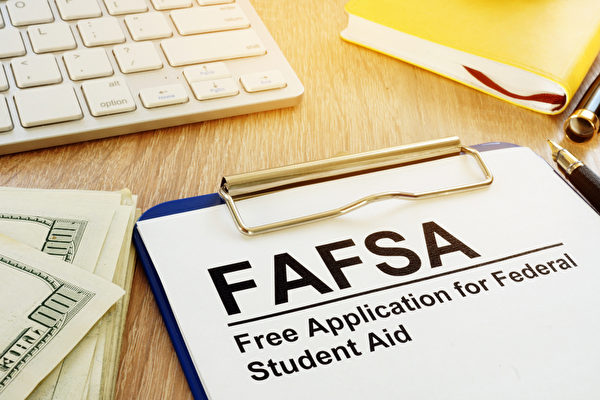
He narrated, “During the summer (last year), we implemented strict anti-fraud measures on the FAFSA (Free Application for Federal Student Aid) form for students applying for federal aid, including mandatory identity verification for first-time aid applicants, to ensure that each applicant is a genuine student, not a fake student or AI robot.”
He expressed, “We are very pleased to have prevented a significant amount of fraudulent activities from occurring… and we do our best to track down the bad guys, capture them, and prosecute them to the fullest extent of the law.”
Kent also noted that sometimes universities turn a blind eye to federal student aid fraud and benefit from these funds as well.
He said, the Department of Education is holding institutions accountable to ensure they understand that if there is fraud on their campus, they should be aware and take anti-fraud measures.
Keith Hovis, spokesperson for the Minnesota Office of Higher Education (OHE), stated that identity verification work on FAFSA is jointly done by the federal government and Minnesota colleges. OHE is not involved in such oversight work, as it is responsible for distributing state-level financial aid.
He explained, “Whether it’s a university in Minnesota or other states, the financial aid staff at each university reviews FAFSA according to the regulations of the Department of Education, then develops financial aid packages to submit to the federal government. If all requirements are met, the federal government disburses the funds.”
A spokesperson from the California Community Colleges Chancellor’s Office stated that they are actively working to prevent fraud, including using the “State Driver’s License System” and ID.me for identity verification and confirming students’ identities.
The spokesperson mentioned that they are also using the LightLeap AI tool in their work and utilizing cross-campus data to quickly detect fraudulent activities, reduce staff workload, and increase enrollment accuracy.
According to data obtained by the Associated Press, in 2024, California community colleges reported 1.2 million suspicious applications, with over 220,000 suspected fraudulent registrations. The community colleges lost at least $11 million in unrecoverable financial aid.