
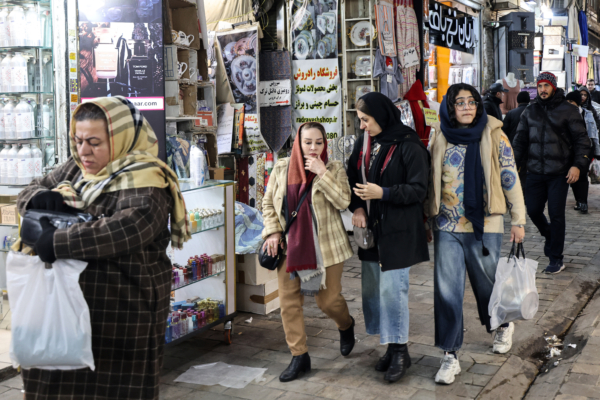
In the bustling downtown area of Tehran, the owner of a pet store is staring blankly at empty shelves. This was supposed to be the busiest time of the day, but now people passing by the shop are hurrying past, their eyes fixed on the food stalls. Since the internet shutdown on January 8th, his shop has seemed like a silent island.
Interviewed by the Associated Press, the shop owner requested anonymity out of fear of retaliation. He lamented, “Before that, I mainly relied on Instagram and Telegram to take orders, but now everything is cut off. The government gave us two domestic alternatives, but the problem is, our customers are not there – they simply don’t use those platforms.”
He told the Associated Press that since the protests and internet shutdown, his business has plummeted by 90%.
The internet blackout has now entered its 12th day, becoming the longest and most comprehensive communication blockade in the history of the Islamic Republic of Iran. For countless Iranian micro-businesses relying on social media for survival, the internet shutdown means not just a loss of communication but a loss of livelihood.
In a high-end tailoring shop in Tehran, the owner, looking at the deserted storefront, bluntly told the AP reporter, “People passing by the store have no desire to shop at all. We still have to pay for electricity, rent, and employee wages… but in return, we have received nothing.” Amid rampant inflation, people are putting their dwindling savings into essential goods for survival rather than clothes or pet supplies.
The trigger for this turmoil was the severe collapse of the Iranian currency Rial’s exchange rate at the end of December last year. Currently, 1 US dollar exchanges for over 1.4 million Rials. A decade ago, this figure was only 32,000; and before the 1979 revolution, the exchange rate was 70 to 1. As the value of the currency evaporated, the sudden hike in oil prices in December acted like a match, igniting long-suppressed economic anger among the public.
The network monitoring group NetBlocks estimates that this “digital blackout” is costing the Iranian economy over $37 million each day. While the Deputy Minister of Information Technology at the Ministry of Information and Communication Technology, Ehsan Chitsaz, has tried to downplay the losses to between $2.8 to $4.3 million per day, the cries of the public cannot be drowned out.
Behind the data and currency collapse, there are also targeted strikes from the establishment. The judiciary’s Mizan News Agency revealed on Tuesday that Tehran’s prosecutor had taken action, planning to confiscate the assets of 60 cafes on the grounds of their involvement in or support of the protests. In Tehran and Shiraz, many once lively social venues have been forcibly closed, and athletes and artists face the threat of asset liquidation.
In the semi-official Fars News Agency’s comment section, an Iranian reader despaired, “For God’s sake, please do not let the internet shutdown become the norm. We need the internet; our business lives are withering away, our enterprises are being destroyed.”
Under the multiple pressures of currency collapse, soaring prices, and the “digital island,” Iran’s economy and society are at an extremely dangerous crossroads.