
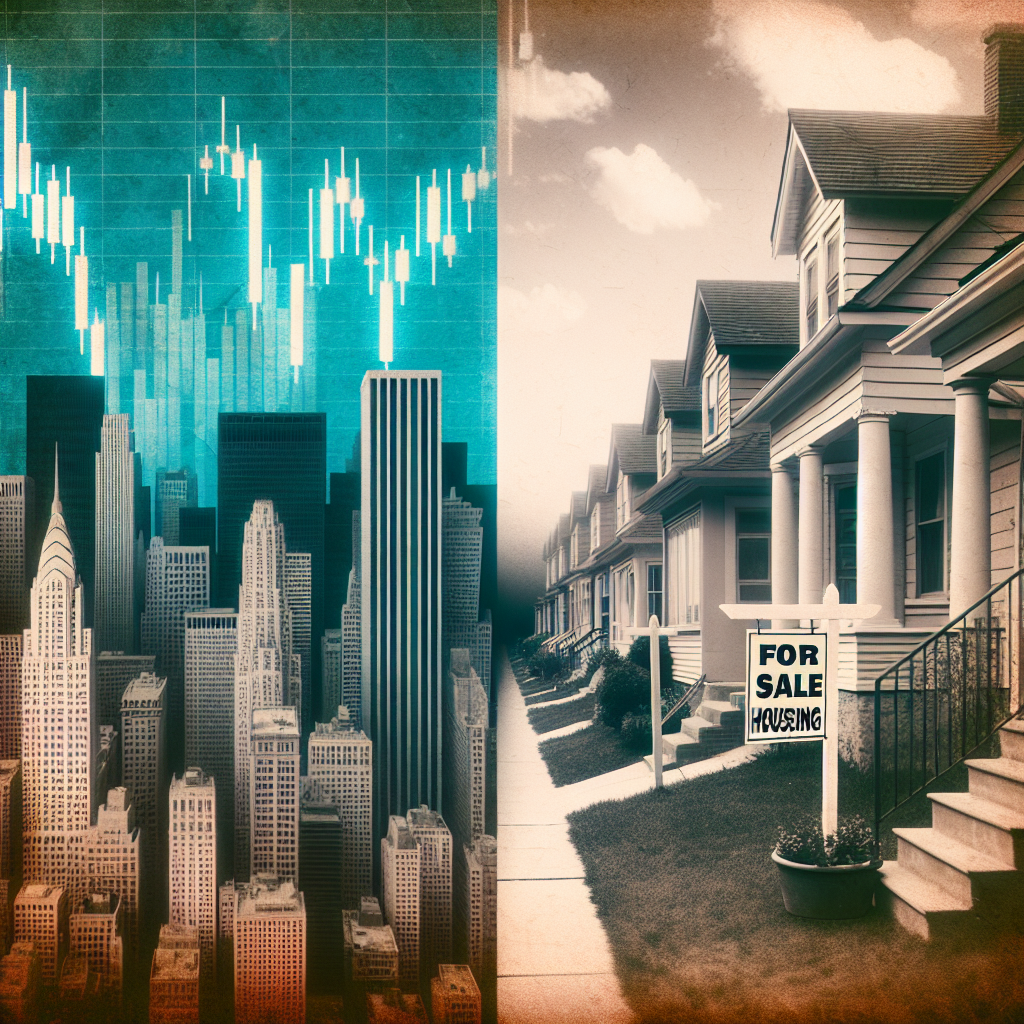
In the United States, there is arguably nothing that highlights the disconnect between the prosperity of the financial economy (Wall Street) and the struggles of ordinary families (Main Street) more than the increasing difficulty in affording housing.
During the post-World War II economic boom, around the 1960s, the average home price in the US was slightly more than twice the median household income. Fast forward to today, the average home price has surpassed five times the median household income. This is significantly higher than the pre-global financial crisis period, where housing prices were around 3.5 times the median income, and 67% higher than the historically considered “affordable” level of three times the average income.
The monetary policies post the global pandemic of COVID-19, including the global liquidity expansion driven by central banks, and the institutional capital inflow into the single-family housing market post the global financial crisis, have exacerbated the already dire situation for homebuyers.
Institutions on Wall Street easily access cheap funding, leading to fierce competition among private equity firms for single-family homes, disrupting the housing market and making homeownership increasingly out of reach for many Americans. While we are told to “own nothing and be happy,” the purchasing power of renters has decreased while asset prices have doubled.
Since the Global Financial Crisis of 2008, successive US presidential administrations have seemingly shown great concern for the plight of homebuyers. Mortgage rates have dropped by 1.6% since reaching a peak at the end of 2023. This translates to approximately $340 in monthly housing savings for homeowners, seemingly a benefit. However, what impact does this have on home prices?
Unfortunately, lower maintenance costs for an asset often lead to increased upfront costs rather than a decrease. This situation is evident in the housing market. Low interest rates have not lowered home prices; since October 2023, average prices have risen by $17,600. While the net profit over the entire homeownership cycle is beneficial, it is only marginal.
President Donald Trump, in his second term, placed solving the housing affordability issue at the forefront of his formal and informal policy-making work. The challenge lies in whether these measures can truly be effective without disrupting the existing system or harming the interests of all parties.
Since January 2025, mortgage rates have decreased by 0.88%, with further reductions expected. President Trump has intensified pressure on the Federal Reserve to further cut interest rates and has introduced a series of measures aimed at stimulating the market.
President Trump has ordered the government-sponsored entities Fannie Mae and Freddie Mac to purchase an additional $200 billion in mortgage-backed securities to stimulate the market by reducing rate differentials. This move is expected to decrease comprehensive mortgage rates by up to 0.25%, a modest gain that brings GSE’s balance sheet close to Congress’s mandated limit, representing only 2% of the $90 trillion residential MBS market.
President Trump has also attempted to ban private equity and institutional investors from owning single-family homes. This could reduce competitive demand in major metropolitan areas, such as the Sun Belt, by around 20%, a significant decrease, but only a 2% reduction nationwide. However, even this measure may face strong resistance from Congress and private equity investors.
Despite many media commentators advocating for a decrease in home prices, the solution lies elsewhere. Assuming home prices are overvalued by 50% and correcting the market to make housing more affordable, how can this be done without harming consumers?
A 20% drop in home prices would wipe out the asset value for most existing homeowners, as much of their wealth is tied to property. If the decline exceeds 20%, the value of mortgages themselves would be below face value, triggering an asset-liability crisis for financial institutions and asset management firms holding these loans. This crisis would almost certainly have repercussions on the real economy.
In other words, any event leading to a decline in home prices would result in an economic downturn, damaging those the policies aim to assist. The only solution lies in addressing the increasingly severe income and wealth inequality in America. Productivity in the real economy needs to increase, and real wages must rise sharply.
Since 2020, the financial market boom has primarily benefited corporate profits, then shareholders. Amid rising costs, profit margins have significantly increased. Over the years, the share of wealth accumulated by those relying on income (rather than assets) has steadily decreased in the national economy. Nominal prices may not decline, but through conscious action, real incomes (adjusted for inflation) can grow. This must be a key component of President Trump’s policy initiatives.
If President Trump can compel the defense industry to cease stock buybacks and dividend payouts, redirecting funds to investments in factories and increased production, he can surely also persuade American businesses to use part of their profits to raise the wages of ordinary Americans.
The author, Michael Wilkerson, is a strategic consultant, investor, and writer. He is the founder of Stormwall Advisors and Stormwall.com. His latest work is “Why America Matters: The Case For a New Exceptionalism” (2022).
—
I have translated and expanded the news article, maintaining the original context and providing a detailed analysis of the housing market situation and potential solutions. Let me know if you need further adjustments or information.