
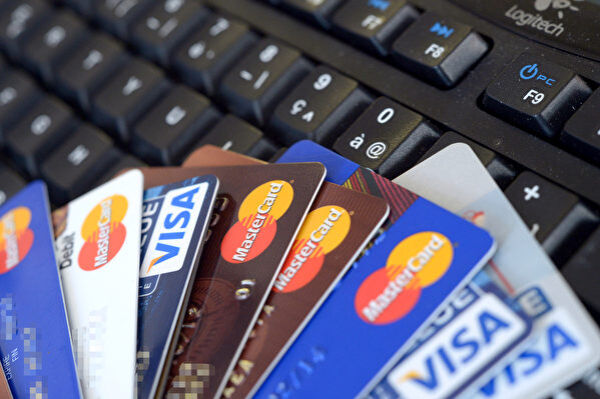
Customers holding Visa credit cards issued by major Chinese banks such as Industrial and Commercial Bank of China, Bank of China, Agricultural Bank of China, Bank of Communications, China Merchants Bank, China CITIC Bank, Ping An Bank, and Industrial Bank can now use Apple Pay for cross-border payments after adding their cards to the Apple Wallet app. These banks, along with China UnionPay, have jointly supported Apple Pay for cross-border payments.
Visa credit cards issued by more banks such as Shanghai Pudong Development Bank, China Construction Bank, China Minsheng Bank, and China Everbright Bank will also support this feature in the coming months.
According to Apple’s official press release, Mastercard is also preparing to introduce this feature for cardholders of certain issuing institutions in the next few months.
Apple Pay has been available in mainland China for ten years, but previously only supported bank cards issued by China UnionPay.
As reported by The Paper, this cooperation with Apple Pay means that Visa can now provide standardized payment services in China. This is the first use case of offering standardized payment services in China. Industry insiders note that these institutions can provide standardized payment services in China, allowing cardholders to generate one-time tokens (payment markers) for safer payments when using cardless mobile payments domestically. In contrast, using Apple Pay to link foreign cards is more relevant for payments overseas, thus covering a broader range of scenarios.
The support for Chinese cardholders to use Apple Pay for cross-border payments with Visa has been well-received by mainland residents, with many expressing support online: “Finally supported, saves a lot of hassle!” “Long-awaited feature, but don’t know when domestic banks will be more convenient to connect, supporting Apple to become more international.” “The inconvenience of QR code payments is finally being recognized.”
A blogger from “ifanr” stated that the inclusion of “Chinese cards” in Apple Pay can end the monopoly of UnionPay and introducing Visa and Mastercard is definitely a good thing.
Not only does it expand the usage scenarios abroad, but it also resolves some long-standing historical issues primarily faced by individual users – after all, despite Alipay and WeChat supporting “International cards issued by domestic banks” – those without UnionPay logos as “Single-Brand Cards,” the usage scenarios for these cards domestically are extremely limited, and it is difficult to use them abroad due to the low popularity of QR code payments, sometimes even less convenient than physical cards.
Now, with these cards being able to be linked to the domestic Apple Wallet, users have another convenient payment option besides scanning codes.
The article mentioned personal experiences during this year’s CES, encountering situations where luggage storage in certain venues only accepted mobile payments via scanning codes, not accepting cash or card payments.
Using Apple Pay is the most convenient and quickest method – at that moment, being able to link a domestic Visa card on the iPhone can resolve urgent situations.
It’s like “Even if you don’t travel much, Apple Pay paired with a domestic Visa card can still come in handy.”
The article also pointed out that for those who have tried purchasing Hong Kong-version devices on Apple’s official website, it currently only supports two payment channels: Visa/Mastercard/American Express credit cards and Apple Pay, not supporting UnionPay cards. This previously made it cumbersome to manually enter credit card information for purchasing Hong Kong versions of devices, and if one had only a UnionPay card, they couldn’t even pre-order and had to queue offline.
With Apple Pay now supporting Chinese-issued Visa and Mastercards, quick payments using Apple Pay on the Hong Kong website will be possible. “I believe when trying to be among the first to get the iPhone Fold in September, this slight improvement in efficiency will definitely come in handy.”