
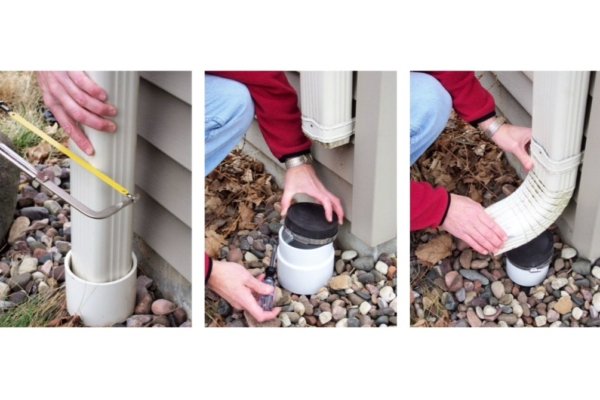
New York City Department of Environmental Protection (DEP) is set to enforce a long-standing but previously less regulated requirement that mandates homeowners to ensure that their residential stormwater pipes (also known as downspouts or roof drainage pipes) are completely disconnected from the municipal sanitary sewer system. DEP has warned that if found in violation during rainy periods, homeowners may face hefty fines.
According to a spokesperson from DEP, homeowners in all five boroughs could potentially be affected. The department points out that direct connections between stormwater pipes and the city’s sewer lines constitute illegal activity, as the sewer system is designed to handle household and commercial wastewater, not large volumes of rainwater. An influx of excessive rainwater during heavy storms could overwhelm the sewer system, leading to basement sewage backups, street flooding, and community inundation.
DEP states that failure to have stormwater pipes disconnected as required by law could result in fines of up to $3,000 for a first offense, $6,000 for a second offense, and $8,000 for a third offense. In addition to fines, other enforcement actions may also be taken by the city government.
DEP notes that disconnecting stormwater pipes is typically a “relatively inexpensive and quickly achievable maintenance task.” Homeowners can choose to do the work themselves or hire licensed contractors to complete the task.
DEP’s official website offers detailed guidance to assist residents in self-disconnecting their stormwater pipes, including steps such as cutting the rainwater pipe above the existing sewage connection point, sealing off the sewage standpipe, installing bends and extension pipes to direct rainwater at least 6 feet away from the building’s foundation, ensuring that rainwater flows towards absorbent ground like lawns, rather than walkways or neighboring private properties.
DEP also recommends that homeowners consider using rain barrels to collect rainwater, redirecting drainage to gardens, lawns, or even setting up rain gardens and minimizing hard surfaces to enhance water infiltration capabilities.
For residents who do not intend to perform the work themselves, DEP advises hiring licensed contractors and reminds consumers to obtain at least three quotes, seek recommendations from past clients, sign a written contract clearly outlining the project details, costs, and payment terms, and be cautious of quotes given without on-site inspection or inducements for immediate sign-ups under “special offers.”
After the completion of the project, homeowners are required to fill out and submit the “New York City Stormwater Pipe Disconnection Certification Form,” with all applications subject to review and spot checks. Failure to submit or being deemed non-compliant could still lead to penalties.
DEP’s official website provides illustrated guides to help residents understand the disconnection process and provides links to download certification forms: tinyurl.com/3uxwv2bc
The city government urges homeowners to proactively inspect their drainage systems before full enforcement begins, make necessary adjustments early on to avoid receiving fines for violations during the next heavy rainfall.