
On December 29th, the day after the conclusion of the Shanghai-Taipei Twin City Forum, the Chinese Communist Party launched its largest-ever military exercise against Taiwan.
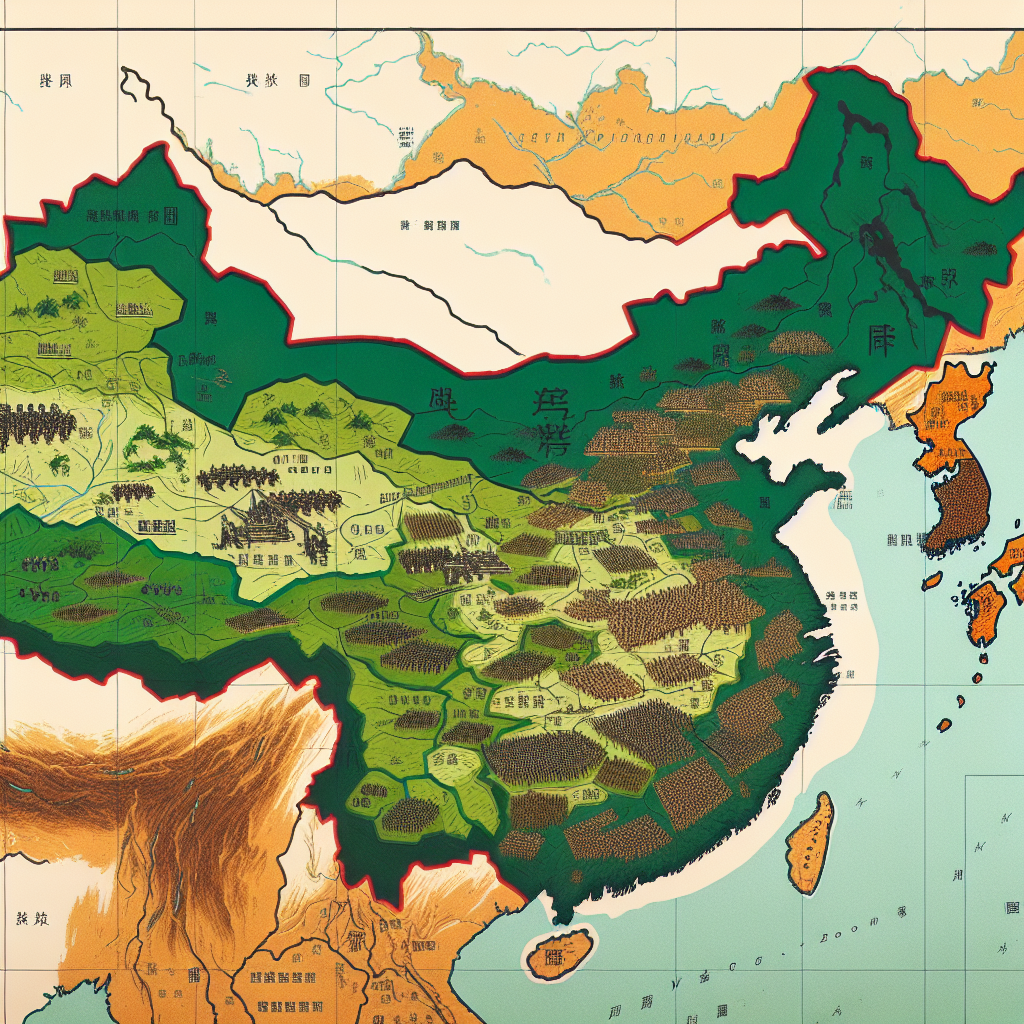
Let’s take a look at the map of the exercise. The green area marked is where the military exercise took place during House Speaker Nancy Pelosi’s visit to Taiwan in 2022, the orange and yellow areas are from the two Joint Exercise Sword exercises in 2024. The red area represents the exercise area at the end of 2025. It can be seen that the exercise area this time is quite large, with three northern regions connected and the area off the west coast of Penghu forming another connected zone.
In the footage released by the Chinese side, the No. 516 ship, Jiǔjiāng, a missile escort ship, appeared. Originally a Type 053H frigate, Jiǔjiāng was later refitted as the only Chinese Navy ship to provide land-based firepower support. The ship had its anti-missile missile launchers removed and added five 50-tube rocket launchers. The footage also showed China’s ballistic missile units, rocket artillery units, as well as the J-20 and J-10 fighters.
Footage captured by mainland Chinese netizens showed Chinese rocket forces moving Dongfeng missile vehicles on the road, disguised with yellow China Aerospace Science and Industry Corporation covers.
The Chinese military also released a video showing four important military bases in Taiwan being targeted. One near Taipei should be the Republic of China Air Force Command. On the east side of Taiwan is the well-known Hualian Jiashan Air Force Base. The two targets in the south of Taiwan appear to be the Zuoying Naval Base in Kaohsiung and the Eighth Army Corps Headquarters in Qishan District.
In this exercise, China also deployed the Coast Guard. China announced the route of the Coast Guard’s military exercise near Matsu Island and Wuchiu Island along the Fujian coast.
Taiwan’s military responded by deploying warships to monitor Chinese warships, likely including the Type 052C destroyer Changchun. On the ground, Taiwan also mobilized armored units, Humvee tanks, and air defense units for training. The air force had F-16 fighters taking off. Images released by the Taiwanese military showed an F-16 locking onto Chinese KJ-500 early warning aircraft and J-16 fighters using Sniper pods.
Taiwan likely used the AN/AAQ-33 Sniper targeting pod on the F-16 to lock onto Chinese fighters. The Sniper pod is an external precision targeting device that uses infrared, high-resolution TV cameras, and laser sensors to detect targets.
Taiwan’s air force has previously used the Sniper pod to lock onto Chinese J-16 fighters and has released related images, so this occurrence is not surprising. However, what is surprising is the appearance of China’s most advanced early warning aircraft, the KJ-500, in the video. Generally, early warning aircraft like the KJ-500 operate behind the frontline fighter fleet, providing intelligence support. However, in this video, the KJ-500 was targeted by the F-16’s Sniper pod, indicating a potential vulnerability.
Given the recent conflict between Russia and Ukraine, China should be cautious. The downing of two Russian A-50 early warning aircraft by Ukraine, despite not having air force or early warning aircraft, signals a potential threat to Chinese early warning capabilities.
This large-scale military exercise by China seems to be a response to the recent significant U.S. arms sales to Taiwan. The U.S. announced record-breaking arms sales worth $11 billion on December 19th, including Harpoon missiles, Army tactical missiles, M109A7 self-propelled artillery, Javelin anti-tank missiles, TOW anti-tank missiles, etc. These weapons enhance Taiwan’s asymmetric warfare capabilities, enabling it to strike the Fujian coast from across the strait.
After the super military sales announcement, China’s reaction was robust, with strong protests from the Ministry of National Defense and the Ministry of Foreign Affairs.
Military expert Mei Fuxing stated in a recent interview that there were at least five items in the arms sales process completed as early as late October, but action was delayed due to various considerations.
The key difference in this arms sale is that Taiwan usually informs the U.S. Congress after passing relevant special budgets, but Taiwan’s Legislative Yuan has been obstructing the government’s military procurement special budget. The U.S. publicly announcing eight arms sales items to Taiwan aims to help Taiwan’s government push through the special budget for this arms sale.
The obstruction of the special budget in Taiwan’s legislature by some lawmakers hinders the process. Taiwan is not seeking to provoke, but to enhance its security with weapons purchases. Other countries like South Korea and Israel also buy weapons for defense without internal opposition like Taiwan faces.
Taiwan has surveillance capabilities using the AN/AAQ-33 Sniper pod, RF-16 aircraft, and plans to import advanced MS-110 pods from the U.S. The images of Chinese aircraft carriers that Taiwan has released were taken using the Sniper pod.
It is evident that China’s sudden massive military exercise at the year-end was a response to the significant U.S. arms sales to Taiwan. By demonstrating Taiwan’s defense capabilities, the arms sales act as a deterrent to China’s aspirations for regional dominance. The pushback in Taiwan’s legislature against the special budget is concerning but necessary for strengthening Taiwan’s defense capabilities.
Let’s wait and see how this situation unfolds and impacts the geopolitics of the region. Subscribe to explore the latest military developments and stay informed on the situation.