
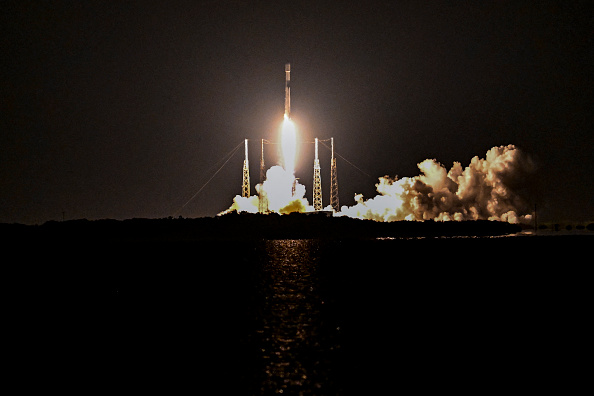
On the first day of 2026, SpaceX, owned by the world’s richest man, Musk, announced that they will be reconfiguring the constellation of their “Starlink” satellites in 2026. This plan involves lowering the orbit height of the satellites to increase space safety and reduce the risk of the Starlink network being disabled by anti-satellite weapons.
The Vice President of Engineering at Starlink, Michael Nicolls, stated that satellites in the 550-kilometer orbit will be lowered to 480 kilometers. This process is expected to take about a year.
In December 2025, an anomaly occurred with one of Starlink’s satellites in space, resulting in the generation of some debris and loss of communication with the spacecraft at an altitude of 418 kilometers. Starlink stated that the satellite rapidly descended by 4 kilometers, indicating a possible explosion or leak.
Such accidents are rare for Starlink, which operates nearly ten thousand satellites for broadband internet network services for consumers, governments, and businesses.
Nicolls mentioned on the social media platform X, “Lowering the satellite orbit will make the Starlink constellation more compact and enhance space safety in various aspects. Below 500 kilometers, the number of debris objects and planned satellite constellations significantly decrease, thereby reducing the overall likelihood of collisions.”
In recent years, with companies and countries deploying tens of thousands of satellites for internet constellations and other space-based services such as communications and Earth imaging, the number of spacecraft in Earth’s orbit has sharply increased.
Starlink is a near-Earth orbit satellite constellation project under SpaceX, aiming to provide high-speed global internet access services. SpaceX has long been known for its rocket launch business and has become the world’s largest satellite operator through Starlink.
Starlink has also become a reliable network link for the Ukrainian military on the battlefield.
Ukrainian forces are utilizing Starlink’s high-speed network for battlefield communications, weapon targeting, etc. In areas where communication capabilities have been disrupted by the Russian side, civilians and government officials also rely on Starlink.
Russian officials have repeatedly warned that commercial satellites providing services to Ukrainian military forces may be “legitimate targets.” Russia has stated that its troops have deployed a new type of ground-based missile system capable of targeting low Earth orbit objects, including satellites and hypersonic weapons.
In December of last year, the Associated Press reported that intelligence obtained by Western countries indicated that Russia’s anti-satellite weapons under development might target Starlink.
The anti-satellite weapon is referred to as a “zone-effect” weapon, which disperses hundreds of thousands of high-density micro-chips along the orbit where Starlink satellites are located to disable multiple satellites at once. The fragments produced by this weapon are extremely small, measured in millimeters, evading conventional tracking systems on the ground and in space, making it difficult for affected countries to hold Russia accountable.
The recent lowering of the satellite orbit by Starlink could also reduce the risk of the entire network being disabled by such anti-satellite weapons.
Although lowering the satellite’s altitude increases the risk of being targeted by anti-satellite weapons or missiles, in the long run, it significantly shortens the lifespan of debris, allowing the debris cloud generated by anti-satellite attacks to dissipate rapidly, thereby reducing the risk of prolonged network disablement. SpaceX estimates that lowering the satellite altitude will shorten the natural debris clearance process from years to months.
In 2022, Russia conducted tests on anti-satellite weapons, which demonstrated that if satellites were in low orbit, most debris would rapidly decay, resulting in only a brief network interruption of a few hours.
Furthermore, the altitude range of 500 to 600 kilometers from Earth is a high-density area for satellites. By lowering the altitude, Starlink aims to reduce the probability of accidental collisions.