
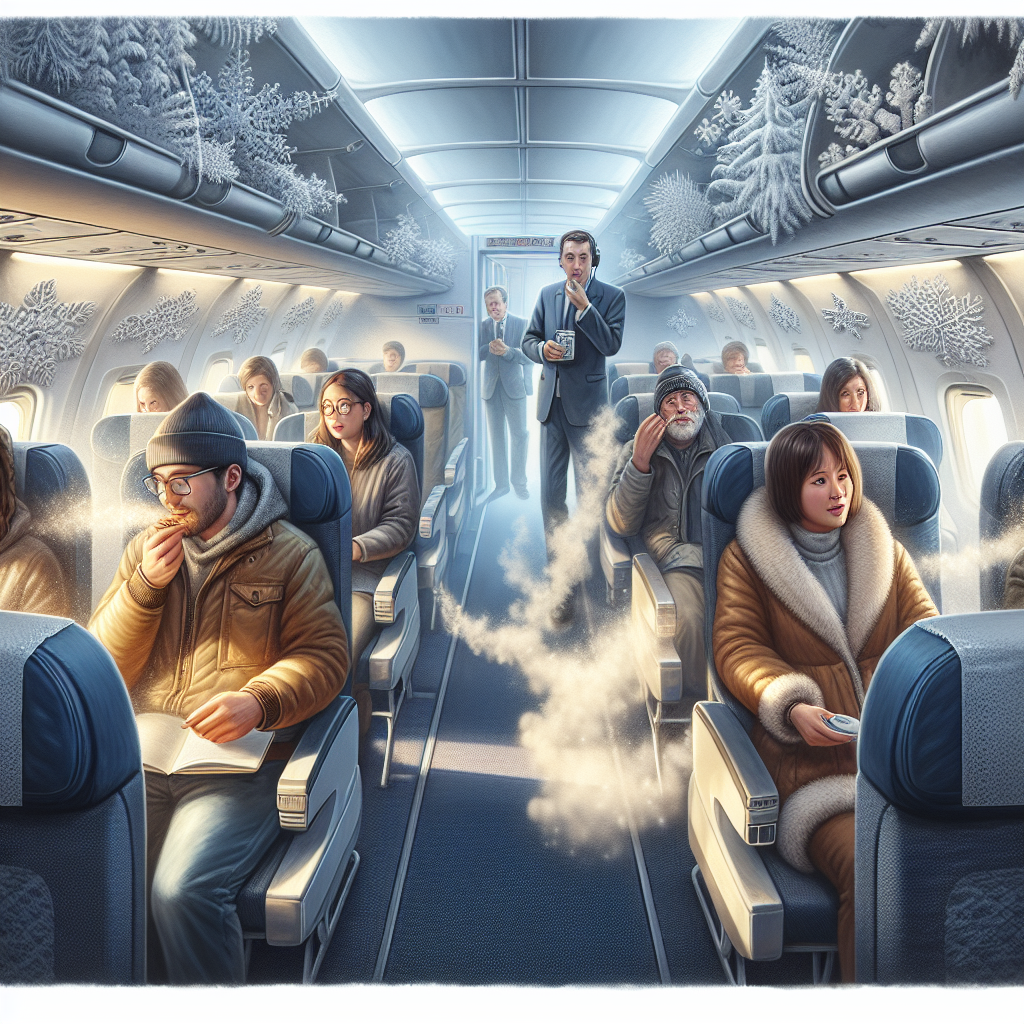
In winter, when you board an airplane operated by an airline, you might catch a whiff of a peculiar scent resembling maple syrup before takeoff. Such an unexpected smell may raise concerns among passengers who are unsure of its origins. However, experts have provided detailed explanations to shed light on the matter.
According to a report by Reader’s Digest, this unidentified odor is only detectable during winter, particularly when temperatures drop below freezing point. The scent is reminiscent of maple syrup with undertones of creamy candy-flavored liqueur. Although mysterious, this scent is a normal and crucial aspect of flight operations, related to aviation safety, hence passengers need not worry.
Experts have revealed that this distinctive aroma actually emanates from deicing fluid used by ground crew for conducting deicing operations on the aircraft. If you have ever wondered about the bright green liquid on the aircraft’s wings, the answer lies here. Without it, the consequences could be dire.
Kevin Singh, the founder and CEO of a U.S.-based charter and travel support company, who is also a flight instructor, mentioned, “If the aircraft is not thoroughly deiced, ice and snow accumulation on the wings and control surfaces will disrupt the smooth airflow over the top of the wings. This is extremely dangerous and could lead to a plane crash.”
Singh’s company provides deicing services regularly in the United States and Canada. During deicing, ground crew members first use high-pressure spray with heated deicing fluid to remove snow, ice, and frost accumulated on the aircraft’s surface. Subsequently, they apply another type of anti-icing fluid to create a protective layer, preventing the aircraft from re-icing before takeoff.
This entire process typically takes 10 to 20 minutes, depending on the aircraft’s size and weather conditions. Pilots must ensure the plane takes off before the anti-icing fluid loses its effectiveness. Missing this timeframe would necessitate another round of deicing.
So why do passengers catch a whiff of deicing fluid’s odor? This occurs because the aircraft’s ventilation system draws in outside air. When ground crew members conduct deicing operations nearby, vapor from the deicing fluid temporarily mixes with the cabin air, wafting into passengers’ noses.
The unique scent of deicing fluid comes from its primary component, propylene glycol. The slightly alcoholic, sweet aroma you perceive also originates from this compound, present in various products including food additives, pharmaceuticals, and even certain e-cigarette liquids. This familiarity might explain why the scent of deicing fluid seems somewhat pleasant, or at least not off-putting.
Although passengers may smell this aroma, aviation professionals primarily identify the fluid by its color. Type I deicing fluid is orange, Type II is transparent or pale yellow, Type III is green, and Type IV is a brighter emerald green. Each formulation is designed for specific conditions during takeoff and aircraft speed.
However, the odor of deicing fluid isn’t always sweet; some types can produce a drastically different smell—pungent reminiscent of raw onions. The scents experienced by passengers can range from slightly alcoholic to distinctly chemical, depending on the formulation, temperature, concentration, and interaction of the deicing fluid with various aircraft components.
Loretta Hill, a flight attendant at JetBlue Airways, mentioned that this scent is temporary and usually dissipates within a few minutes after takeoff. The aroma is most intense while the aircraft is on the ground and in the initial minutes after takeoff.
She stated, “If you are particularly sensitive to smells, you might notice it for slightly longer than others, but even then, we are talking about just a few minutes, not the entire duration of your flight.”
Since deicing operations only occur in winter when temperatures are low enough for ice, frost, or snow to accumulate on the aircraft’s surfaces, passengers only smell this aroma when conditions reach or drop below freezing point.
As for the safety of inhaling deicing fluid, Singh clarified, “The liquid is non-toxic, and inhaling it poses no harm, but its scent is indeed strong enough to cause a wrinkled nose.”
Nevertheless, Singh emphasized that deicing fluid “can corrode aircraft metal and is not environmentally friendly. Therefore, every snow-prone airport has drainage collection systems designed to collect these liquids sprayed on the apron.”
He added that deicing fluid can corrode the soles of pilots’ shoes worn during pre-flight aircraft inspections, underlining the strong corrosive nature of this fluid.
However, passengers need not worry when briefly smelling this scent within the aircraft cabin. Some individuals who are more sensitive to odors may feel slightly uncomfortable or sneeze, but for the vast majority, it is simply a unique scent that quickly dissipates.
Modern aircraft are equipped with highly efficient air particulate filters that effectively circulate cabin air, thus eliminating any residual odors.
Hill noted that for individuals who tend to feel nervous during flights due to various sights, sounds, and other sensations, “Understanding what is normal can make the entire flight experience less nerve-wracking.”
It is worth noting that during flight, the aircraft’s exterior surfaces may also accumulate ice due to low temperatures. This can lead to decreased aircraft performance, increased fuel consumption, and, in the worst-case scenario, loss of control and a crash.
Therefore, anti-icing and deicing systems are crucial components for ensuring the safe operation of aircraft. Pilots must remain vigilant regarding aircraft icing conditions to ensure flight safety.