
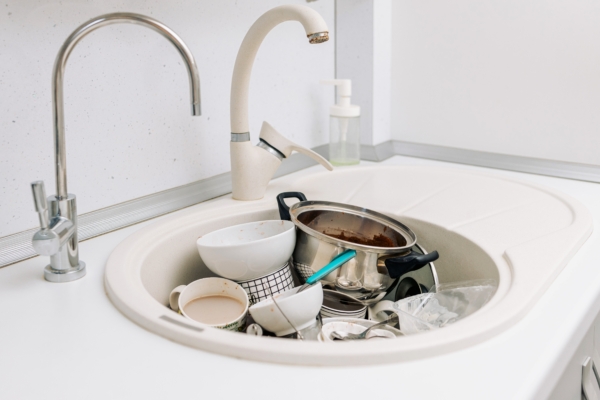
After dining, some people tend to toss piles of dirty dishes into the kitchen sink or let them soak in warm water overnight, waiting to wash them the next morning, especially after indulging in a festive feast. But the harsh reality is that the sink is one of the most bacteria-laden areas in the house, and you definitely do not want to leave your utensils there to breed bacteria.
In a study published in 2019, researchers from Cardiff Metropolitan University in the UK collected samples from surfaces in the kitchens of 46 households in the country. They found that the sink and faucet handles had the highest levels of bacteria.
They explained that these surfaces come into frequent contact with raw food and dirty hands, and being moist provides an ideal environment for bacteria to thrive and multiply.
The most common types of bacteria found in the study included Enterobacter cloacae (found in 52% of kitchens), other Enterobacteriaceae bacteria (26%), Klebsiella pneumoniae (24%), Escherichia coli (20%), Pseudomonas aeruginosa (15%), Bacillus subtilis (57%), staphylococcal and micrococcal bacteria.
Among them, Escherichia coli and staphylococcus are more commonly heard of bacteria and are potential pathogens that can make you sick. Therefore, placing dishes where they like to reside is not a good idea.
If you soak food-stained dishes in warm water in the sink, it’s even worse because warm water is an ideal environment for bacteria to thrive. Of course, leaving them unwashed in the sink overnight is no better.
Brian Labus, an associate professor at the University of Nevada, Las Vegas School of Public Health, told Reader’s Digest, “Dry environments may inhibit bacterial growth, but that doesn’t mean they can’t survive and reproduce later. If you leave food out for a long time, it attracts bugs that can spread bacteria to other areas of the kitchen.”
As for how bacteria in the sink can make us sick, Labus explained that bacteria in the sink can easily contaminate nearby objects and food through splashing dirty water or direct contact. “If you pour a glass of water from the faucet or fill a water bottle while dirty dishes are soaking in the sink, you significantly increase the likelihood of coming into contact with the bacteria on those dishes.”
Another concerning issue is that the more grime accumulates in the sink, the harder it is to thoroughly disinfect. Labus said, “If items are soaking in water full of harmful bacteria, it becomes more difficult to kill all the bacteria during the cleaning process.”
If you have a dishwasher at home, experts suggest using it as it is the safest way to clean utensils. Setting the dishwasher on high temperature or sanitizing mode ensures thorough disinfection of greasy utensils, free from any harmful bacteria.
For items like dishes, glassware, and wooden cutting boards that cannot be cleaned in a dishwasher, Labus says it’s fine. Just carefully wash these items with a sponge and hot, soapy water, then air dry them before storing. Don’t forget to clean the sponge, which can be done using a dishwasher or microwave.
If you don’t have a dishwasher and want to soak dirty dishes for a while before washing them, what is the safe “minimum soak time”? Microbiologist Jason Tetro says there is no absolute “minimum soak time” that is entirely safe.
In fact, sometimes you have to let dirty dishes soak for a while. Perhaps you need to put your child to bed, walk the dog, answer emails, or multitask. Perhaps burnt food at the bottom of a pot really won’t come off without soaking. These experts say, don’t worry too much. Just wash the dishes as soon as possible.
If you let dirty dishes soak in the sink for a period of time, the sink should also be cleaned. Disinfecting the sink is actually quite simple. Labus suggests, first wash the sink with soapy water, then spray with an antibacterial spray or bleach-containing cleanser. Do not rinse off the spray immediately, but let it sit on the sink surface for a sufficient amount of time to kill bacteria.
You can check the label on the bottle to see how long the sprays need to stay before rinsing them off, and then you’re all set.